Whole House Air Filtration in Tampa, FL
IAQ Whole-House Air Filtration in Tampa, FL
Indoor air quality matters year-round in Tampa, where high humidity, seasonal pollen, coastal salt, and occasional storm debris combine to challenge home comfort and respiratory health. Whole-house IAQ (indoor air quality) filtration installed in the duct system captures airborne particulates, reduces allergens and dust, and helps HVAC systems run cleaner and more efficiently when sized and maintained correctly.
Common IAQ problems in Tampa homes
- High humidity and mold risk: Tampa’s humid climate promotes mold growth on coils, in ductwork, and on filter media if filters remain saturated.
- Seasonal pollen and outdoor allergens: Spring and fall pollen spikes increase filter loading and aggravate allergy symptoms indoors.
- Coastal salt and corrosion: Salt air can accelerate corrosion of metal components if housings and fasteners are not corrosion-resistant.
- Dust, pet dander, and fine particulates: Everyday indoor sources add to load on filters and HVAC components.
- Storm-driven debris and particulate spikes: After storms or windy conditions, more outdoor particulates can infiltrate homes.
Duct-based filtration solutions and what they capture
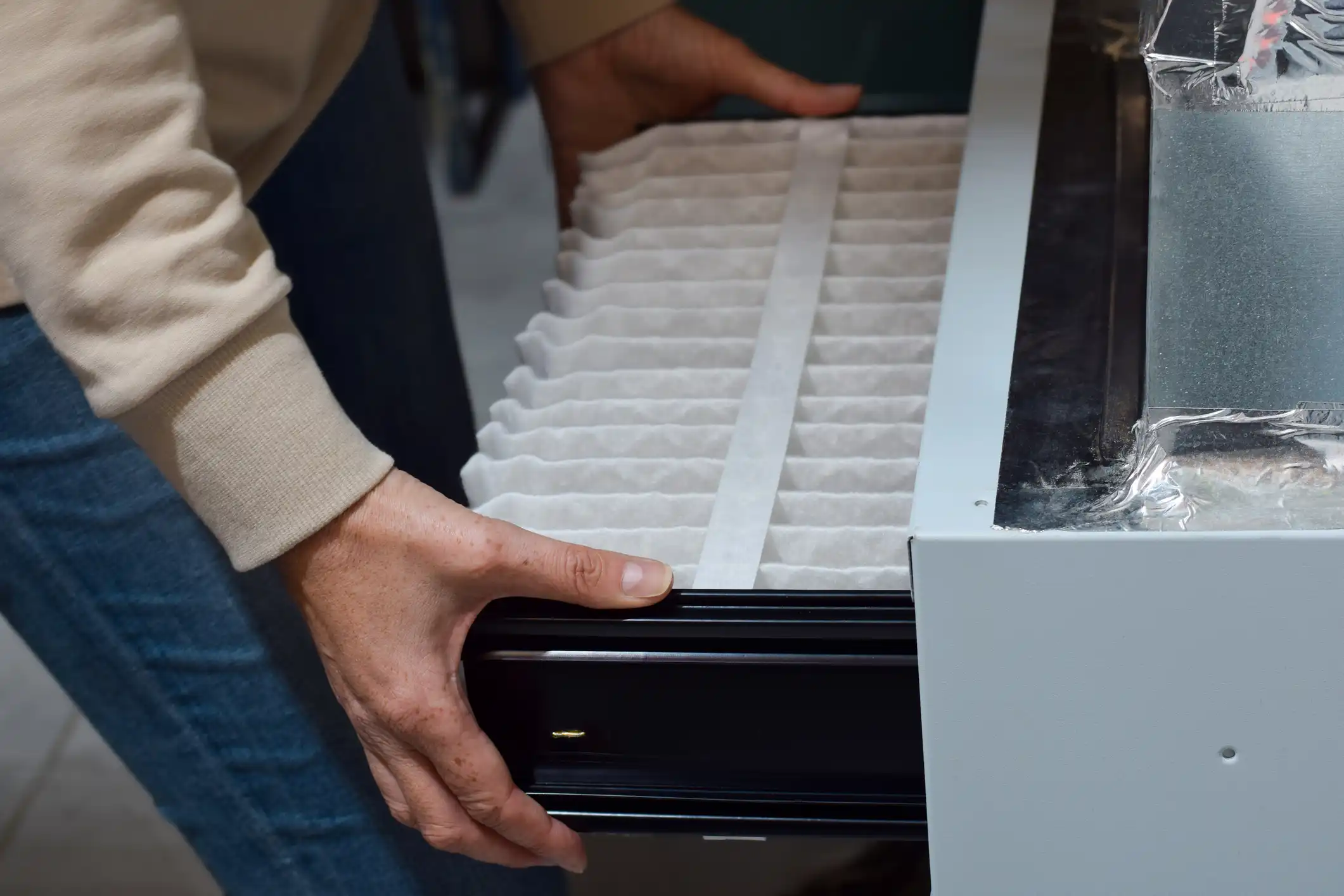
Whole-house filtration is installed in the return duct or filter cabinet so every cycle of HVAC airflow is filtered. Options commonly used in Tampa homes include:
- Standard pleated filters (MERV 6 to MERV 8)
- Capture larger particles such as dust, pollen, and lint.
- Low pressure drop, compatible with most residential systems.
- High-efficiency pleated filters (MERV 9 to MERV 13)
- Capture smaller particles including fine dust, smoke, pet dander, and many respiratory aerosol sizes.
- Require attention to system fan capacity and static pressure.
- HEPA and HEPA-style solutions
- True HEPA captures very fine particles down to 0.3 microns, but typical HVAC systems need a dedicated HEPA cabinet or bypass approach because HEPA introduces high airflow resistance.
- Electronic air cleaners and electrostatic filters
- Active systems that trap particles electrostatically; many have lower pressure drop but require periodic cleaning and careful maintenance.
- Supplemental technologies
- UV-C lamps can reduce microbial growth on coils and in ductwork (does not remove particulates).
- Activated carbon or specialty media can reduce odors and some VOCs when integrated into a whole-house system.
Note on MERV: MERV ratings align with particle size capture. As a rule, MERV 8 is effective for common allergens and dust, while MERV 13 provides substantially better capture of fine aerosols. Very high-MERV or HEPA options may need HVAC adjustments to avoid impaired airflow.
How IAQ whole-house filtration installation works
1. System assessment
- Evaluate existing duct layout, filter rack size, return locations, and HVAC fan capacity. Measure current static pressure and airflow.
2. Filter selection and sizing
- Choose the filtration approach (MERV level, electronic, HEPA cabinet) that balances particle removal goals against HVAC compatibility.
3. Mechanical preparation
- Install or upgrade a sealed filter cabinet or retro-fit the return plenum with a properly sized filter rack. Use corrosion-resistant materials in coastal Tampa homes.
4. Sealing and bypass prevention
- Seal joints and gaps so return air cannot bypass the media. Proper sealing prevents unfiltered air from circulating.
5. System balancing and commissioning
- Check static pressure, airflow, and temperature differentials. Adjust fan speed or controls if necessary to maintain design airflow with the new filter.
6. Optional add-ons
- Install UV-C in the coil/return area to control microbial growth, or add a whole-house dehumidifier to limit humidity-related filter degradation.
Maintenance requirements for Tampa homes
- Filter replacement/cleaning
- Disposable pleated filters: typically every 1 to 3 months depending on MERV rating, household occupancy, pets, and pollen season. High-efficiency (MERV 13) often requires more frequent replacement under heavy loading.
- Washable/electrostatic filters: clean according to manufacturer guidance, usually monthly during high pollen or heavy use.
- Annual professional inspection
- Check static pressure, inspect ductwork for mold or moisture intrusion, verify cabinet seals and fan performance.
- UV lamp and accessory upkeep
- Replace UV-C lamps according to manufacturer interval (commonly annually) to maintain microbial control.
- Duct cleaning and corrosion check
- Schedule duct inspection and cleaning if there is visible mold, heavy dust accumulation, or after major storm events. Inspect for salt corrosion on metal parts and protect with appropriate coatings or stainless components.
- Monitor performance
- If you see increased dust, rising energy use, or reduced airflow, measure static pressure and inspect filters immediately.
Expected impact on indoor air quality for Tampa homes
- Allergen and particulate reduction
- Upgrading to higher-MERV duct filtration will noticeably reduce pollen, dust, and pet dander indoors, often improving allergy and asthma symptoms within weeks.
- Cleaner HVAC components
- Better filtration reduces buildup on coils and blower wheels, which can improve system efficiency and extend equipment life when balanced properly.
- Odor and VOC control
- Standard particulate filters do not remove most VOCs; adding activated carbon media can help reduce odors associated with humidity and coastal living.
- Comfort and moisture management
- Filtration alone does not control humidity. Combining filtration with proper dehumidification in Tampa is important to prevent mold and prolong filter life.
- Energy and airflow considerations
- Very high-MERV or HEPA installations can increase static pressure, potentially increasing blower power consumption or reducing airflow. Proper system assessment and possible fan upgrade avoid negative impacts.
Troubleshooting common issues and practical solutions
- Reduced airflow after upgrading to high-MERV filter
- Solution: verify static pressure, install a lower-pressure drop pre-filter, or upgrade blower motor to maintain airflow.
- Frequent clogging during pollen season
- Solution: use a staged approach (pre-filter + higher-efficiency final filter), increase replacement frequency during peak months, and seal building envelope where feasible.
- Mold on or behind filters
- Solution: address humidity with a whole-house dehumidifier, ensure filters are replaced before saturation, and add UV-C at the coil to limit microbial growth.
- Corrosion in coastal homes
- Solution: specify stainless or coated housings and fasteners; inspect annually after hurricanes or salt storms.

Customer Testimonials

Service Areas