AC Repair in Auburndale, FL
Reliable AC Repair in Auburndale, FL: Beat the Heat with Expert Service
Here in Auburndale, our long, humid summers and intense afternoon storms push air conditioners to their limit. When your AC system fails, it’s more than an inconvenience, it’s an emergency. You need a trusted partner to get your cool, comfortable air back quickly and reliably.
.jpeg)
Why timely AC repair matters in Auburndale, FL
Auburndale’s hot, humid climate drives air conditioners to run more hours than in milder regions. That continuous load accelerates wear on compressors, capacitors, motors, and coils, and moisture encourages clogged condensate drains and coil corrosion. Delaying repairs risks higher energy bills, uneven cooling, indoor air quality decline, and larger failures that require full system replacement.
Common AC repair issues in Auburndale, FL
Most service calls fall into a predictable set of problems. Understanding them helps you spot issues early.
- Compressor failure or short cycling - often caused by overload, low refrigerant, electrical faults, or age.
- Condenser coil damage or fouling - outdoor units exposed to humidity and yard debris can lose efficiency or overheat.
- Fan motor or blower issues - worn bearings, seized motors, or belt failure in older systems.
- Faulty capacitors and contactors - common causes of no-start conditions or intermittent operation.
- Refrigerant leaks - seals and brazed joints can fail; R-22 systems are increasingly costly to recharge due to regulatory phaseout.
- Thermostat and control problems - miscalibration, poor placement, or communication faults between controls and the system.
- Clogged condensate drains and pans - higher fungal growth risk in humid climates leads to overflow and safety shutoffs.
- Electrical failures - corroded connections, tripped breakers, and storm-related surges that impact control boards.
Residential vs commercial considerations
Residential systems are typically smaller and quicker to diagnose. Commercial systems often involve rooftop units, multiple zones, and larger refrigerant volumes; they require additional safety checks, lift and handling equipment, and sometimes coordination around business hours to minimize disruption.
Step-by-step diagnostic approach
Technicians follow a consistent diagnostic workflow so repairs are targeted and efficient:
- Initial intake and symptom review - document model, age, observed behavior, and recent events (power outages, storms).
- Visual inspection - check outdoor unit, condensate drainage, wiring, and thermostat placement.
- Electrical testing - verify power at the disconnect, measure voltages, and test capacitors, contactors, and motor currents.
- Refrigerant and pressure checks - measure system pressures and superheat/subcooling to detect leaks or improper charge.
- Airflow assessment - inspect filters, blower operation, duct pressures, and temperature splits across evaporator coils.
- Component-level testing - isolate suspect parts (compressor windings, fan motors, control boards) with meters and gauges.
- Diagnostic report and repair plan - list findings, recommended repairs with priorities, and expected time to complete each repair.
Typical repair procedures explained
Common repairs performed on-site include:
- Replacing capacitors, contactors, and relays - quick fixes that restore reliable starts and operation.
- Motor and blower repairs - replace bearings or motors; rebalance fans to reduce vibration and extend life.
- Compressor interventions - in-place replacement or, for severe damage, full system replacement when the compressor failure is coupled with age or mismatched components.
- Refrigerant leak repair and evacuation - locate leak, repair brazed joints or replace leaking components, then evacuate and recharge to manufacturer specs. Note: refrigerant type affects availability and repair strategy.
- Condenser and evaporator coil cleanings or coil repairs - restore heat transfer efficiency and reduce run times.
- Thermostat replacement or recalibration - update controls to improve comfort and system control.
- Drain line clearing and condensate safety switch replacement - prevent water damage and nuisance shutdowns.
- Control board and sensor replacements - restore system logic and communication between components.
Estimated timelines and how complexity affects duration
Timelines vary by fault and site conditions:
- Basic diagnostics: typically completed within 30 to 90 minutes.
- Minor component repairs (capacitor, contactor, thermostat): often resolved in 1 to 3 hours.
- Motor or compressor replacement: usually requires most of a business day; compressor swaps can take half a day to a full day depending on accessibility and whether refrigerant recovery is required.
- Coil replacement or major refrigerant system repair: may span one to two days, especially for commercial systems with larger refrigerant volumes or rooftop access issues.
- Full system replacement: typically scheduled over a day or more with pre-install planning and possible permit coordination.
Factors that increase repair time include part availability, access constraints (tight mechanical rooms or rooftop units), permitting for larger commercial projects, and the need for specialized lifts or crane service.
Pricing considerations (factors that influence cost)
Rather than fixed figures, cost is driven by several factors:
- Part type and availability - OEM parts and modern refrigerant-compatible components often cost more than generic replacements.
- Complexity of the repair and labor time - electrical troubleshooting and refrigerant work require certified technicians and more labor hours.
- System age and efficiency - older systems may require more extensive repairs or be less cost-effective to fix than to replace.
- Local regulatory considerations - refrigerant handling rules and disposal requirements can affect scope and cost.
Providing clear diagnostic findings helps prioritize repairs by safety, energy savings, and long-term value.
Warranty, parts, and replacement guidance
Most manufacturers provide parts and compressor warranties that vary by model and registration status. Typical warranty types to understand:
- Manufacturer parts warranty - covers specific components for a set period; often registered at installation for full benefit.
- Compressor warranties - may be longer than other parts but can require authorized replacement parts and certified installation to remain valid.
- Workmanship warranty - many professional services provide a limited warranty on labor for a specified period after repair.
When repairing, technicians will note whether OEM or aftermarket parts are used and how that choice affects warranty coverage. For older systems nearing expected service life, replacement may offer better long-term protection and modern efficiency advantages.
Emergency response and temporary solutions
In Auburndale’s climate, emergency response options are important during heat waves or after storms. Emergency response typically includes after-hours diagnostics and prioritized dispatch for critical failures. While awaiting repair, safe temporary measures include:
- Ensuring power to the unit is on and breakers are not tripped.
- Replacing or cleaning air filters to restore airflow.
- Clearing debris from around the outdoor unit and ensuring condensate drains are free-flowing.
- Using shaded areas or portable cooling in small spaces to reduce heat load.
Avoid attempting refrigerant handling or electrical repairs yourself; those require licensed technicians and specialized equipment.
Maintenance and prevention in Auburndale conditions
Regular maintenance is the best defense against frequent repairs:
- Seasonal tune-ups before peak summer use, including coil cleanings, refrigerant checks, and electrical inspections.
- Monthly filter checks during high-use months and prompt replacement when dirty.
- Scheduled condensate line inspections and periodic chemical cleaning in humid seasons to prevent clogs.
- Consider whole-house surge protection and routine tightening of electrical connections to protect controls from storm-related damage.
A maintenance-focused approach reduces emergency calls, extends equipment life, and keeps energy costs lower during Auburndale’s hottest months.
Scheduling logistics (what to have ready)
When arranging service, having this information available speeds diagnostics: system make/model, approximate installation year, description of symptoms, recent service history, and any safety/access notes for the technician. For commercial sites, note hours of operation and any required access procedures.

Customer Testimonials

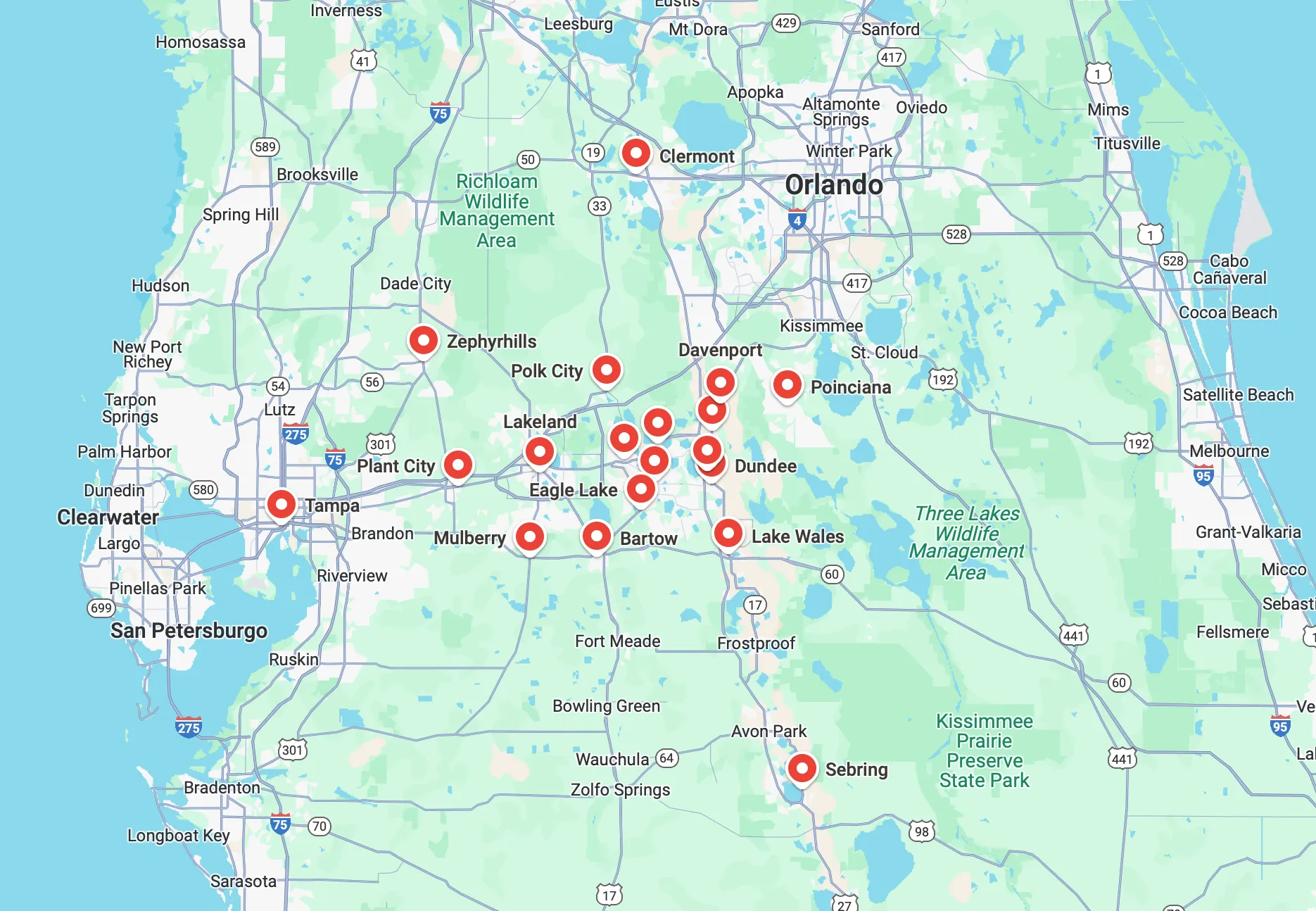
Service Areas