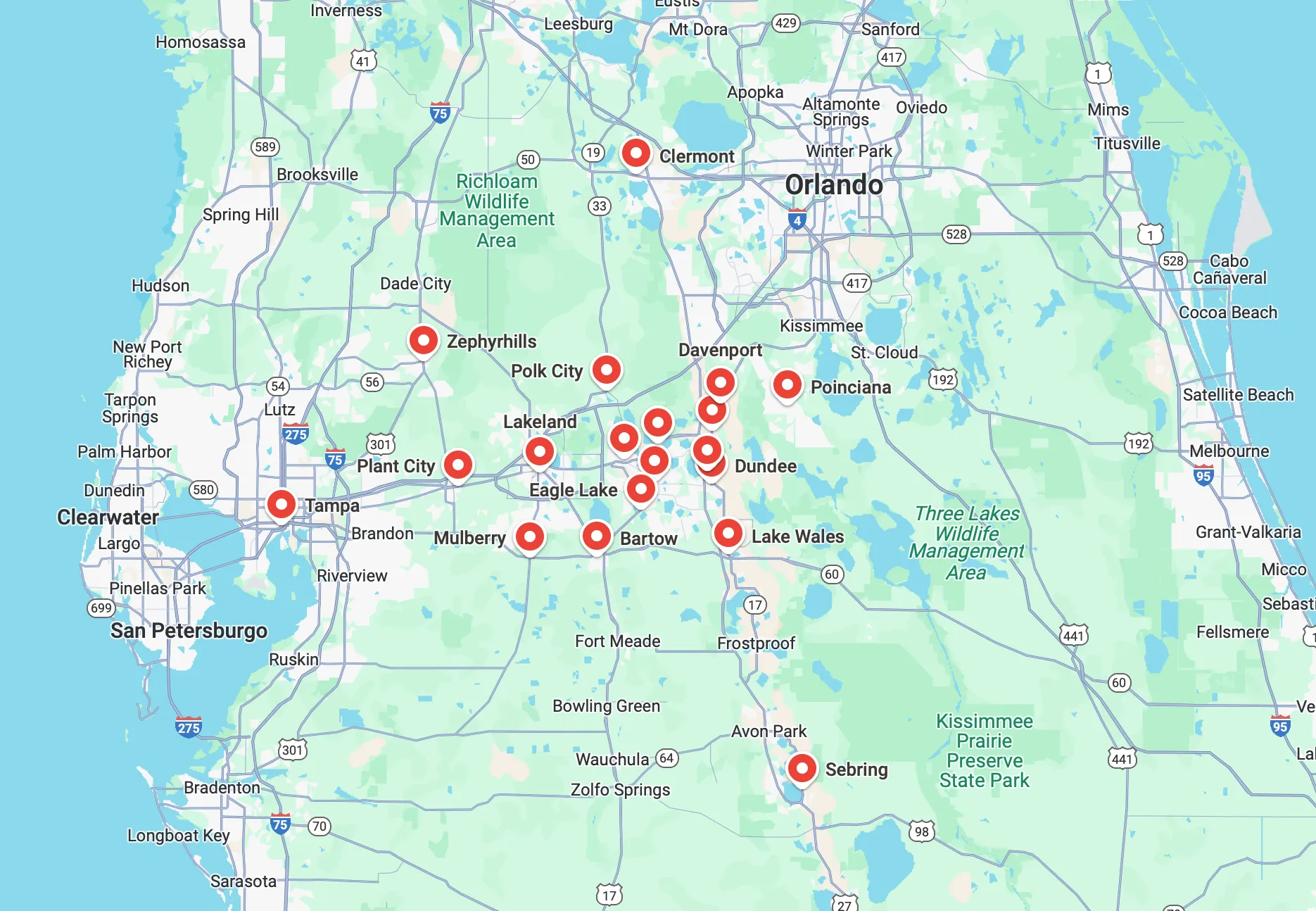
Home Air Filtration in Plant City, FL
IAQ Home Air Filtration in Plant City, FL
Indoor air quality (IAQ) affects comfort, health, and the performance of home HVAC systems. In Plant City, FL, where high humidity, seasonal pollen, and dust from nearby agricultural activity are common, a whole-home IAQ filtration system can meaningfully reduce allergens, particulates, odors, and airborne irritants.
.webp)
Why IAQ Home Air Filtration matters in Plant City, FL
Plant City experiences hot, humid summers and a marked pollen season in spring. Humidity promotes mold and dust mite growth, while pollen and agricultural dust increase seasonal allergen loads. A dedicated IAQ home air filtration system:
- Reduces airborne pollen and particulate matter that trigger allergies and asthma.
- Helps control mold spores and organic particulates that thrive in humid climates.
- Removes odors and VOCs associated with household products and outdoor agricultural activity.
- Lowers dust accumulation on surfaces and inside ductwork, improving HVAC efficiency.
Common IAQ issues in Plant City homes
- High indoor humidity leading to musty smells and mold growth on walls, insulation, and ductwork.
- Seasonal spikes in pollen and outdoor particulates that enter through doors, windows, and HVAC systems.
- Odors and volatile organic compounds (VOCs) from cleaning products, paints, and nearby agricultural operations.
- Increased dust and pet dander from pets and open living spaces. Understanding these local drivers helps choose the right filtration approach and maintenance schedule.
Whole-home filtration options and efficiency
Whole-home systems are installed at the HVAC return or in a dedicated housing so all conditioned air is filtered before distribution. Main options:
- Pleated media filters (MERV-rated)
- MERV 8–11: Good for dust, pollen, and pet dander. Common upgrade for homes with mild allergy concerns.
- MERV 12–13: Captures fine particulates, many pollen and mold spores; a good balance of filtration and airflow for many residential systems.
- MERV 14–16: Approaches HEPA-level capture for very fine particles; may require HVAC blower upgrades to avoid airflow loss.
- Note: Higher MERV ratings trap smaller particles but create greater resistance to airflow. Professional evaluation is essential.
- HEPA filtration
- HEPA captures 99.97% of particles 0.3 microns and larger. In many homes, HEPA is best implemented through a standalone whole-house HEPA housing or in combination with a bypass system because typical HVAC fans may not handle the added resistance.
- Activated carbon filters
- Remove odors, VOCs, and some gases. Often used in series with particulate filters for comprehensive IAQ control—useful in Plant City for reducing agricultural and household odors.
- Electronic air cleaners and ionizers
- Can remove very small particles. Some types generate ozone; select models that meet safety standards and avoid ozone-producing units.
- UV germicidal lights
- Installed near the coil to reduce microbial growth on HVAC components. UV reduces bacteria, mold on the coil, and can limit microbe recirculation, but it does not remove particulates by itself.
- Whole-home dehumidification (complementary)
- In Plant City’s humid climate, controlling humidity (below 60%, ideally 40–50%) is often required to prevent mold growth and to improve filtration effectiveness.
Installation: what to expect
- Assessment: A professional inspection of the existing HVAC system, ductwork, and household IAQ drivers determines suitability and proper filter sizing. This includes checking air handler capacity and static pressure limits.
- Equipment selection: Choose a filter type and housing compatible with the HVAC blower. If high-MERV or HEPA is selected, the installer may recommend a stronger blower or a dedicated filtration housing.
- Installation steps:
- Shut down and isolate the HVAC system.
- Install a filter housing or retrofit the existing return plenum with the selected filter mount.
- Seal and test duct connections to prevent bypass and leaks.
- Measure static pressure and airflow to confirm the system meets manufacturer specifications.
- Validate operation and, optionally, perform baseline IAQ measurements.
- Typical disruptions: Most installations are completed in a single day, with minimal disruption when planned properly.
Maintenance and filter replacement schedules
Filter life depends on filter type, household conditions, and local pollutant load. Typical guidelines for Plant City homes:
- Basic fiberglass filters: Replace monthly (least effective).
- Pleated filters (MERV 8–11): Replace every 60–90 days under normal conditions; every 30–60 days with pets, renovations, smoking, or high pollen seasons.
- Higher-efficiency filters (MERV 12–13+): Replace every 60–120 days depending on load; check more frequently during spring pollen spikes.
- HEPA housings: Check seals and pre-filters every 3 months; HEPA elements often last 1–3 years depending on contamination level.
- Activated carbon cartridges: Replace every 6–12 months for sustained odor control.
- Electronic cleaners and UV lights: Annual inspection and cleaning; replace UV lamps per manufacturer interval (commonly 9–12 months for optimal output).Regular filter changes protect indoor air quality and maintain HVAC efficiency. In Plant City, plan for more frequent checks during late winter and spring pollen seasons and during humid summer months.
What improvements to expect
After proper installation and maintenance, homeowners commonly see:
- Lower airborne particulate levels (visible dust and allergens reduced).
- Fewer allergy and respiratory complaints for sensitive occupants.
- Reduced odors and lower VOC concentrations when carbon filtration is used.
- Less dust buildup in vents and on surfaces and improved HVAC performance with reduced strain on equipment.
- When combined with dehumidification, fewer signs of mold and musty odors in humid months.
Common problems and their solutions
- Reduced airflow after installing high-MERV filters: Solution—verify blower capability and static pressure; consider a staged filtration approach or blower upgrade.
- Persistent odors despite filtration: Solution—add or replace activated carbon media and inspect for hidden moisture or microbial growth.
- Frequent filter clogging: Solution—check for sources of heavy dust (renovation, outdoor activities), increase replacement frequency, or install a pre-filter stage.
- Ozone concerns with electronic cleaners: Solution—select certified low-ozone models or use mechanical filtration coupled with UV for microbial control.
Warranties and service plans
Typical equipment warranties cover manufacturing defects for the filtration housing and UV units; filter media and consumables are usually covered only if defective. Many homeowners find service plans that include regular inspections, filter replacement reminders, and annual IAQ checks helpful for maintaining system performance—especially in climates like Plant City where seasonal conditions affect load. When evaluating warranties and plans, confirm coverage terms for labor, replacement parts, and recommended service intervals.
Final note: For Plant City homes, a tailored IAQ strategy that combines appropriate mechanical filtration, humidity control, and scheduled maintenance provides the most reliable improvement in indoor air quality. Baseline and follow-up IAQ measurements help document benefits and fine-tune filter type and replacement frequency for local conditions.

Customer Testimonials

Service Areas