Heating Repair in Lake Wales, FL
Heating Heating Repair in Lake Wales, FL
An effective heating repair service keeps your home safe, comfortable, and energy-efficient when cooler nights or occasional winter fronts arrive in Lake Wales, FL. Although Central Florida winters are milder than northern regions, many homes rely on heating systems - most commonly heat pumps and electric furnaces - to maintain consistent indoor comfort.
Why heating repair matters in Lake Wales, FL
Lake Wales experiences warm, humid conditions most of the year with short cool periods. That climate means heating systems often sit idle for months, then face sudden load during cold snaps. Heat pumps, which both heat and cool, are particularly common and are subject to issues from humidity, heavy use of defrost cycles, and outdoor unit exposure. Prompt, expert repairs protect indoor air quality, prevent energy waste, and reduce the chance of a no-heat emergency on chilly nights.
Common heating system problems in Lake Wales homes
- Heat pump low or no heat: Often caused by refrigerant leaks, failing compressors, faulty reversing valves, or control board faults. Salt and humidity can accelerate corrosion on outdoor coils and electrical connections.
- Short cycling or frequent on-off cycles: Typically caused by airflow restrictions, oversized thermostats settings, failing capacitors, or refrigerant issues.
- Strange noises from furnace or heat pump: Rattles, grinding, or squeals can indicate failing motors, loose panels, bearing wear, or blower wheel problems.
- Ignition failures on gas furnaces: Pilot or electronic igniters, flame sensors, or gas valves can malfunction after long idle periods.
- Frosted outdoor unit or excessive defrost cycles: Common in heat pumps that struggle to enter and exit defrost mode properly due to sensor or control failures.
- Poor airflow or uneven heating: Caused by clogged filters, blocked vents, duct leaks, or failing blower motors.
- Water leaks and condensate problems: High humidity and clogged drains can cause water to back up, damaging cabinets or indoor components.
- Electrical failures and tripped breakers: Outdoor exposure, age, or rodents can cause short circuits, bad capacitors, or contactor failure.
Diagnostic approach technicians use
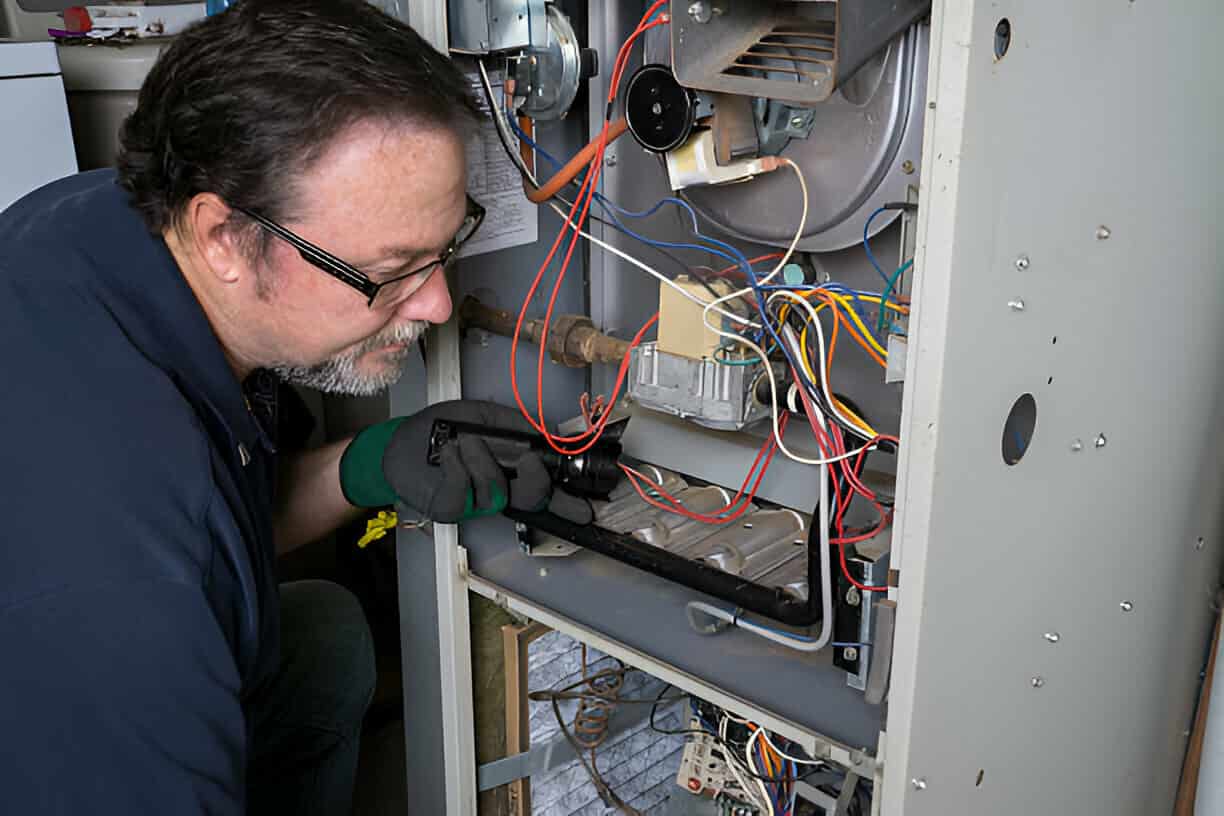
Technicians follow a systematic diagnostic process to identify root causes quickly and accurately:
- System history and symptoms review - Ask when problem began, recent maintenance, and thermostat behavior.
- Visual and safety inspection - Check for obvious damage, gas smell, water leaks, rust, and proper venting.
- Thermostat and control verification - Confirm setpoints, wiring, and control board error codes.
- Electrical testing - Measure voltage, current, capacitors, and contactors to detect failing components.
- Airflow and duct inspection - Check filters, blower operation, duct joins, and return/supply vents.
- Refrigerant and pressure checks (heat pumps) - Measure refrigerant charge and look for leaks.
- Combustion analysis (gas furnaces) - Test combustion efficiency and carbon monoxide levels when applicable.
- Operational test under load - Run the system to observe startup, run, and shutdown behavior.
This step-by-step testing minimizes guesswork and targets repairs that restore reliability and efficiency.
Typical repair procedures and parts replaced
Repairs are tailored to the diagnosis. Common interventions include:
- Refrigerant leak repair and recharge - Locate and repair leaks, then recharge to correct pressures for efficient heat transfer.
- Compressor or reversing valve replacement - Reserved for major failures in heat pumps when critical components fail.
- Control board and defrost board replacement - Replace failed electronics that cause erratic behavior or defrost problems.
- Capacitor and contactor replacement - Fix startup and running issues for compressors and fans.
- Blower motor and fan repair or replacement - Restore proper airflow and reduce noise.
- Igniter and flame sensor cleaning or replacement - For gas furnaces that fail to establish or maintain flame.
- Gas valve servicing and safety check - Ensure safe gas flow and correct ignition timing.
- Drain cleaning and condensate pump replacement - Stop water backups and prevent indoor leaks or mold.
- Thermostat replacement or recalibration - Eliminate programming errors, poor setpoint control, and wiring faults.
- Duct sealing and simple balancing - Fix uneven heating and reduce energy loss.
Technicians will explain whether repairs restore original performance or if component replacement is the safer, longer-term option.
Service response times you can expect
Response times vary with urgency and availability. Typical timelines in Lake Wales:
- Same-day or next-business-day diagnostics for non-emergency requests during normal business hours.
- Faster attention for emergency no-heat situations, often within a few hours when possible.
- Parts replacement timelines depend on part availability; common items like thermostats, capacitors, and filters are usually replaced on the first visit, while major components such as compressors may require ordering and scheduling within 24-72 hours.
Technicians prioritize safety and temperate risk conditions when scheduling, especially during seasonal cold snaps.
Safety checks after repair
After any heating repair, thorough safety verification is critical:
- Carbon monoxide check (for gas systems) - Test for CO leaks and verify proper venting.
- Gas leak detection - Confirm gas connections are secure and free of leaks.
- Electrical safety tests - Verify grounding, breakers, and safe wiring.
- Proper flue and vent operation - Ensure exhaust gases are routed correctly away from living spaces.
- System control verification - Confirm thermostats, safeties, and limit switches function normally.
- Operational run test - Observe the system under typical load to confirm stable temperature control, proper cycling, and absence of abnormal sounds or odors.
Technicians document completed safety checks and explain findings in clear, non-technical terms.
Preventative advice to reduce future repairs
Proactive maintenance reduces emergency repairs and extends equipment life:
- Schedule annual or biannual tune-ups, ideally before peak heating or cooling seasons, to catch wear early.
- Replace air filters regularly (every 1-3 months) to maintain airflow and indoor air quality.
- Keep outdoor heat pump units free of debris and vegetation, and ensure adequate clearance for airflow.
- Insulate exposed ducts and seal leaks with mastic or foil tape to improve efficiency and balance heating.
- Clear condensate drains seasonally to prevent blockages and water damage.
- Use a programmable thermostat to avoid unnecessary cycling and preserve compressor and motor life.
- Address small issues promptly, such as strange noises or uneven heating, before they become major failures.
Regular care tuned to Lake Wales conditions - high humidity, outdoor exposure, and variable seasonal use — will keep systems reliable and energy-efficient.

Customer Testimonials

Service Areas