Whole House Dehumidification in Davenport, FL
IAQ Whole-House Dehumidification in Davenport, FL
Living in Davenport, FL means year‑round heat and humid air that works against indoor comfort, energy bills, and the longevity of your home. IAQ whole-house dehumidification in Davenport, FL addresses the root cause: excess moisture inside the building envelope. Proper whole-house dehumidification integrated with your HVAC system lowers relative humidity, reduces mold and mildew risk, improves perceived comfort, and protects finishes, electronics, and stored items.
Why whole-house dehumidification matters in Davenport, FL
Davenport experiences high outdoor humidity much of the year, with summer afternoons, tropical storms, and hurricane season driving moisture intrusion. When indoor relative humidity stays above about 60 percent, you’ll commonly see:
- Mold and mildew growth in closets, attics, and bathrooms
- Condensation on windows and walls
- Musty odors and increased allergy or asthma symptoms
- Rust or corrosion on appliances and electronics
- Longer air conditioner run times or short cycling because AC can cool but not remove moisture efficiently
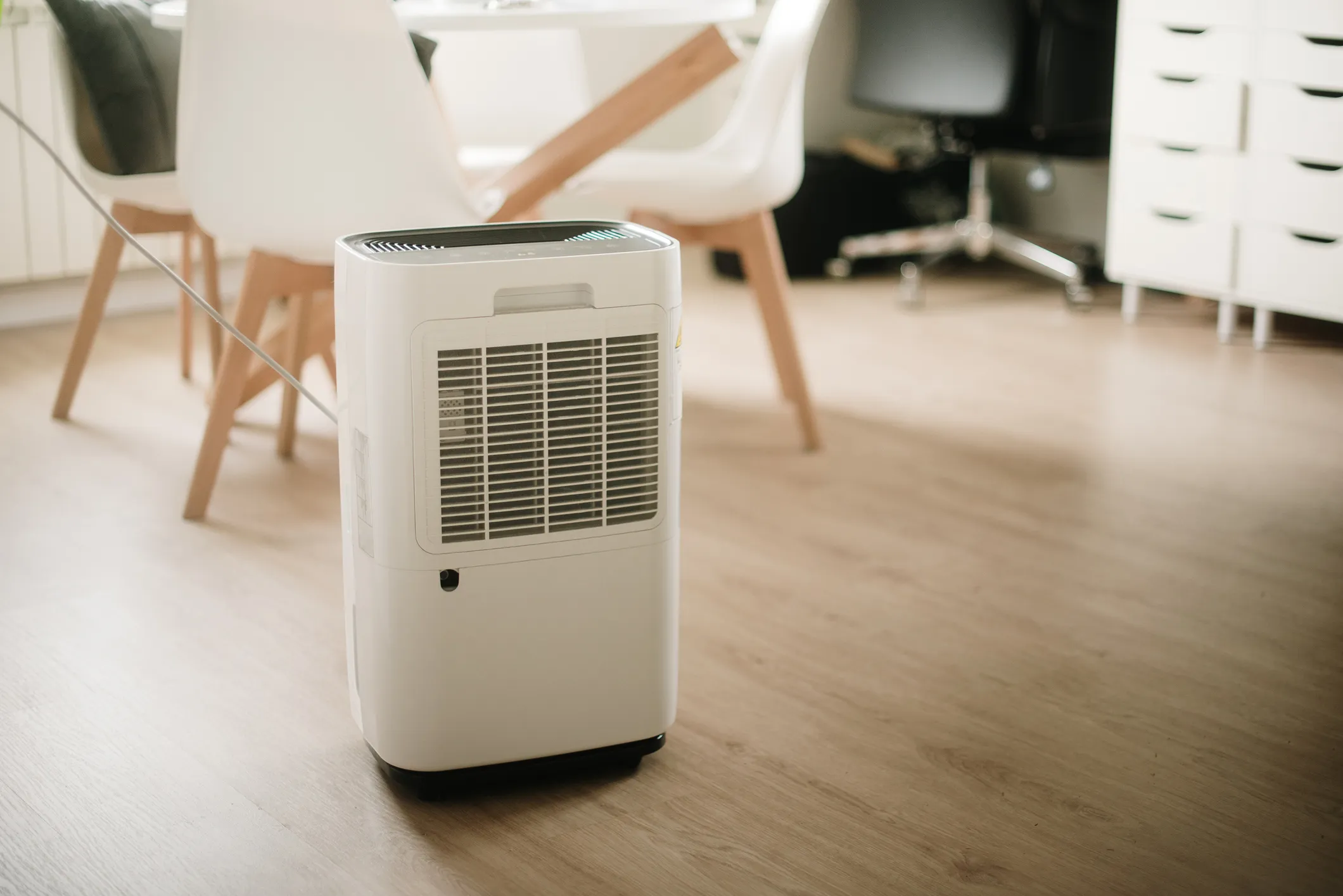
A dedicated whole-house dehumidifier, integrated with the home’s central air handler or ductwork, controls humidity independently of temperature so indoor RH can be maintained at an optimal range for comfort and health.
Common whole-house dehumidification issues in Davenport homes
- High baseline indoor RH (often 60 percent or more) due to Florida climate and open windows
- Crawlspaces and attic moisture intrusion in slab‑on‑grade or older homes
- Oversized AC that cools too quickly without dehumidifying
- Blocked or undersized condensate drains causing backups and water damage
- Poor duct sealing allowing humid outdoor air to infiltrate
- Inadequate controls or lack of a whole‑house humidistat to manage RH
Types of whole-house dehumidifiers and how to choose
- Ducted refrigerant dehumidifiers: Mounted near the air handler or within the return plenum. Efficient for most Florida homes and provide continuous moisture removal while sharing HVAC airflow.
- Drain pan style (coil) with air handler integration: Uses existing coil and a drain system; suitable when AC is properly sized and runs long enough to remove moisture.
- Desiccant dehumidifiers: Use a sorbent wheel, effective at lower temperatures or specialized needs, but less common for typical Florida residences.
- Compact inline units and multi-stage systems: Useful for larger or multi-zone homes when installed with proper duct modifications.
Selection depends on home size, envelope tightness, routine occupancy, and HVAC characteristics. For Davenport homes, choose a unit rated to control humidity at higher outdoor dew points and capable of sustained operation during humid months.
Sizing guidance for Davenport homes
Sizing is based on moisture load, square footage, and home tightness. Typical guidance for humid Florida conditions:
- Under 1,500 sq ft: 50 to 70 pints per day capacity
- 1,500 to 2,500 sq ft: 70 to 90 pints per day
- 2,500 to 4,000 sq ft: 90 to 120 pints per day
- Large, very leaky, or homes with extensive moisture sources: 120 to 160+ pints per day or dual systems
These are starting points. Accurate sizing requires a moisture load calculation using local climatic data and an inspection of attic, crawlspace, and ventilation. In Davenport’s humid climate, err toward higher capacity and consider variable‑speed models to modulate output.
Typical installation process
- Initial assessment: Measure indoor RH at multiple locations, inspect ducts, attic, crawlspace, and existing drains.
- Load calculation: Determine moisture ingress, occupancy, and sources (appliances, showers, pools).
- Equipment selection: Choose a unit sized for the calculated load and compatible with the air handler and ductwork.
- Ductwork and plenum work: Install or modify a return/connection location; ensure proper airflow and sealed connections.
- Drainage setup: Route condensate to a gravity drain, floor drain, or install a condensate pump with reliable check valves and air gap if required.
- Electrical and control wiring: Install dedicated circuit and whole‑house humidistat or integrate with existing thermostat/controls.
- Startup and balancing: Commission unit, set RH target (commonly 45 to 55 percent in Florida conditions), verify drainage and airflow, and adjust settings for steady performance.
- Documentation: Provide user controls and maintenance schedule.
Maintenance and common troubleshooting
Regular maintenance preserves performance and prevents failures:
- Replace or clean filters every 3 months or per manufacturer recommendations.
- Clear condensate lines and inspect condensate pump operation before the wet season.
- Clean coils annually to maintain heat transfer and efficiency.
- Verify humidistat calibration and sensor placement away from supply registers.
- Inspect duct seals and insulation; repair any leaks that allow humid infiltration.
Common issues and fixes:
- Unit short cycles: Check controls and ensure correct sizing; oversized AC or dehumidifier can short cycle and fail to remove moisture efficiently.
- Condensate backup: Confirm drain slope, clear clogs, or service/replace condensate pump.
- Inadequate dehumidification: Reinspect airflow, duct leakage, and ensure the unit is sized for Davenport humidity conditions.
Energy considerations and indoor comfort tradeoffs
Whole-house dehumidification consumes additional electricity, but it often reduces overall HVAC energy use in humid climates by allowing the thermostat to be set higher while maintaining comfort. Key efficiency tips:
- Choose high‑efficiency models with variable speed fans and controls.
- Use whole‑house humidistats that allow the dehumidifier to run independently of cooling cycles.
- Seal and insulate ducts and the building envelope to reduce moisture infiltration.
- Balance RH targets: in Davenport aim for 45 to 55 percent indoors to prevent mold while avoiding excessive energy use and condensation on windows.
Benefits for Davenport homeowners
- Lower mold and mildew risk in closets, attics, and crawlspaces
- Improved comfort without overcooling the home
- Reduced odors and lower allergen levels
- Protection for wood floors, furniture, and electronics
- More consistent indoor air quality during hot, humid months and storm season
Whole-house dehumidification is a practical, long-term solution for Davenport homes facing persistent humidity challenges. Proper assessment, right‑sized equipment, correct drainage, and routine maintenance keep indoor humidity under control and protect both your health and your home.

Customer Testimonials

Service Areas