Air Quality Testing in Davenport, FL
IAQ Air Quality Testing in Davenport, FL
Indoor air quality testing in Davenport, FL helps you understand what you and your family are breathing every day. Central Florida homes face specific IAQ challenges - high humidity, frequent thunderstorms, pollen from citrus and ornamental trees, and seasonal construction or remodeling that can raise dust and chemical emissions. Professional IAQ testing pinpoints contaminants (particles, biological spores, and VOCs), explains what the results mean for health and comfort, and recommends practical remediation and filtration improvements tailored to Davenport homes.
.jpeg)
What we test and why it matters
Common IAQ tests and what they reveal:
- Air particle measurement (PM2.5 and PM10): measures fine and coarse particles from cooking, tobacco, road or agricultural dust, and remodeling. Fine particles penetrate deep into lungs and are linked to asthma and cardiovascular effects.
- Mold spore and bioaerosol sampling: identifies elevated fungal spores or atypical species inside homes after storms, leaks, or in older/poorly ventilated attics and crawlspaces. Important in humid Davenport homes where mold grows quickly.
- Volatile Organic Compounds (VOCs) screening and targeted sampling: detects off-gassing from paints, new flooring, cabinetry, cleaning products, and hobby chemicals. VOCs can cause headaches, irritation, and long-term exposure risks.
- Formaldehyde testing: useful in newer or renovated homes with pressed-wood products or furniture.
- Short-term and continuous monitoring: real-time particle counters and sensors show fluctuations throughout the day (cooking, HVAC cycles, outdoor pollen intrusion).
- Temperature and relative humidity logging: high indoor humidity (above 50%) supports mold growth and dust mite populations; in Davenport the summer humidity pattern makes this especially important.
Common IAQ issues in Davenport, FL homes
- Mold growth in attics, HVAC systems, bathrooms, and under flooring after heavy rains or poor ventilation
- Elevated humidity and moisture-driven odors
- Seasonal pollen and outdoor allergens infiltrating through windows and doors
- VOC spikes after remodeling, new cabinetry installation, or from household cleaners
- Fine particle exposure from indoor cooking, smoking, or nearby agricultural/dust activity
How testing works - straightforward, evidence-based process
1. Scheduling and pre-test questionnaire
- A short intake collects information about symptoms, known moisture events, recent renovations, HVAC systems, and areas of concern. You are asked to maintain normal living conditions but to avoid extraordinary cleaning, running air fresheners, or changing HVAC filters right before testing.
- On-site walkthrough
- A technician inspects suspect areas (attic, crawlspace, HVAC returns, bathrooms, kitchens) to identify visible moisture, stains, or debris and selects sampling locations that represent living spaces and problem zones.
2. Deploy monitoring and collect samples
- Particle counters record PM2.5 and PM10 in real time for the duration chosen (minutes to 24 hours or continuous over several days).
- Spore traps or bioaerosol samplers capture airborne mold and pollen for lab analysis.
- VOC screening with a portable photoionization detector (PID) provides immediate readings; sorbent tube samples can be sent to a lab for detailed compound identification.
- Humidity and temperature loggers may be left in place to track daily cycles.
3. Lab analysis and quality control
- Particle data are available immediately; lab-analyzed samples (spore counts, VOC speciation) typically return results within set turnaround windows (see typical times below). Results are quality-checked and compared to guidance values and outdoor baselines.
4. Reporting and remediation plan
- You receive a clear, prioritized report that explains numeric findings, graphs trends, identifies likely sources, and provides remediation recommendations suited to Davenport homes and climate.
How results are interpreted
Reports translate technical measurements into plain language:
- Numeric values are compared to health-based or industry guideline ranges (for example common PM2.5 guidelines and recommended humidity ranges).
- Mold results show total spore counts and dominant species; comparisons to outdoor counts help determine if indoor growth is present.
- VOC results list detected compound groups and indicate likely sources and whether levels are elevated enough to justify targeted action.
- Recommendations prioritize source control first, then ventilation and filtration upgrades, and finally targeted cleaning or repairs.
Typical turnaround times
- Real-time particle and humidity results: immediate, with preliminary on-site summary available the same day.
- Spore trap analysis (mold/pollen): commonly 24 to 72 hours after lab receipt for basic counts; species-level or microscopy details may take slightly longer.
- VOC lab confirmation and speciation from sorbent tubes: typically 7 to 14 calendar days depending on lab schedules and the depth of analysis required.
- Final written report: generally delivered within 3 to 14 days depending on the tests conducted and whether advanced VOC speciation is requested.
Recommended remediation and filtration improvements
Priority actions for Davenport homes:
- Source control
- Fix leaks, roof and flashing issues, and plumbing leaks promptly to prevent ongoing mold growth after storms.
- Replace or properly treat water-damaged building materials.
- Humidity control
- Maintain indoor relative humidity between 40% and 50% year-round. Consider whole-house dehumidification in humid summer months or localized dehumidifiers for crawlspaces and bathrooms.
- Filtration and HVAC improvements
- Upgrade HVAC filters to an appropriate MERV rating (MERV 8 to 13 for most systems; consult system specifications before selecting higher-rated filters).
- Use whole-house HEPA or high-efficiency filtration if HVAC supports it, or deploy portable HEPA air cleaners in bedrooms and living areas for immediate particle reduction.
- Add activated carbon or other adsorbent media for persistent VOC issues.
- Consider HVAC cleaning and inspection when tests identify duct contamination or visible microbial growth.
- Ventilation
- Improve ventilation with balanced systems or intermittent exhaust for kitchens and baths. In hot-humid climates like Davenport, controlled mechanical ventilation or energy recovery ventilators (ERV) can help without excessive humidity transfer.
- Targeted remediation
- Professional mold remediation for confirmed indoor growth, localized cleaning and surface treatment, and replacement of contaminated insulation or drywall when necessary.
What to expect in the report
A complete IAQ testing report for a Davenport property will typically include:
- Executive summary with key findings and prioritized actions
- Raw and summarized data tables and graphs (particles, humidity, spore counts, VOC levels)
- Interpretation relative to outdoor baselines and health guidance ranges
- Clear identification of likely sources and affected areas
- Practical remediation options with relative timelines and expected outcomes
- Filtration and ventilation recommendations tailored to the home’s HVAC type and the Davenport climate

Customer Testimonials

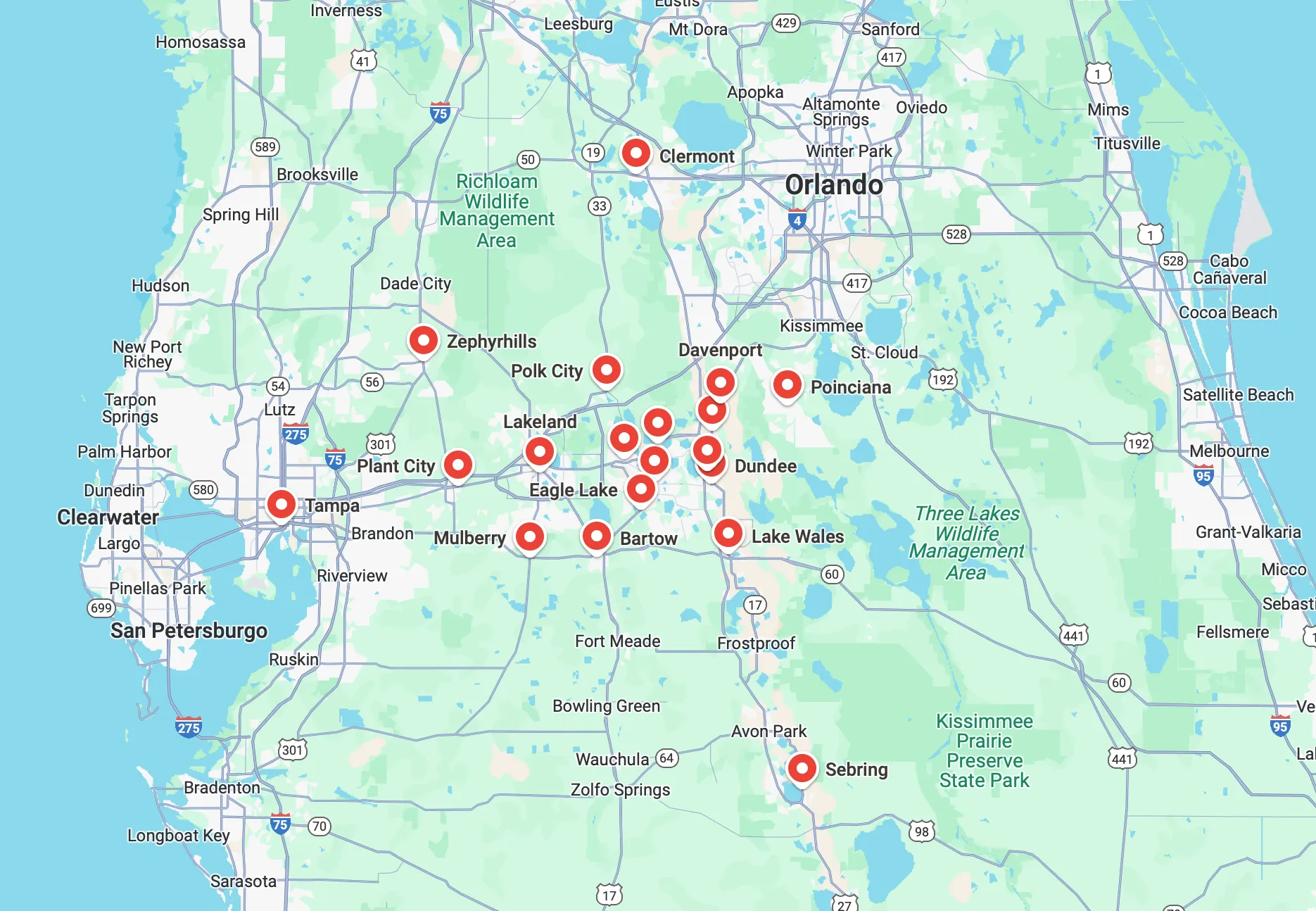
Service Areas