Home Air Filtration in Davenport, FL
IAQ Home Air Filtration in Davenport, FL
Indoor air quality (IAQ) matters in Davenport, FL. High humidity, year-round heat, seasonal pollen and frequent use of air conditioning mean your home often recirculates contaminants: pollen, mold spores, dust mites, pet dander, cooking particles, and volatile organic compounds (VOCs). IAQ home air filtration systems reduce these airborne pollutants, protect HVAC equipment, and make indoor air noticeably cleaner for people with allergies, asthma, or heightened sensitivity.
Common IAQ issues in Davenport, FL homes
- High humidity promoting mold and dust mite growth in carpets, ductwork, and crawlspaces
- Seasonal tree and grass pollen during spring and fall
- Dust and construction debris from regional development and home renovation projects
- Odors and VOCs from cleaning products, paints, and new furnishings
- Continuous recirculation of indoor particulates because HVAC runs long hours during hot months
How home air filtration improves indoor air
- Mechanical filters trap particles by size, removing dust, pollen, and pet dander before they circulate through living spaces.
- Activated carbon filters adsorb odors and many VOCs that mechanical filters cannot capture.
- HEPA-grade filtration captures very fine particles (including many allergens) down to submicron sizes when applied correctly.
- Filtration reduces particulate load on your HVAC system, improving heat exchange and potentially extending equipment life when correctly installed and maintained.
Types of filters and what the ratings mean
- Fiberglass (low-efficiency): inexpensive, protects equipment but captures only large particles. Typical use: short-term protection during construction.
- Pleated disposable filters (MERV 6-11): common in residential systems; balance particle removal and airflow. Good for general dust, pollen, and pet dander.
- High-MERV pleated filters (MERV 12-13): capture finer particles and are suitable for allergy-prone homes. Ensure your system can handle the increased resistance.
- HEPA (True HEPA): captures 99.97% of particles 0.3 microns and larger. Most central HVAC systems cannot accept true HEPA without retrofit due to high static pressure; often used in portable units or dedicated whole-home systems with upgraded air handlers.
- Activated carbon: targets odors and many VOCs; often combined with particulate filters for broader IAQ improvement.
- Electrostatic and washable filters: reusable options that vary widely in effectiveness; washables may have lower capture efficiency unless properly designed and maintained.
Understand MERV (Minimum Efficiency Reporting Value):
- MERV 1-4: minimal filtration (large particles)
- MERV 5-8: basic residential filtration (most common)
- MERV 9-12: better capture of fine particles and some bacteria-sized particles
- MERV 13-16: high-efficiency residential/commercial level; effective for allergy and asthma concerns but requires compatible HVAC equipment
Installation considerations in Davenport homes
- Compatibility with your HVAC blower: higher-MERV filters create more resistance. Confirm your furnace or air handler can maintain proper airflow to avoid reduced comfort and higher energy use.
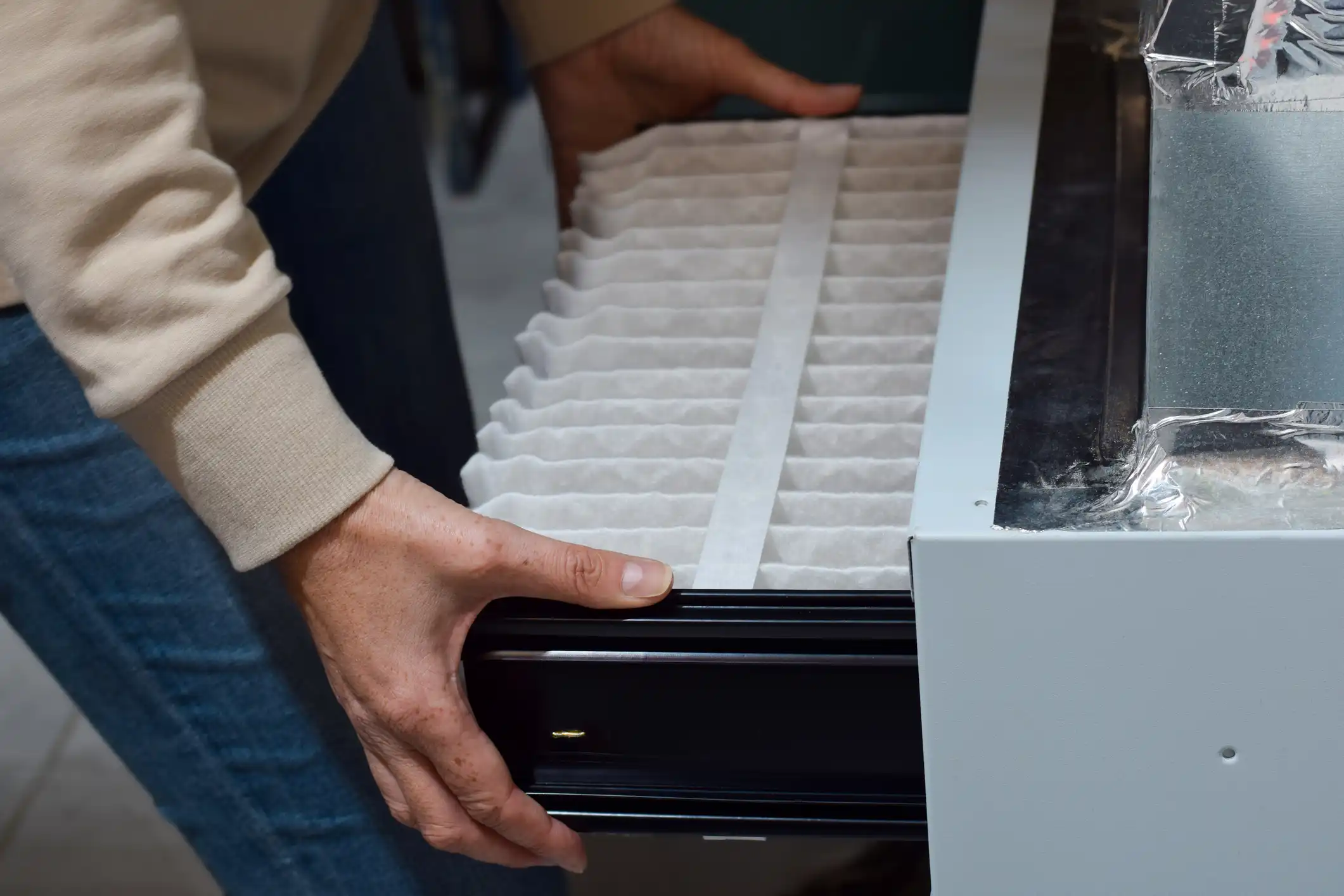
- Filter size and fit: use the correct size and a tight seal to prevent bypass (air flowing around the filter instead of through it). Gaskets or filter brackets help ensure a good seal.
- Whole-home vs portable solutions: whole-home filtration (installed at the return) treats air throughout the house. Portable HEPA units are effective for single rooms (bedrooms, living rooms), especially during renovation or when a central system cannot support HEPA.
- Ductwork condition: leaky or dirty ducts undermine filtration performance. Sealing and cleaning ducts may be necessary for the best results in older Davenport homes.
- Pre-filters: using a lower-MERV pre-filter ahead of a high-MERV or HEPA stage extends life and protects expensive media from rapid loading.
Routine maintenance and filter replacement schedules
- Inspect filters monthly. In Davenport’s humid and pollen-heavy climate, filters can load faster, especially during spring and summer pollen peaks or after storms.
- Typical replacement guidance (adjust based on inspection and manufacturer):
- Fiberglass: every 1 month
- Standard pleated (MERV 6-8): every 1-3 months
- Higher-MERV pleated (MERV 9-13): every 3-6 months
- Activated carbon: 3-6 months depending on odor and VOC levels
- HEPA/whole-home media: 6-12 months or per manufacturer for whole-home installations; portable HEPA unit pre-filters and HEPA cartridges vary—inspect and replace per device instructions
- Clean return grilles and registers when changing filters to avoid immediate reloading.
- Schedule an annual HVAC inspection to verify blower performance, duct integrity, and that the filtration system remains properly installed and effective.
Choosing the right filtration for your Davenport home
Consider these factors when selecting a system:
- Household health needs: for allergy or asthma sufferers or immune-compromised residents, aim for MERV 13 or supplemental HEPA in occupied rooms.
- Pets and activities: homes with multiple pets or heavy cooking may benefit from upgraded pleated filters plus activated carbon for odors.
- HVAC capability: check your system’s specifications; higher MERV filters often require a compatible blower or a dedicated whole-home filtration module.
- Budget and maintenance willingness: high-efficiency media and HEPA deliver more protection but require greater initial investment and careful maintenance. Portable HEPA units can be a lower-cost, targeted solution for bedrooms or living rooms.
- Moisture risk: because Davenport’s humidity increases mold risk, pair filtration with humidity control (dehumidification, proper ventilation, prompt water intrusion repairs). Filtration removes spores and particles but will not stop mold growth caused by excess moisture.
Typical problems and solutions
- Problem: Rapid filter clogging during pollen season. Solution: switch to a larger-capacity pleated filter or add a pre-filter; inspect more frequently during peak pollen months.
- Problem: Reduced airflow after upgrading to a higher-MERV filter. Solution: verify blower capacity, add a compatible whole-home filtration unit, or use staged filtration (pre-filter + main filter) to balance capture and airflow.
- Problem: Persistent odors despite particulate filtration. Solution: incorporate activated carbon or VOC-specific media designed for odor adsorption.
Benefits of timely filtration upgrades and maintenance
- Better symptom control for allergy and asthma sufferers by reducing airborne allergens
- Cleaner HVAC components, potentially lowering repair frequency and maintaining efficiency
- Reduced indoor dust and odors, creating a more comfortable living environment in Davenport’s humid climate
- Flexibility: targeted portable units plus a central upgrade can address both immediate and whole-home IAQ needs

Customer Testimonials
Discover why our customers love us through their heartfelt testimonials.

Stephen J.
Great company all the way around! I have been using these guys for about 15 years now and have nothing but good things to say about them. They just installed a new unit in my house and I was very pleased with the price and the quality of work. Give them a call you will not regret it!!
Andrea R.
This is one of the most professional companies I have dealt with in a long time. They keep their appointments and communicate any delays asap. Service is top notch! I would recommend them to anyone!
Lisa R.
I’ve never had a business promise, something and then fulfill it until Newbern Air Conditioning. I needed a new air handler, I was quoted a price, And they told me they would wait on me to let them know when I could do it. They also told me when they ordered it. They would install it the day after it came in and they did just that. They are dependable and trustworthy.
Garrett L.
Great folks! They installed a couple units for me almost 2 years ago. One unit started blowing warm air, so I called in a repair around 9:00 a.m. They repaired a poorly seated compression fitting and had it going by 2:30 p.m. the same day under warranty. That says a lot about their work ethics and willingness to stand behind their work.
Matthew M.
Great company i would give more than five stars if it gave me the option, Christopher is a great guy and helped me out alot and works with you. 100 percent beat pricing and work around, if you need any a/c needs come to this place. I appreciate it so much
Kimberly G.
This is your AC company! Any problem we have ever had they have been fast and so professional. New unit was installed today and his crew was amazing and polite just like him! If I could give 10 stars I would! Thank you!!!
Service Areas
Not sure if we cover your neighborhood? Give us a quick call we’ll let you know in seconds.