Home Air Filtration in Poinciana, FL
IAQ Home Air Filtration in Poinciana, FL
Indoor air quality matters in Poinciana, FL. High humidity, year-round pollen, seasonal storm debris, and homes near wetlands increase airborne particulates, mold spores, and allergens. A properly designed whole-home IAQ (indoor air quality) filtration system removes those particulates before they circulate through your living spaces, reduces allergy symptoms, and protects HVAC equipment.
Common IAQ Home Air Filtration issues in Poinciana, FL
Homes in Poinciana frequently face these problems:
- Persistent allergy symptoms indoors during pollen peaks.
- Visible dust buildup on surfaces and in returns.
- Musty odors or intermittent mold growth caused by high humidity.
- Reduced HVAC performance after storms due to outdoor debris and particulates.
- Using the wrong filter type or size causing increased energy use or poor filtration.
Understanding the root cause helps determine whether whole-home filtration, combined with humidity control and duct sealing, is the right solution.
How whole-home filtration works
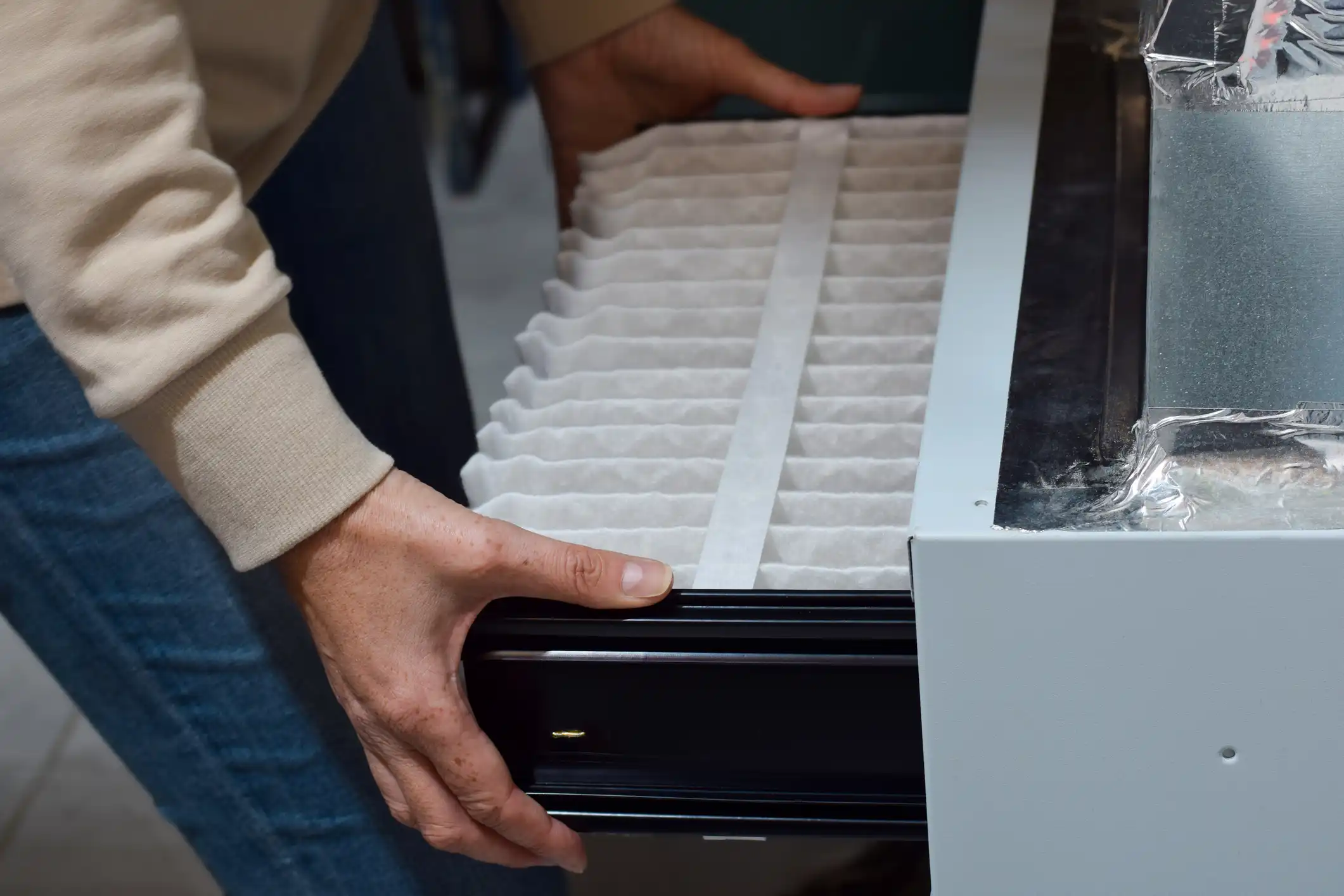
Whole-home filtration integrates a filter bank into your existing HVAC system so all circulated air passes through the filter(s). Key points:
- Filtration happens at the return air or in a dedicated filter cabinet near the air handler.
- Filters capture particulates by mechanical trapping (pleated media), electrostatic attraction, or a combination.
- More advanced systems combine filtration with other IAQ technologies like UV lights (for microbes) or electronic air cleaners.
Whole-home systems reduce airborne particulates consistently across the house - unlike portable room units that only protect one space at a time.
Filter types and MERV ratings explained
Choosing the right filter type and MERV rating is critical. MERV (Minimum Efficiency Reporting Value) indicates how effectively a filter captures particles sized 0.3 to 10 microns.
- MERV 6-8: Basic protection against dust and pollen. Common for older systems and where airflow preservation is critical.
- MERV 9-11: Better for allergy relief and finer particles like mold spores and pet dander - a common sweet spot for residential homes.
- MERV 12-13: High residential-level filtration that approaches hospital-type capture for smaller particles. Requires HVAC compatibility due to higher resistance.
- HEPA: Exceptional filtration but usually requires a purpose-built blower or bypass setup because standard residential air handlers can struggle with the added pressure drop.
Filter media options:
- Pleated disposable filters - widely used, balance performance and cost.
- Extended surface filters - larger media area lowers pressure drop while increasing capture.
- Electrostatic filters - attract particles electrically; performance varies by product.
- Electronic or electronic precipitators - high capture but require maintenance and careful installation.
Assessment and installation process
A professional assessment ensures the system will perform without harming HVAC operation. Typical steps:
- Initial IAQ consultation - review symptoms, occupancy, pets, smoking, and local exposure (near wetlands or busy roads).
- System compatibility check - measure filter slot size, blower capacity, and static pressure tolerance.
- Duct inspection - locate leaks and bypass paths that reduce filtration effectiveness.
- Product selection - pick filters or whole-house units that meet filtration goals and match the system.
- Installation - seal filter housing, install proper sized media, and ensure no bypass gaps.
- Verification - check HVAC static pressure and airflow after installation to confirm acceptable performance.
Maintenance and replacement schedules
Replacement frequency depends on filter type, occupancy, outdoor conditions, and season:
- Basic pleated MERV 8: check every 1-3 months in Poinciana; replace at least every 3 months during high pollen or post-storm periods.
- MERV 9-11 extended surface: often 3-6 months; inspect sooner if allergy symptoms return.
- MERV 12-13 or HEPA (if installed with proper bypass equipment): inspect every 2-4 months; replace per manufacturer guidance.
- Electronic cleaners and UV lights: periodic cleaning and annual inspection recommended.
Factors that shorten intervals: pets, multiple occupants, active smokers, remodeling, and hurricane season debris. Consistent maintenance preserves airflow, prolongs equipment life, and maintains filtration performance.
Energy implications and system compatibility
Higher MERV ratings capture smaller particles but usually increase airflow resistance. Considerations:
- Increased pressure drop can raise blower energy consumption and reduce airflow to conditioned spaces.
- Modern variable-speed air handlers can often compensate better than older single-speed systems.
- Extended surface filters and properly sized filter cabinets reduce pressure issues by increasing media area.
- If MERV 12-13 or HEPA-level filtration is required, a professional may recommend upgrades to the blower or a dedicated in-line filtration module to avoid compromising HVAC performance.
A balanced design optimizes filtration effectiveness while protecting comfort and energy efficiency.
Expected improvements and measurable benefits
With an appropriately designed whole-home filtration system you can expect:
- Noticeable reduction in airborne dust and surface dust accumulation.
- Fewer allergy symptoms and reduced reliance on point-of-use air cleaners.
- Lower airborne mold spore counts when combined with humidity control.
- Cleaner HVAC components - reduced coil and blower contamination - which supports system efficiency and longevity.
- More consistent indoor air throughout the home compared to single-room purifiers.
Results vary by baseline IAQ, occupancy, and maintenance diligence. In Poinciana, addressing filtration together with humidity control often yields the best outcomes because high humidity promotes biological contaminants.
Practical tips for Poinciana homeowners
- Choose a filter rating that matches your HVAC capability and your health priorities - MERV 9-11 often balances performance and airflow for many homes.
- Inspect filters monthly during spring pollen season and after storms; replace as soon as visible dust accumulation or increased HVAC run times appear.
- Pair filtration with humidity control - aim for indoor relative humidity below 55 percent to reduce mold growth.
- Ensure filter housings are sealed - air bypasses render even the best filter ineffective.
- Include duct inspection in annual IAQ checkups, especially after hurricane season.
A properly specified and maintained whole-home IAQ filtration system provides durable relief from pollen, dust, and biological particles common in Poinciana homes while protecting your HVAC investment and improving overall comfort.

Customer Testimonials

Service Areas