Home Air Filtration in Eagle Lake, FL
IAQ Home Air Filtration in Eagle Lake, FL
Ensuring healthy indoor air is a top priority for Eagle Lake, FL homeowners. With a warm, humid climate, seasonal pollen, and occasional storm-driven dust and debris, effective home air filtration reduces dust, allergens, mold spores, and other pollutants that accumulate in living spaces.
Why IAQ home air filtration matters in Eagle Lake, FL
Eagle Lake’s humidity encourages indoor mold growth and makes particulate matter stickier and more persistent. Spring and early summer bring higher pollen counts across Polk County, while hurricane season and windy storms can introduce outdoor dust and debris into homes. Lakefront properties additionally contend with moisture-driven odors and organic particulates. A properly designed IAQ home air filtration solution:
- Reduces airborne allergens like pollen, dust mite debris, and pet dander
- Lowers household dust accumulation on surfaces
- Reduces mold spores and some biological contaminants when combined with humidity control
- Improves comfort and perceived freshness, especially for allergy sufferers and respiratory conditions
Common IAQ home air filtration issues in Eagle Lake, FL homes
Homeowners often encounter the same IAQ problems tied to local conditions:
- Rapid filter clogging during high pollen periods or after storms
- Musty odors from elevated indoor humidity and mold in ductwork
- Reduced HVAC airflow and efficiency when high-efficiency filters are used without system upgrades
- Uneven filtration by room when relying solely on portable units rather than whole-house solutions
- Recurring dust and surface particles indicating poor filtration or unsealed ducts
Filter types and what they do
Understanding filter types helps match filtration to needs. Key options include:
- Standard fiberglass filters: Low cost, basic protection against large dust and debris. Best for basic HVAC protection but poor for allergy control.
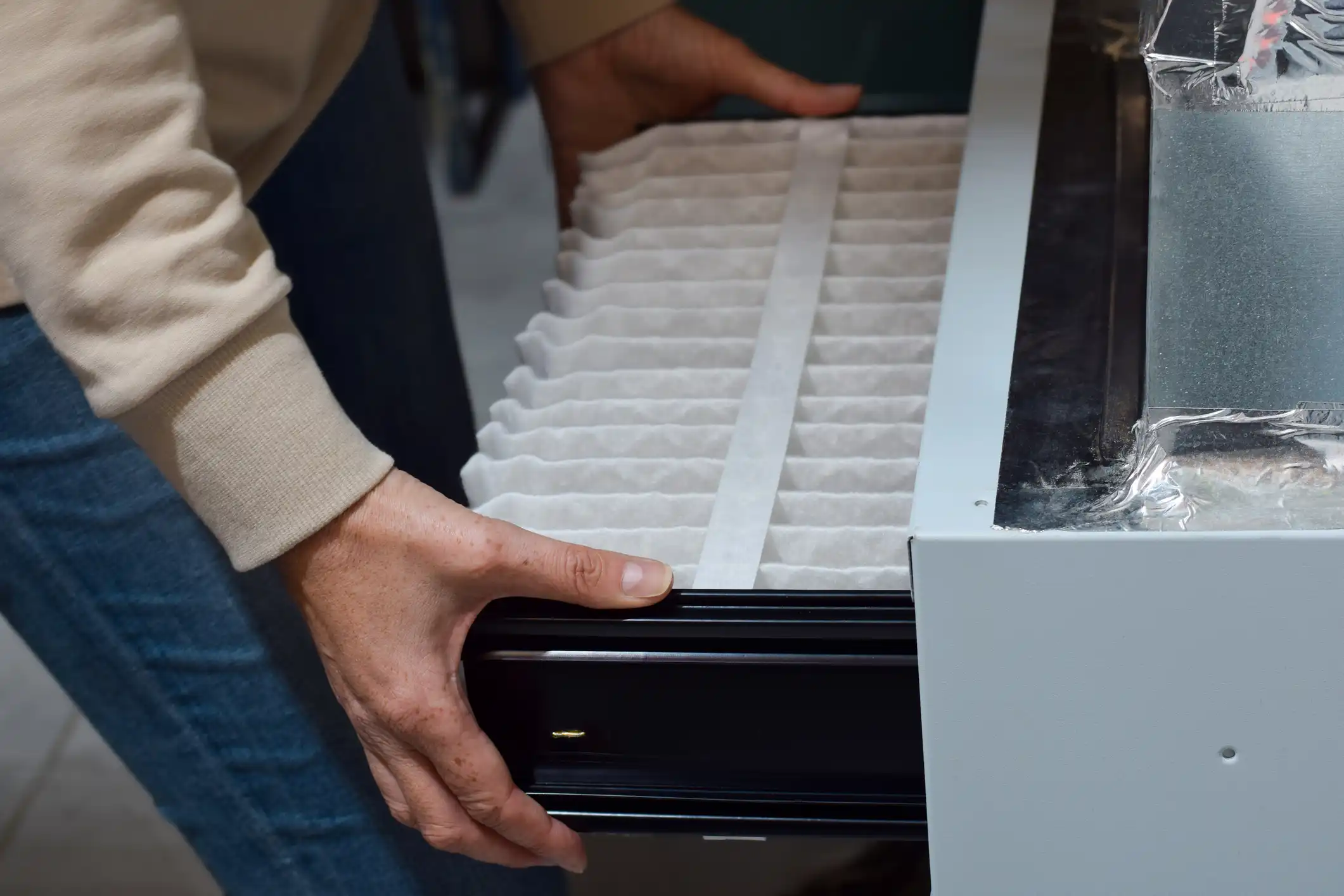
- Pleated filters (rated by MERV): Common whole-house option. MERV ratings indicate particle capture efficiency. MERV 8 is typical for dust and pollen; MERV 11 to MERV 13 captures finer particles and many allergens.
- HEPA filters: True HEPA removes 99.97 percent of particles down to 0.3 microns. HEPA is ideal for allergy or immunocompromised households but is usually installed in standalone units or as part of a modified duct system because most residential HVAC systems cannot handle the added resistance without fan upgrades.
- Electronic and UV options: Electronic air cleaners can capture small particles but require maintenance. UV treatment targets biological growth on coils and drain pans, helping control mold when combined with filtration.
Selection guidelines for Eagle Lake homes:
- For typical allergy relief and pollen control, MERV 11 to MERV 13 whole-house filtration balances performance with HVAC compatibility.
- For severe allergies or medical needs, a HEPA-centric approach-either portable HEPA in key rooms or a professionally adapted whole-house HEPA—delivers the best particle removal.
- Factor in humidity control and duct cleaning in high-moisture homes to reduce mold and musty odors.
Integration with existing HVAC systems
Proper integration is essential. Whole-house IAQ filtration ties into the return side of your central HVAC so the system filters air as it circulates. Key integration considerations:
- System compatibility: High-MERV or HEPA filters increase resistance to airflow (static pressure). HVAC systems not sized for that resistance may lose efficiency or experience reduced airflow.
- Fan capacity and controls: Some upgrades require a variable-speed or higher-capacity blower to maintain airflow with denser filters.
- Duct sealing and return placement: Sealing leaks and ensuring appropriately located returns maximizes filtration effectiveness and prevents unfiltered air infiltration.
- Supplemental options: Standalone HEPA units for bedrooms or living areas can supplement whole-house filtration without altering HVAC airflow.
Diagnostic and installation process
A typical professional approach for IAQ home air filtration in Eagle Lake, FL includes these steps:
- On-site assessment: Inspect HVAC equipment, ductwork, return locations, and current filter practices. Check for visible mold, moisture issues, and airflow problems.
- Airflow and static pressure testing: Measure current performance to determine whether higher-efficiency filters are feasible without system modification.
- Filter selection: Recommend a solution tailored to home size, occupant needs, and local allergen patterns (e.g., MERV 11-13 or a HEPA option).
- Ductwork and humidity review: Identify sealing, insulation, or dehumidification needs that affect long-term IAQ.
- Installation: Install whole-house filter cabinet or upgraded filter media, or place standalone HEPA units as specified. Adjust blower or controls if necessary.
- Post-install testing: Verify airflow, static pressure, and system operation to confirm expected performance.
Recommended installation and replacement schedules
Filter life depends on type, household activity, and local conditions:
- Standard fiberglass: Replace every 30 days for protection but performance is limited.
- Pleated (MERV 8-11): Replace every 90 days; check monthly during high pollen or storms.
- Higher-efficiency pleated (MERV 11-13): Replace every 60 to 90 days; check more often if pets or heavy pollen.
- HEPA filters (standalone units): Replace according to manufacturer guidance, usually 6 to 12 months for pre-filters and 12 to 24 months for HEPA elements depending on usage.
- Electronic cleaner cells: Clean per manufacturer schedule, often monthly for high-use homes.
In Eagle Lake, expect filter changes to be needed more frequently during peak pollen season and after significant storms. Homes with pets, smokers, or renovation work will require closer attention.
Maintenance tips for durable IAQ results
Simple maintenance maximizes system life and air quality:
- Check and replace filters on schedule; inspect monthly during allergy season.
- Keep returns and vents free from blockage and dust buildup.
- Control indoor humidity to 40 to 50 percent where possible to limit mold growth.
- Clean or service electronic air cleaner cells and UV lamps as required.
- Schedule duct inspections and cleaning if there is visible mold, pest activity, or persistent dust.
- Consider portable HEPA units in bedrooms during spring pollen peaks for targeted relief.
Expected performance and benefits
A correctly specified and installed IAQ home air filtration system in Eagle Lake, FL can:
- Significantly reduce airborne pollen, dust, and pet dander exposure
- Lower visible household dust and the frequency of surface cleaning
- Reduce airborne mold spores when paired with humidity control and duct maintenance
- Improve overall comfort and sleep quality for allergy sufferers
- Help HVAC equipment run cleaner, potentially extending service intervals
True HEPA solutions remove the smallest particles, including many fine smoke and PM2.5 particles. MERV 11 to MERV 13 whole-house filters deliver strong allergen control with fewer system modifications than HEPA.
Typical next steps for homeowners
The typical homeowner path to better indoor air quality is straightforward: arrange an on-site assessment to evaluate HVAC compatibility and indoor conditions, choose the filtration approach that matches health needs and system capacity, and proceed with professional installation followed by verification testing and a maintenance schedule. Properly matched filtration, combined with humidity management and periodic duct care, yields the best long-term indoor air quality results for Eagle Lake homes.

Customer Testimonials

Service Areas