Air Quality Testing in Sebring, FL
IAQ Air Quality Testing in Sebring, FL
Indoor air quality testing in Sebring, FL is an important step when you want clear, actionable information about contaminants, moisture problems, and ventilation performance inside your home or business. Sebring’s hot, humid climate, proximity to lakes, and seasonal pollen patterns can increase the risk of mold growth, elevated humidity, and particle infiltration. Professional IAQ testing identifies the specific pollutants present, quantifies exposure levels, and guides targeted improvements so you can reduce health risks and protect property.
.jpeg)
Common IAQ issues in Sebring, FL homes
- High indoor humidity and mold growth: Sebring’s humid subtropical climate and frequent summer storms increase indoor relative humidity. Crawlspaces, poorly insulated attics, and past water intrusion are common contributors to mold and mildew.
- Particulate pollution and dust: Rural roads, nearby agricultural activity, and track events at local facilities can elevate dust and coarse particles that enter homes through doors, windows, and HVAC systems.
- Seasonal pollen and allergens: Spring and fall bring high pollen counts that can penetrate building envelopes and accumulate in HVAC filters and carpets.
- Volatile organic compounds (VOCs): New furniture, household cleaners, paints, and stored gasoline or pesticides can emit VOCs that affect indoor air quality, particularly in tightly sealed homes with limited ventilation.
- Poor ventilation and elevated CO2: Older or tightly sealed homes may have inadequate fresh air exchange, leading to stale air, higher CO2 levels, and accumulation of indoor-generated pollutants.
- Post-storm water damage concerns: After hurricanes or heavy rains, hidden moisture in walls, attics, and crawlspaces can lead to mold and structural damage if not identified and remediated promptly.
How IAQ testing works
IAQ testing is a systematic process that combines visual inspection, targeted sampling, and real-time monitoring to provide a full picture of indoor air conditions. Testing is tailored to the specific concerns of the property and occupants.
Initial walkthrough and visual inspection
A technician inspects the building for visible signs of moisture, mold, HVAC problems, ventilation paths, and potential pollutant sources. This informs the types and locations of samples to collect.
Sampling methods
- Air sampling (active and passive): Active air sampling uses pumps and collection media to capture particles, mold spores, and VOCs over a set time. Passive samplers collect gases or VOCs over longer periods without a pump.
- Particle counts and real-time monitoring: Portable instruments measure PM2.5 and PM10 concentrations to reveal short-term or intermittent sources like cooking or smoking.
- Surface and dust sampling: Wipe or vacuum dust samples identify settled allergens, lead dust, and accumulated mold spores; useful where surface contamination is suspected.
- Mold spore analysis: Spore trap sampling (non-viable) provides a profile of airborne mold types and concentrations; culture-based testing (viable) can show which molds are alive and growing.
- VOC and formaldehyde testing: Specific collection methods and lab analysis determine concentrations of total VOCs and key compounds like formaldehyde.
- Humidity, temperature, and CO2 logging: Data loggers record relative humidity and temperature over time; elevated RH (commonly above 60%) suggests conditions favorable for mold. CO2 levels indicate ventilation effectiveness.
- HVAC and duct testing: Inspections and sampling in ducts and at system components evaluate filter performance and potential microbial growth within the system.
Lab analysis and quality control
Samples are analyzed by accredited laboratories. Results include quantitative readings (e.g., particle counts, VOC concentrations, spore counts) and, when appropriate, identification of species or compounds. Repeat samples or side-by-side outdoor comparisons are used to distinguish indoor sources from outdoor background.
Interpreting your IAQ results
Test reports translate raw data into understandable findings and prioritize risks.
- Benchmarking against guidelines: Results are compared to established guidance from agencies like EPA, WHO, and industry standards for ventilation and particulate levels. For example, elevated PM2.5 or CO2 readings indicate poor air quality or ventilation that should be addressed.
- Identifying source vs infiltration: Comparing indoor and outdoor samples helps determine if contaminants originate inside (off-gassing, cleaning products, mold) or are infiltrating from outside (pollen, dust).
- Health-risk prioritization: The report highlights issues most likely to affect occupant health—mold and moisture, combustion gases, very high particulate or VOC levels—and ranks recommended actions.
- Actionable findings: Clear, step-by-step recommendations are provided for remediation, filtration upgrades, and changes in occupant behavior to reduce exposures.
Recommended improvements and remediation
Based on test results, common and effective remedies for Sebring homes include:
- Moisture control and mold remediation
- Repair leaks and water intrusion promptly.
- Dry and replace water-damaged materials; use professionals for concealed mold in walls, attics, or crawlspaces.
- Improve drainage and landscape grading to keep groundwater away from foundations.
- Ventilation and HVAC solutions
- Increase outdoor air exchange through balanced ventilation or properly sized exhaust fans in kitchens and bathrooms.
- Maintain HVAC systems: change filters regularly, verify condensate drain operation, and inspect coils and drip pans for microbial growth.
- Upgrade filters to high-efficiency MERV-rated filters and add point-of-use HEPA filtration where needed.
- Filtration and VOC reduction
- Install portable HEPA air cleaners in rooms with high particulate loads or allergies.
- Use activated carbon filtration for homes with VOC or odor issues. Source control-storing chemicals outside living areas and using low-VOC products—reduces long-term exposure.
- Humidity control
- In Sebring’s humid climate, dehumidifiers and properly sized air conditioning systems help maintain indoor relative humidity below mold-favoring thresholds.
- Seal and insulate ductwork and crawlspace vapor barriers to reduce moisture ingress.
- Targeted cleaning
- HEPA-vacuum carpets and upholstered furniture to remove settled allergens and dust.
- Clean and replace HVAC filters and consider a professional duct inspection if contamination is suspected.
Follow-up testing and long-term IAQ management
After remediation, follow-up testing confirms that interventions worked. Ongoing strategies keep indoor air healthy:
- Periodic IAQ checks, especially after storms or renovation work.
- Continuous or spot monitoring for humidity, CO2, and particulates to catch problems early.
- Seasonal maintenance of HVAC and dehumidification equipment before high-humidity months.
- Implementing source control practices-use of low-VOC materials, proper storage, and good housekeeping.

Customer Testimonials

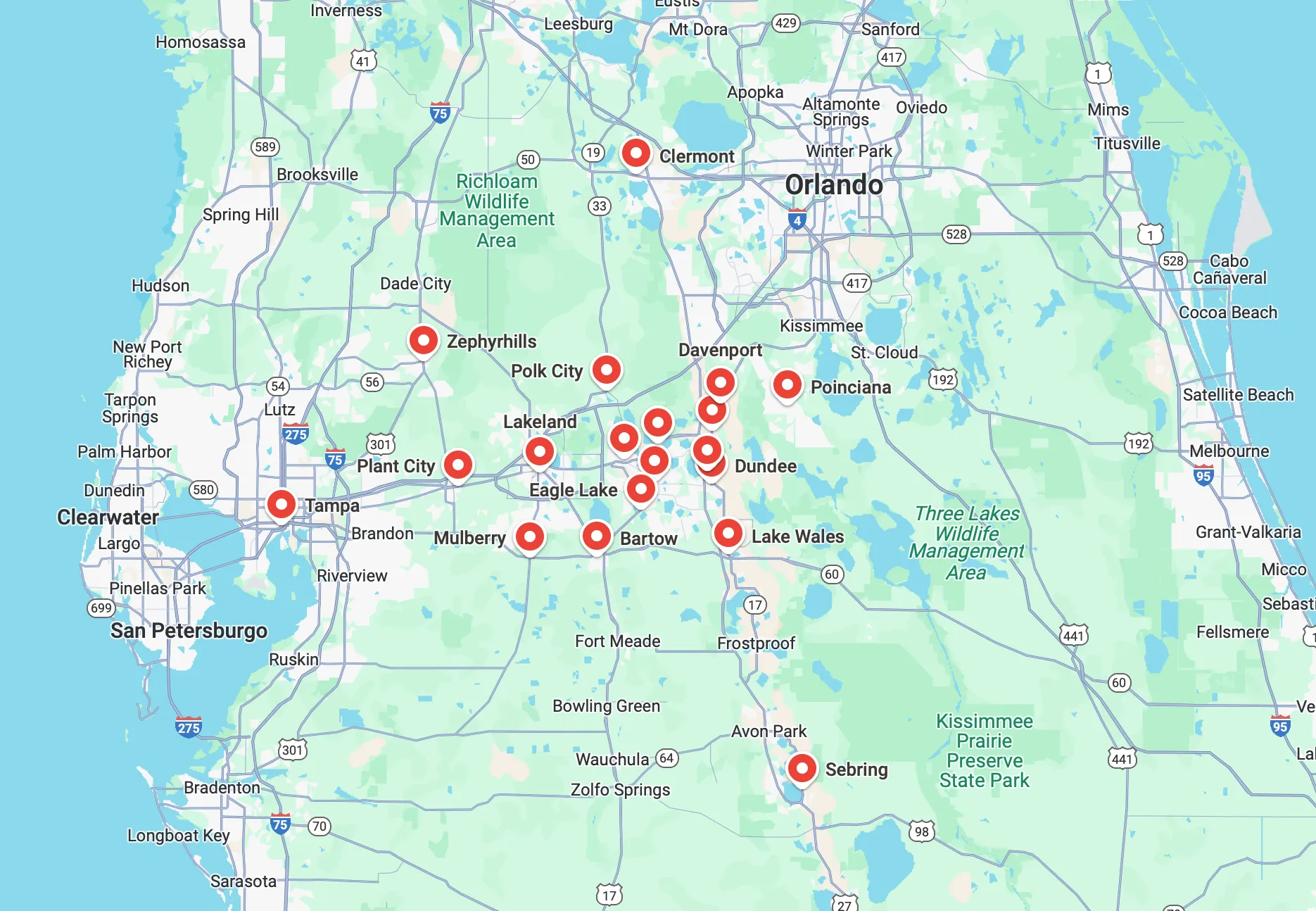
Service Areas