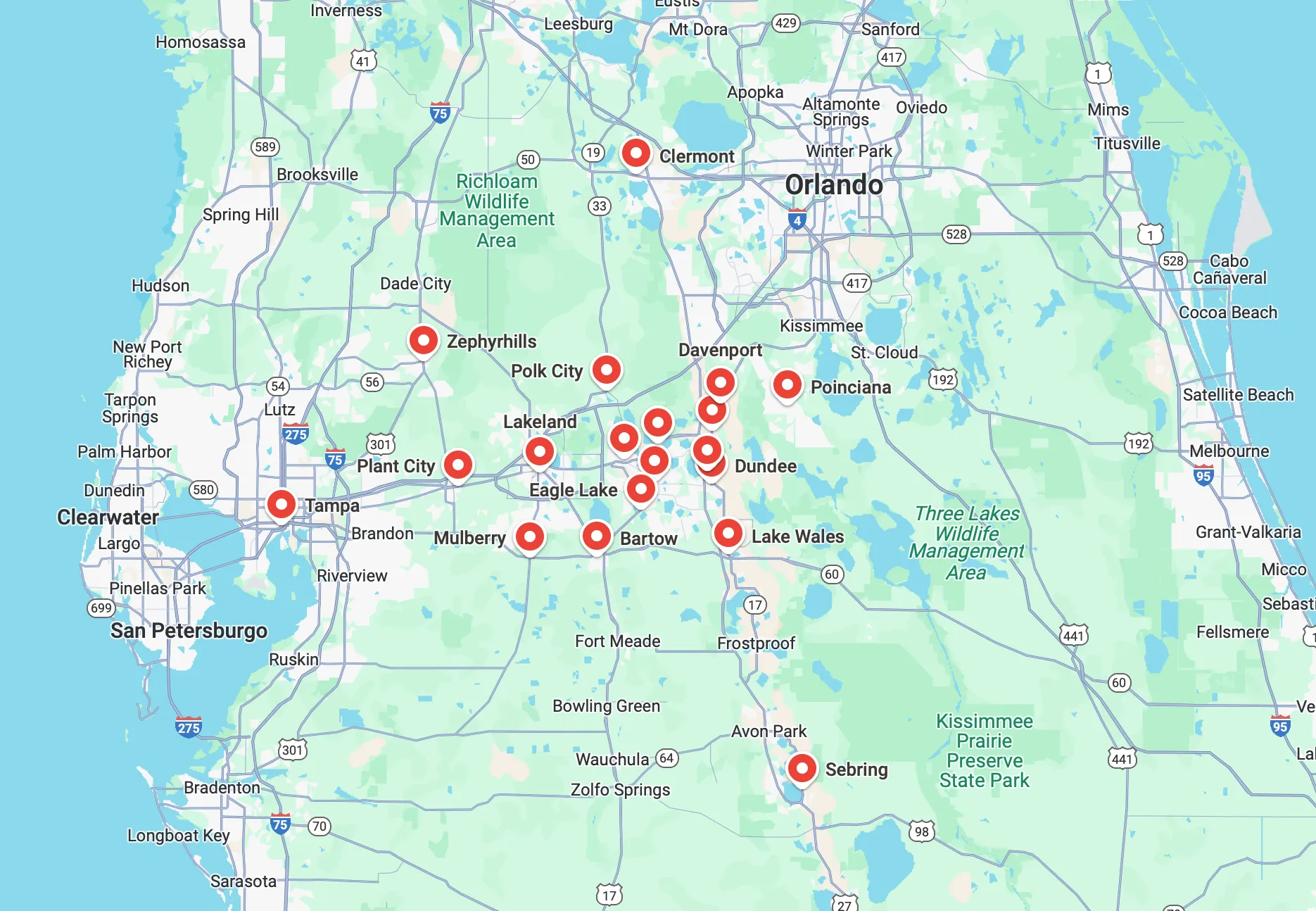
Air Quality Testing in Mulberry, FL
IAQ Air Quality Testing in Mulberry, FL
Indoor air quality testing in Mulberry, FL identifies hidden threats and gives you a clear, actionable path to healthier, more comfortable homes. In a warm, humid region like Mulberry - with high year-round humidity, seasonal pollen, and nearby industrial and agricultural activity - common indoor pollutants such as fine particulate matter, volatile organic compounds, elevated CO2, and excess humidity can affect sleep, allergies, asthma, and long-term building durability.
.webp)
Why test indoor air in Mulberry homes?
Mulberry’s climate and local industries influence indoor air:
- High humidity encourages mold growth in attics, crawlspaces, and behind drywall.
- Pollen and outdoor dust can infiltrate through windows and ducts during spring and summer.
- Local road dust, agricultural activities, and phosphate-related industries can increase fine particulate infiltration in some neighborhoods.
- New building materials, cleaning products, and furnishings emit VOCs that raise indoor chemical levels.
Testing establishes a baseline, detects specific pollutants, and helps prioritize fixes that make the biggest difference for health and comfort.
What pollutants are measured
IAQ Air Quality Testing in Mulberry, FL commonly includes measurement of:
- PM2.5 (fine particulate matter): Small particles that penetrate deep into lungs. Measured with optical particle counters to assess indoor exposure and infiltration from outdoors.
- VOCs (volatile organic compounds): Total VOCs plus targeted screening for common indoor chemicals (formaldehyde, benzene, toluene, etc.) using PID meters or sorbent tubes analyzed in a lab.
- CO2 (carbon dioxide): Measured with NDIR sensors as a proxy for ventilation adequacy and occupancy-related buildup. Elevated CO2 often signals insufficient fresh-air exchange.
- Relative humidity and temperature: Continuous thermo hygrometers record conditions that influence mold growth, dust mite populations, and occupant comfort.
Optional or complementary tests can include surface or air sampling for mold, lead or asbestos screening in older homes, and formaldehyde testing after renovations.
Common IAQ issues in Mulberry homes
- Persistent musty odors and visible mold after high-humidity months
- Worsening allergies or asthma during pollen season or after renovations
- Dust accumulation tied to nearby roads or industrial activity
- Stale indoor air or headaches indicating poor ventilation
- VOC spikes after new furniture, paints, or cleaning product use
How testing is performed - step by step
- Initial walk-through and intake
Discuss symptoms, recent changes (renovation, new furniture, water intrusion), HVAC type, and problem locations to tailor the testing plan. - Baseline monitoring and targeted sampling
Place monitors (PM2.5 counters, CO2 sensors, thermohygrometers) in key rooms - typically bedrooms, living areas, and near the HVAC return. Collect VOC samples using handheld PID meters and/or passive sorbent tubes for lab analysis if needed. - Event-based or continuous logging
Continuous monitoring over 24–72 hours captures occupancy patterns, cooking events, humidity cycles, and outdoor influence. Shorter grab samples may be used for quick screening. - Optional surface or mold testing
If humidity or visual mold is present, surface swabs or spore trap air samples can determine fungal species and concentration. - Data analysis and reporting
Compare results to established indoor guidelines and health-based benchmarks (EPA outdoor references, ASHRAE ventilation guidance, and industry best practices). Provide a clear, written report with concentrations, explanatory graphs, and prioritized recommendations.
Interpreting results - what the numbers mean
- PM2.5: Indoor readings below 12 µg/m3 align with tight outdoor air quality standards; persistent indoor spikes above 25–35 µg/m3 indicate sources or infiltration that need addressing.
- VOCs: TVOC levels are often presented as ranges; acute irritation commonly occurs with higher spikes. Detection of specific compounds (formaldehyde above ~0.1 ppm, benzene detectable) requires targeted mitigation.
- CO2: Levels below 800–1,000 ppm typically indicate acceptable ventilation for residential settings. Sustained values above 1,200 ppm suggest poor fresh-air exchange.
- Relative humidity: Ideal indoor humidity is 30–50%. In Mulberry, consistency below 60% is critical to discourage mold; sustained RH above 60% needs dehumidification strategies.
Reports explain health and building risks associated with each result and rank fixes by impact and cost-effectiveness.
Recommended improvements based on test findings
- Filtration upgrades
- Use HVAC filters with a minimum MERV 13 for homes with forced-air systems to reduce PM2.5 and larger allergens.
- Add portable HEPA air purifiers in bedrooms and living spaces for targeted removal of fine particles.
- Install activated carbon or VOC-specific filters for homes with elevated chemical odors or renovation off-gassing.
- Ventilation and air exchange
- Increase controlled ventilation rates to reduce CO2 and dilute VOCs. In hot, humid climates, consider balanced ventilation systems with sensible heat or energy recovery to limit moisture intrusion while improving air change.
- Ensure exhaust fans in kitchens and bathrooms are properly sized and vented outdoors, not to attics.
- Humidity control
- Deploy whole-house dehumidifiers or high-capacity portable units to maintain RH below 60% year-round.
- Seal and insulate attics and crawlspaces, improve drainage, and ventilate conditioned spaces to prevent moisture accumulation that feeds mold.
- Source control
- Replace or seal high-emitting materials (old carpet padding, pressed wood products). Opt for low-VOC paints and finishes.
- Store chemicals and solvents in ventilated, sealed areas outside living spaces.
- HVAC and building envelope
- Perform duct cleaning if ducts are dusty or show biological growth; seal and insulate ducts to prevent infiltration.
- Add UV-C or photocatalytic options in HVAC for biological control where mold or microbial growth is confirmed.
- Improve window and door seals to reduce pollen and dust ingress.
When to test (timing and triggers)
- After persistent allergy or respiratory symptoms with no clear source
- Following water intrusion, flooding, or repeated AC/duct issues
- After renovations, new furniture, or installation of composite materials
- Before and after installing major IAQ improvements to verify effectiveness
- Seasonally: during high pollen months and the humid summer season in Mulberry
Benefits of professional IAQ testing in Mulberry, FL
- Objective data that separates perception from measurable problems
- Targeted solutions that avoid unnecessary work and expense
- Improved health outcomes: reduced allergy and asthma triggers, better sleep and comfort
- Protection of home value by addressing moisture and mold risks before they damage structure
- Peace of mind knowing remediation is based on measured conditions and not guesswork
Testing residential indoor air in Mulberry provides the clarity needed to make informed, effective improvements. With focused measurement of PM2.5, VOCs, CO2, and humidity, you can prioritize filtration upgrades, humidity control, and ventilation changes that directly address the factors most relevant to homes in this climate and community.

Customer Testimonials

Service Areas