Heating Repair in Zephyrhills, FL
Heating Heating Repair in Zephyrhills, FL
Keeping your home comfortable during the occasional cool nights and cold fronts in Zephyrhills, FL means having a heating system that starts reliably and runs efficiently. Whether your home uses a furnace, heat pump, or packaged system, professional heating repair in Zephyrhills, FL focuses on fast, accurate diagnostics, quality parts sourcing, safe repairs, and guidance to prevent repeat failures.
Why heating repair matters in Zephyrhills homes
Zephyrhills sits in a humid subtropical climate where winters are usually mild but can include sudden cold snaps. Many local homes rely on heat pumps for year-round comfort, so heating problems often become urgent when overnight temperatures drop. Additionally, humidity, pollen, and periodic storms can accelerate wear on outdoor components, making timely repair and maintenance a priority for safety, comfort, and energy efficiency.
Common heating problems in Zephyrhills, FL
- No heat or very little heat - often caused by thermostat issues, low refrigerant (heat pumps), failed ignition or burners (furnaces), or a failed compressor.
- Intermittent heating or short cycling - common with clogged air filters, oversized systems, faulty thermostats, or control board failures.
- Cold air from vents during heating call - typical for heat pump defrost problems, reversing valve faults, or compressor issues.
- Strange noises (banging, squealing, rattling) - could indicate motor bearings, loose components, or airflow obstructions.
- High utility bills with poor output - reduced efficiency from dirty coils, failing capacitors, or failing heat exchangers.
- Odors or soot - possible combustion issues in gas furnaces, which require immediate attention due to safety risks.
- System that won’t start - electrical failures, tripped breakers, or failed safety switches.
Diagnostic approach: what a professional will do
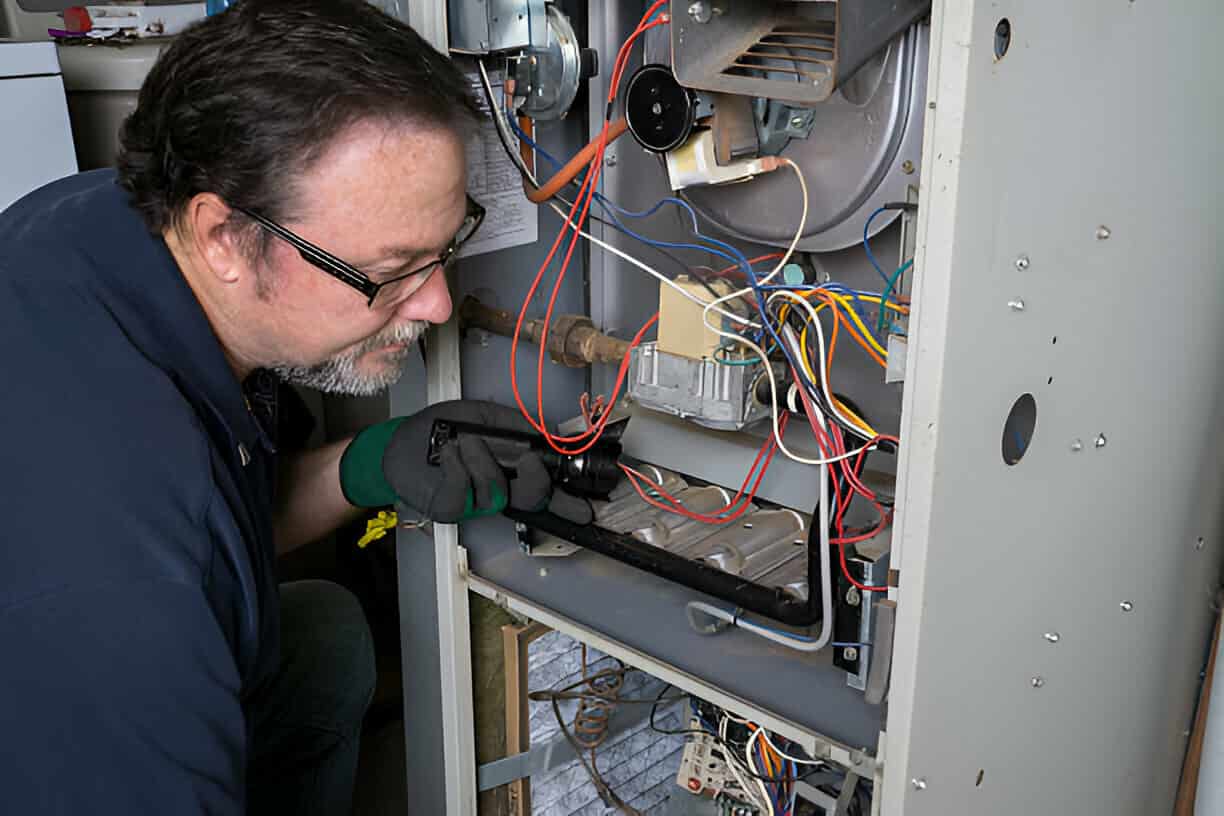
A thorough diagnostic is the first step in effective heating repair in Zephyrhills, FL. Typical diagnostic steps include:
- Visual inspection of indoor and outdoor units for damage, corrosion, or debris.
- Thermostat verification and control system checks.
- Electrical checks (voltage, current, wiring integrity).
- Mechanical inspection of motors, fans, belts, and bearings.
- Refrigerant checks and leak detection for heat pumps.
- Combustion analysis and carbon monoxide check for gas-fired systems.
- Airflow analysis: filter condition, duct leaks, blower performance.Diagnostics typically identify root causes so repairs target the problem rather than applying temporary fixes.
Repair process and parts sourcing
Repairs begin with safety steps: shutting power or fuel sources off, verifying safe conditions, and stabilizing the system. Common repair tasks include:
- Replacing capacitors, contactors, sensors, or igniters.
- Repairing or replacing blower motors, fans, or belts.
- Repairing refrigerant leaks and recharging systems (heat pumps).
- Replacing control boards, relays, or thermostats.
- Cleaning coils, burners, and condensate drains to restore efficiency.Parts sourcing strategy matters for long-term reliability. In Zephyrhills homes, technicians typically weigh OEM parts versus high-quality aftermarket alternatives based on availability, compatibility, and warranty implications. For critical components (compressors, heat exchangers, control boards), OEM or manufacturer-approved parts are often recommended to preserve system performance and warranty coverage.
Expected repair times and cost factors
- Diagnostic appointments: often 30 to 90 minutes depending on system complexity.
- Minor repairs (sensor, filter, capacitor, thermostat): frequently completed in 1 to 3 hours.
- Major component repairs (compressor, heat exchanger, motor replacement): may require several hours to a full day and sometimes off-site parts ordering.
- Repairs requiring special-order parts or permits may extend timelines to multiple days.
Cost is influenced by part type, system age, labor complexity, and whether warranty or manufacturer support applies. In Zephyrhills, seasonal demand during cold snaps can affect parts availability and scheduling. A clear diagnostic report should outline recommended repairs, expected timeline, and warranty coverage for parts and labor.
Emergency response policy
Heating failures that present safety risks or leave residents without heat during cold snaps are treated as high priority. Typical emergency response features include:
- Rapid priority assessment to determine immediate hazards such as gas leaks, carbon monoxide, or electrical risks.
- On-site stabilization measures when a permanent repair cannot be completed safely at once (temporary heaters are not recommended as a permanent solution when combustion issues exist).
- After-hours triage for urgent situations, with technicians following strict safety protocols and local code requirements.
- Transparent notes on whether a full repair can be completed during the emergency visit or if parts must be ordered.
Safety checks for combustion systems, including carbon monoxide testing, are a critical part of any emergency heating repair call.
Repair vs replacement: how to decide
Repair is often the right choice for isolated failures, newer systems, or when a single component fails. Replacement should be considered when:
- The system is approaching or beyond typical service life for its type.
- Repeated failures occur within a short timeframe.
- Repair costs approach the cost of a new, more efficient system.
- Safety-critical components like a cracked heat exchanger are involved.
In Zephyrhills, upgrading to a high-efficiency heat pump can improve comfort during both heating and cooling seasons and reduce overall energy use, particularly as electricity rates and home efficiency become bigger concerns.
Preventive steps to reduce future breakdowns
- Replace or clean air filters every 1 to 3 months during active seasons.
- Schedule annual heating tune-ups before the first cold snap to catch issues early.
- Keep outdoor equipment clear of debris, plants, and standing water to prevent corrosion.
- Seal and insulate ductwork to improve airflow and system efficiency.
- Install and regularly test carbon monoxide detectors for homes with combustion heating.
- Consider thermostat upgrades for better control and efficiency.

Customer Testimonials

Service Areas