Whole House Dehumidification in Haines City, FL
IAQ Whole-House Dehumidification in Haines City, FL
Keeping indoor humidity in check is essential for comfort, durability, and health in Haines City homes. IAq whole-house dehumidification reduces excess moisture throughout your home, preventing musty odors, condensation, and mold growth while improving air conditioner performance.
.jpeg)
Why humidity control matters in Haines City, FL
Haines City is in a humid subtropical climate. Warm temperatures and frequent summer storms mean outdoor relative humidity is often high year round. That moisture easily migrates into homes through gaps, ductwork, and ventilation, causing:
- Persistent condensation on windows, doors, and cold-water pipes
- Musty smells and visible mold on walls, baseboards, and built-in closets
- Sweating or dripping ductwork and insulation damage in attics or crawlspaces
- Increased cooling demand and uneven comfort as AC systems struggle to remove moisture
- Faster deterioration of wood floors, trim, and drywall
Whole-house dehumidification addresses these issues more effectively than portable units by treating the entire conditioned space and working with your existing HVAC system.
Common IAQ whole-house dehumidification issues in Haines City homes
Homeowners in Haines City often report these symptoms that indicate a need for professional IAq whole-house dehumidification:
- Indoor relative humidity routinely above 60 percent
- Mold or mildew in bathrooms, closets, attics, and behind furniture
- Long AC runtimes with little perceived comfort improvement
- Allergies or respiratory irritation that worsens in humid months
- Condensation on windows after cooler nights
- Damp crawlspace or musty basement conditions
Identifying the specific source of moisture is part of the diagnostic process. Local factors like roof leaks after storms, poorly sealed doors, or HVAC duct leaks frequently contribute to high indoor humidity.
How whole-house dehumidification works
Whole-house dehumidifiers remove moisture at the system or duct level so humidity is controlled across every room. Key elements include:
- Dehumidification unit types: Most Florida homes use a refrigerant-based (compressor) whole-house unit installed in the return plenum, utility closet, or next to the air handler. Desiccant systems exist but are less common in warm, humid climates.
- Control and sensing: A dedicated humidistat or whole-home sensor network measures relative humidity and modulates the dehumidifier or HVAC settings to maintain a target range, typically 40 to 50 percent for health and comfort.
- Integration with HVAC: The unit can run independently or work in tandem with a variable-speed air handler. Proper integration minimizes temperature swings while maximizing moisture removal.
- Condensate handling: Condensate drains or pumps remove the collected water. In Haines City, pump options are common when gravity drains are not feasible.
Equipment options and selection criteria
Choosing the right IAQ whole-house dehumidification solution depends on home size, construction, and moisture load. Consider:
- Capacity: Measured in pints or liters per day. A licensed HVAC technician will do a moisture load calculation to size the unit correctly for your Haines City home.
- Ducted vs bypass: Ducted, direct connections to the return plenum provide the most uniform whole-home control. Bypass options are available when space or layout limits full duct integration.
- Variable-speed vs single-speed: Variable-speed compressors and ECM fans adjust output to match humidity needs, using less energy and maintaining more consistent conditions.
- Controls: Look for units with programmable humidistats, whole-home sensors, or smart integration that can schedule dehumidification during off-peak hours.
- Drain options: Gravity drain is preferred where available; sealed condensate pumps are typical in slab homes or attics common in Polk County.
- Filter and coil access: Easy access reduces maintenance time and prevents moisture-related mold growth inside the unit.
Typical installation steps
A professional IAQ installation in Haines City generally follows these steps:
- Home assessment and moisture load calculation, including inspection of attic, crawlspace, and ductwork
- Selecting unit type and sizing based on square footage, local climate data, and occupancy patterns
- Locating the unit (return plenum, garage, or mechanical closet) and planning condensate routing
- Mechanical installation: mounting unit, connecting to HVAC return, extending or modifying ducts as needed
- Plumbing: connecting drain lines or condensate pump to an appropriate disposal point
- Electrical and controls wiring, including humidistat or integrated control setup
- Startup, commissioning, and balancing to verify humidity targets and overall system performance
- Walkthrough with homeowner on system operation and maintenance needs
Maintenance and long-term care
Proper maintenance keeps performance high and prevents problems common in high-humidity areas:
- Check and clean or replace filters every 1 to 3 months depending on use
- Inspect condensate lines and pumps monthly, and clean drain pans annually
- Have a professional service the coils and mechanical components annually before the humid season
- Calibrate humidistats or sensors yearly to ensure accurate control
- Inspect surrounding ductwork and insulation for leaks or wet insulation that can reintroduce moisture
Addressing issues quickly prevents recurring mold and structural damage that are costly to repair in Florida’s climate.
Energy considerations and performance
Whole-house dehumidifiers use electricity, but properly sized modern units with variable-speed technology are energy efficient and can lower overall cooling costs by reducing AC runtime. Key points for Haines City homeowners:
- Maintaining 40 to 50 percent indoor relative humidity improves comfort at higher thermostat settings, which can reduce cooling energy use
- Variable-speed compressors and ECM fans use less power than older single-speed systems
- Proper integration with the air handler avoids short cycling and maximizes moisture removal per kilowatt
- Consider running dehumidification during off-peak hours when electricity rates may be lower, if your system controls allow scheduling
Benefits specific to Haines City homes
Whole-house IAQ dehumidification delivers several location-specific benefits:
- Reduces mold growth risk in Haines City’s humid summers and rainy season
- Protects building materials from moisture-related deterioration common in Florida
- Improves indoor comfort without constantly lowering thermostat setpoints
- Eases allergy and respiratory symptoms that are exacerbated by high indoor humidity
- Preserves the performance and lifetime of HVAC equipment by reducing moisture load
Routine maintenance and correct system selection are the foundation of long-term performance in Polk County climate conditions.
Maintenance checklist summary
- Replace or clean filters every 1 to 3 months
- Inspect condensate lines and pump monthly
- Clean coils and housing annually
- Calibrate sensors yearly
- Check ducts and insulation for moisture intrusion seasonally
Whole-house IAQ dehumidification is a practical, effective solution for Haines City homes dealing with persistent humidity, mold risk, and comfort problems. When sized and installed correctly and maintained on a regular schedule, it protects your home, improves indoor air quality, and reduces strain on your cooling system.

Customer Testimonials

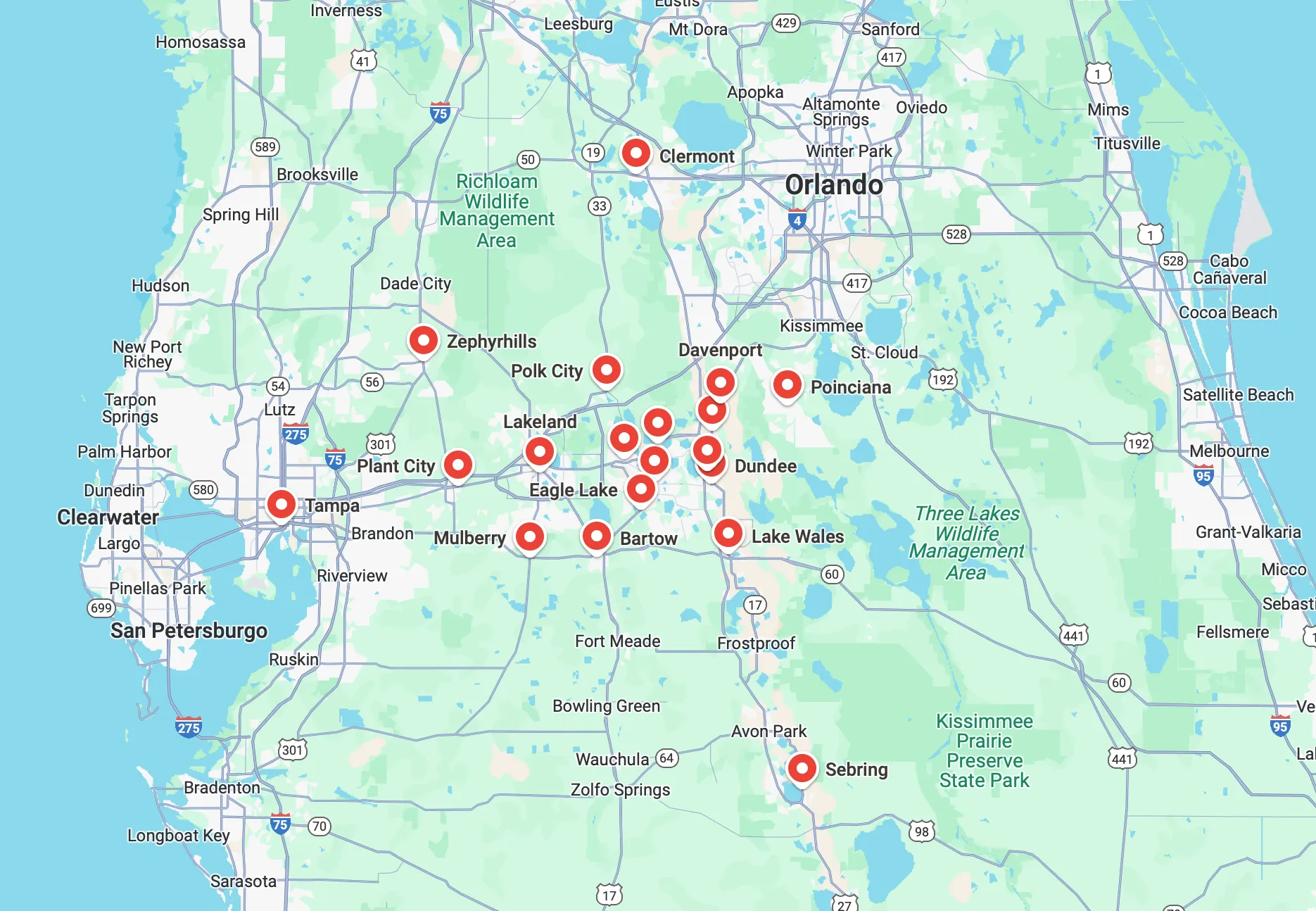
Service Areas