Home Air Filtration in Haines City, FL
IAQ Home Air Filtration in Haines City, FL
Indoor air quality is one of the most overlooked factors in home comfort and health. In Haines City, FL, where high humidity, seasonal pollen, and year-round air conditioning combine to circulate indoor contaminants, a whole-house IAQ home air filtration system reduces dust and allergens at the source and improves breathing comfort for everyone in the household.
.webp)
Common IAQ problems in Haines City homes
- Seasonal pollen and grass allergens during spring and fall that infiltrate homes and recirculate with HVAC operation
- Elevated indoor humidity that encourages mold spores and microbial growth on surfaces and in ducts
- Fine dust and construction debris from local development and landscaping activities
- Odors and VOCs from household products, paints, or nearby agricultural activity
- Persistent dust buildup on surfaces and reduced HVAC efficiency from clogged filters
Types of whole-house filters and media
Choosing the right filter media depends on the contaminants you want to control, your HVAC system capacity, and your family’s health needs.
- Pleated MERV Filters (MERV 8–13)
- Common, cost-effective in-duct option. MERV 8 is good for general dust control. MERV 11–13 is recommended if allergies or asthma are concerns because it captures smaller pollen, dust mite fragments, and some mold spores.
- Low-maintenance but higher-MERV pleats can increase system static pressure if the blower isn’t sized for it.
- Whole-House HEPA Systems
- HEPA captures 99.97% of particles down to 0.3 microns, which removes most fine particulate matter, smoke, and many allergens. Typically installed in a dedicated in-line cabinet with its own fan or as an add-on to systems designed for HEPA integration.
- Requires professional sizing to avoid airflow restriction.
- Activated Carbon/Adsorptive Media
- Targets odors and volatile organic compounds (VOCs). Often combined with particle filters for comprehensive control of smells from cooking, paints, or pool chemicals.
- Electronic Air Cleaners (Ionizers/Electrostatic)
- Actively charge and collect particles on plates that are washable. Effective for many particle sizes; maintenance involves regular cleaning of collector cells.
- UV Germicidal Lamps (complementary)
- Installed near the coil to reduce microbial growth on the evaporator coil and in the drain pan, helping to limit mold spore release into the air. UV is not a particle filter; it complements filtration.
How installation typically works
- On-site assessment: A technician inspects your HVAC equipment, duct layout, and existing air handler capacity, and may perform a basic particle or humidity measurement.
- System selection: Based on assessment and goals (allergy control, odor removal, smoke mitigation), the appropriate media is selected - e.g., high-MERV pleated, HEPA cabinet, or a combined solution with carbon and UV.
- Sizing and compatibility check: Confirm blower capacity and static pressure limits. For HEPA or high-MERV upgrades, evaluate whether a dedicated fan or an upgraded blower is necessary.
- Professional installation: Install a filter cabinet or in-duct housing, mount any electronic or UV devices, seal connections, and wire equipment as required. For electronic cleaners, ensure proper grounding and access for cleaning.
- Commissioning and testing: Measure airflow and system pressure to verify performance and ensure the HVAC system is balanced. Provide documentation of filter type and replacement schedule.
Maintenance and filter replacement schedules
Maintenance frequency depends on filter type, household conditions, and Haines City environmental factors (pollen season, humidity, pets). Typical ranges:
- Standard pleated MERV 8: inspect every 90 days; replace as needed (usually every 90 days)
- MERV 11–13 pleated filters: inspect every 30–60 days during high pollen or dust periods; replace every 3–6 months
- Whole-house HEPA media: professional inspection every 6–12 months; media replacement intervals vary by system and load (commonly 12 months)
- Activated carbon cartridges: replace every 3–6 months for strong odor/VOC environments; longer in low-odor homes
- Electronic air cleaner cells: clean monthly or as recommended; replace collector cells per manufacturer (often annually)
- UV lamps: replace annually to maintain germicidal output
- Duct and coil cleaning: inspect annually; clean when visible microbial growth or heavy dust accumulation exists
Tip: After heavy pollen events or home construction, check filters sooner - increased loading reduces effectiveness and increases strain on HVAC equipment.
Expected indoor air quality improvements
- Noticeably less settled dust on surfaces and fewer dusting cycles required
- Reduced visible and airborne pollen entering living spaces, helping reduce allergy symptoms for many residents
- Lower occupant exposure to fine particles (PM2.5) when HEPA or high-efficiency filters are used; HEPA-level filtration captures the smallest allergenic and combustion-related particles
- Decreased musty or chemical odors when activated carbon media is included
- Reduction in microbial transfer from HVAC components when UV lights and proper filtration are combined
Realistic outcomes depend on system choice and home behavior. Filtration reduces airborne contaminants but works best when paired with source control (reduce indoor pollutants), ventilation strategies, and humidity control.
Considerations specific to Haines City, FL
- High humidity: Without proper humidity control, filtration alone won’t stop mold growth on wet surfaces. Consider combining filtration with dehumidification to keep indoor relative humidity under 50 percent during humid months.
- Pollen seasons: Spring and early summer bring elevated pollen loads. During these periods, more frequent filter checks and using MERV 11–13 or HEPA-level solutions will yield the most noticeable symptom relief.
- Continuous AC operation: Central air systems run frequently, recirculating indoor air. Whole-house filtration captures what the system pulls through its return, making regularly maintained filters more impactful in Florida’s cooling-driven homes.
- System impact: Upgrading to high-MERV or HEPA media can increase static pressure, which may reduce airflow and raise energy use if the blower is not matched. Professional assessment prevents unintended efficiency losses.
Maximizing long-term results
- Combine filtration with routine HVAC maintenance: cleaned coils and properly sealed ducts improve both IAQ and system efficiency.
- Use targeted source control: exhaust cooking fumes, store chemicals in sealed containers, and limit indoor smoking to reduce particle and VOC loads.
- Monitor performance: Consider a basic particle or VOC monitor to verify improvements and inform maintenance frequency.
- Balance filtration and ventilation: In the humid Florida climate, controlled mechanical ventilation with proper filtration is preferable to frequent open-window ventilation.
Whole-house IAQ home air filtration in Haines City, FL, is a practical investment if you want fewer allergens and dust, improved odor control, and measurable reductions in fine particulate matter. With the right filter media, correct installation, and an appropriate maintenance plan tailored to local conditions, homeowners can expect meaningful improvements in indoor air quality and occupant comfort.

Customer Testimonials

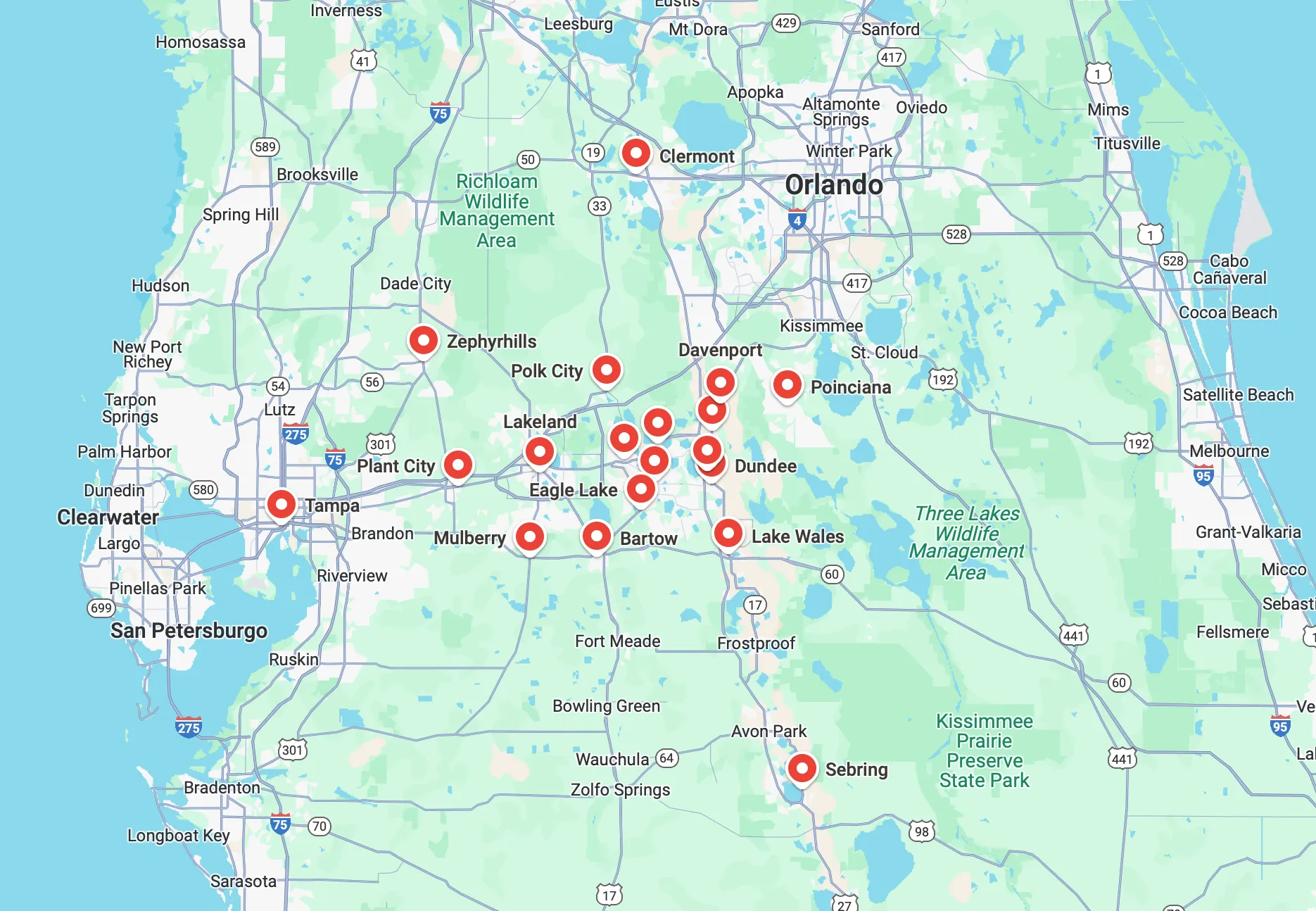
Service Areas