Air Quality Testing in Lakeland, FL
IAQ Air Quality Testing in Lakeland, FL
Indoor air quality testing in Lakeland, FL helps homeowners identify hidden risks that affect health, comfort, and home systems. With Lakeland's hot, humid climate, abundant lakes, and seasonal pollen, common indoor contaminants such as mold, dust, fine particles, and VOCs can worsen without obvious signs. IAQ Air Quality Testing in Lakeland, FL provides measurable data-particle counts, VOC levels, humidity readings-and clear remediation recommendations so you can make informed decisions about protecting your home and family.
.jpeg)
Why IAQ testing matters for Lakeland homes
Lakeland experiences high humidity for much of the year, frequent storms, and a pronounced pollen season in spring. These local factors make homes prone to:
- Elevated indoor humidity encouraging mold growth in attics, crawlspaces, and behind walls.
- High airborne pollen and fine particulates that enter through windows and doors.
- Accumulation of volatile organic compounds (VOCs) from household products, paints, and building materials during warm weather.
- Increased HVAC runtime that can spread contaminants if systems are dirty or poorly filtered.
Understanding these local drivers is essential. IAQ testing in Lakeland, FL targets the issues most likely to affect your home so remediation is practical and effective.
Common IAQ issues in Lakeland, FL
- Mold spores and damp-related growth in poorly ventilated areas
- High humidity levels leading to condensation and structural moisture
- Elevated PM2.5 and PM10 particle counts from outdoor pollen, dust, and indoor sources
- VOCs from cleaning supplies, new furnishings, building materials, and stored chemicals
- Dust and biological allergens lodged in HVAC systems and ductwork
What IAQ tests measure
IAQ Air Quality Testing in Lakeland, FL typically includes a combination of the following measurements to build a complete picture:
- Air particle counts (PM2.5, PM10) using calibrated particle counters to quantify fine and coarse particulates
- Total VOC (volatile organic compound) screening with photoionization detectors or sorbent sampling for laboratory analysis
- Relative humidity and temperature monitoring to assess moisture risk and occupant comfort
- Targeted sampling where indicated: mold spore traps, surface swabs, or settled dust analysis
- Optional checks: carbon monoxide screening, formaldehyde sampling, or extended time-based monitoring for intermittent problems
Typical IAQ testing process
Testing follows a structured, transparent process designed for clarity and minimal disruption:
1. Pre-inspection and homeowner interview
- Technician gathers history: symptoms, timing, known water events, and areas of concern.
2, Walkthrough of the property
- Visual inspection of attics, crawlspaces, HVAC equipment, visible mold, and moisture sources.
3. Strategic sampling plan
- Placement of particle counters, VOC monitors, and humidity loggers in living areas, bedrooms, and problem zones.
4. Active testing period
- Short-term spot tests (minutes to hours) for particle and VOC levels, or extended monitoring (24 hours to several days) when needed to capture variability.
5. Targeted supplemental sampling
- If results suggest mold or specific chemical concerns, spore traps or lab-analyzed VOC canisters are used.
6. Data analysis and interpretation
- Readings are compared to health-based guidance values, outdoor baselines, and industry standards to determine significance.
7. Clear reporting
- A written report explains findings in plain language, includes data charts, photographs of problem areas, and prioritized remediation recommendations.
How test results are interpreted
Reports focus on practical meaning rather than raw numbers. Interpreting IAQ test results in Lakeland, FL addresses:
- Whether particle counts exceed outdoor levels or health guidance for PM2.5 and PM10
- VOC concentrations relative to typical indoor ranges and whether specific compounds require follow-up
- Humidity patterns that indicate chronic moisture risk (for example, sustained relative humidity above recommended thresholds)
- Correlation between visual moisture damage, HVAC condition, and measured contaminants
Each result is translated into risk levels (low, moderate, high) and tied to homeowner-relevant outcomes such as allergy flare-ups, respiratory irritation, or potential for structural mold growth.
Recommended remediation options
Remediation advice is prioritized by effectiveness and local relevance. Typical recommendations for Lakeland homes include:
- Humidity control
- Install or optimize dehumidification in basements, crawlspaces, and conditioned spaces to keep relative humidity in a healthy range.
- Improve ventilation
- Add or repair exhaust fans, use balanced mechanical ventilation, and ensure attic ventilation to reduce indoor pollutant buildup.
- HVAC system service and filtration upgrades
- Clean coils, ducts, and drip pans; replace filters with MERV-rated options appropriate for your system to reduce particle recirculation.
- Source control for VOCs
- Remove or relocate high-VOC products, use low-VOC paints and finishes, and store chemicals in ventilated areas or sealed containers.
- Targeted mold remediation
- Address moisture sources, remove contaminated materials when necessary, and use professional mold remediation for hidden or extensive growth.
- Localized air cleaning
- Use certified portable air cleaners with true HEPA filtration in bedrooms or high-use areas to reduce fine particle exposure during high-pollen periods.
Each recommended action is linked in the report to the specific measurements that triggered it, so homeowners understand why a given step will help.
Benefits of IAQ testing for Lakeland homeowners
- Health protection: Lower exposures to mold, particles, and VOCs reduce allergy and asthma triggers and improve overall respiratory comfort.
- Data-driven decisions: Testing removes guesswork, ensuring remediation addresses real problems rather than symptoms.
- Improved energy performance: Fixing moisture or HVAC issues often improves system efficiency and longevity.
- Peace of mind: Measured results and a clear plan help prioritize repairs and avoid unnecessary work during seasonal humidity spikes.
Maintenance and seasonal considerations for Lakeland
- Monitor humidity year-round; Lakeland summers typically require dehumidification, while spring pollen calls for heightened filtration.
- Schedule HVAC inspections before peak cooling season to avoid system-driven contaminant spread.
- Re-test after major remediation or seasonal events such as floods, roof leaks, or home renovations to confirm improvements.

Customer Testimonials

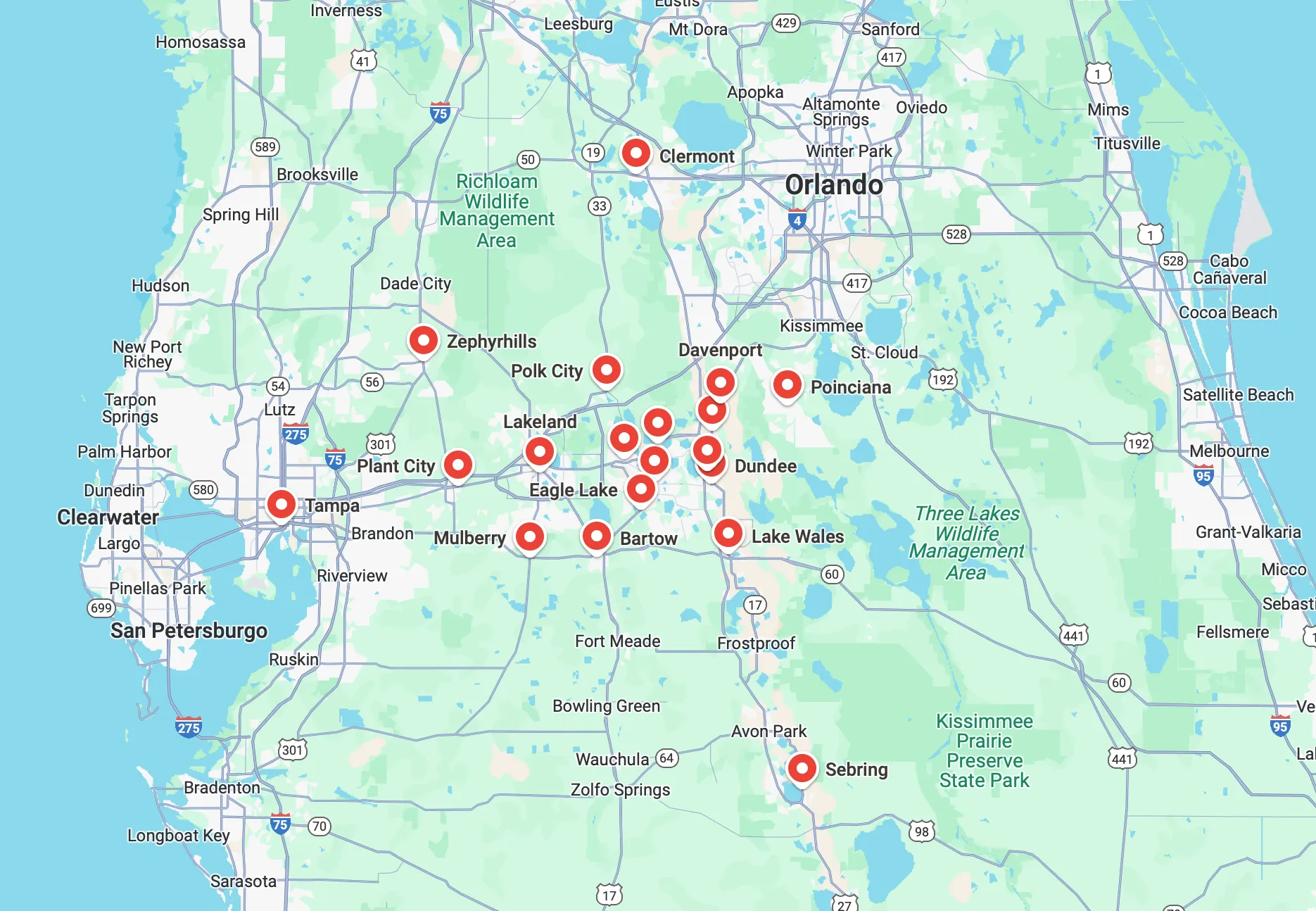
Service Areas