HVAC Replacement in Lakeland, FL
VAC Replacement in Lakeland, FL
Replacing an aging or failing HVAC system in Lakeland, FL is more than a comfort upgrade. It is a strategic investment that reduces summer downtime, lowers energy bills in a hot, humid climate, improves indoor humidity control to prevent mold, and ensures compliance with local permitting and code requirements.
.jpeg)
Why Lakeland homes need timely HVAC replacement
Lakeland’s subtropical climate means long cooling seasons and high indoor humidity. Systems that struggle to maintain set temperatures or control moisture will drive higher electric costs and create comfort and indoor air quality problems. Salt-free but humid inland conditions still accelerate corrosion and filter clogging from pollen and organic debris, shortening the effective life of equipment. Replacing a failing system proactively avoids repeated repair costs, prevents sudden mid-summer outages, and improves overall system reliability.
Common HVAC replacement triggers in Lakeland
- Frequent breakdowns or rising repair frequency and costs
- Equipment older than 12 to 15 years, especially using phased-out refrigerants like R-22
- Poor humidity control, uneven cooling, or persistent hot spots
- Rising electricity bills despite regular maintenance
- Loud operation, compressor or coil corrosion, and visible refrigerant leaks
- Inefficient ductwork, significant air leakage, or poor insulation increasing load
System evaluation: how professionals decide repair vs replacement
A thorough evaluation typically includes:
- Age and service history of the system
- Type of refrigerant and availability/cost of future service
- Seasonal energy efficiency rating (SEER) and expected life remaining
- Frequency and cost of recent repairs versus replacement cost
- Load assessment for the home: size, insulation, duct condition, attic temperatures
- Comfort and indoor air quality goals (dehumidification, filtration)
Key decision factors favoring replacement are repeated major repairs, an old low-SEER unit, incompatible refrigerant, or a desire for improved humidity control and efficiency. If a single, inexpensive repair will restore reliable performance and the unit is relatively new, repair may be appropriate.
Comparing replacement unit types and efficiencies
Choose based on efficiency goals, ductwork, and home layout:
- Central split systems (air handler and outdoor condensing unit)
- Common in Florida; effective for whole-home cooling.
- Look for high SEER ratings and variable-speed blower options for better humidity control.
- Heat pumps (air-source)
- Preferred in mild-winter climates like Lakeland; provide efficient cooling and heating.
- Modern inverter-driven heat pumps modulate capacity for comfort and energy savings.
- Ductless mini-splits
- Ideal for homes without ductwork or for room additions and zoned control.
- High efficiency and precise temperature control; can reduce duct losses.
- Packaged units
- Less common for single-family homes in Lakeland but used for certain roof or commercial applications.
Efficiency and features to prioritize:
- SEER and HSPF ratings: higher SEER reduces cooling energy use; modern systems often exceed 14 to 16 SEER.
- Variable-speed compressors/blowers: better humidity control, quieter operation, and lower runtime.
- Properly sized units: oversizing leads to short cycling and poor dehumidification; undersizing causes constant running.
- Enhanced filtration and UV or coil treatment for better indoor air quality in humid climates.
Removal, refrigerant handling, and disposal
Federal and state rules require certified refrigerant recovery for all replaced systems. Proper disposal includes:
- Recovering and documenting refrigerant removal using EPA-approved equipment
- Recycling or disposing of metals and components per local solid waste rules
- Notifying or acquiring permits required by Polk County or the City of Lakeland for equipment replacement and disposal
A professional replacement includes safe refrigerant handling, disposal paperwork when required, and clearing the work area to code standards.
Permits and inspections
Local permits and inspections are typically required for full HVAC replacements. Common permit-related tasks:
- Submitting equipment specifications and match information to the local building department
- Scheduling inspections for electrical connections, refrigerant work, and final system operation
- Ensuring equipment meets Florida building codes and local energy efficiency minimums
Coordinating permit pull and inspections prevents delays at final inspection and ensures code compliance.
Projected energy savings and payback estimates
Energy savings depend on the efficiency difference and your home’s cooling load. A simple way to estimate savings:
- Estimate relative energy reduction: savings roughly equal 1 - (SEERold / SEERnew).
- Example: upgrading from 10 SEER to 16 SEER yields about 37.5 percent less cooling energy use.
- Translate that to dollars: multiply your annual cooling cost by the savings percentage to estimate annual savings.
- Illustrative example: if cooling currently costs roughly $1,500 per year, a 37.5 percent reduction reduces that to about $937 per year, saving about $563 annually.
- Payback period equals incremental installed cost of the efficient system divided by annual savings. Consider incentives and rebates to shorten payback.
Because Lakeland residents use cooling heavily, efficiency upgrades often achieve shorter payback periods than in milder climates. Accurate payback calculations require a site-specific load estimate and local electric rates.
Warranties, registration, and long-term reliability
Understand manufacturer and labor warranties:
- Manufacturer warranties typically cover compressors and parts for a specified period; some are conditional on product registration.
- Labor warranties are provided by the installing contractor and vary in length and coverage.
- Extended warranties and maintenance plans can protect long-term investment and preserve warranty eligibility.
Always register equipment and retain proof of installation and permit records to support warranty claims.
Financing and rebate assistance
Many homeowners can access financing options or local rebates that reduce upfront costs. Typical assistance includes:
- Utility incentives for high-efficiency systems or demand response programs offered by local utilities
- State or federal energy efficiency incentives or tax credits that may apply to qualifying heat pumps or ENERGY STAR equipment
- Installer or third-party financing programs structured to match projected energy savings
Check eligibility and application requirements before purchase to maximize incentives.
Aftercare and maintenance tips for Lakeland climates
- Schedule annual professional tune-ups, especially before the cooling season
- Replace or clean filters monthly during high-use months
- Ensure proper attic insulation and duct sealing to reduce load
- Consider a smart thermostat and improved filtration for humidity and comfort control
Regular maintenance preserves efficiency, extends equipment life, and protects warranty coverage.

Customer Testimonials

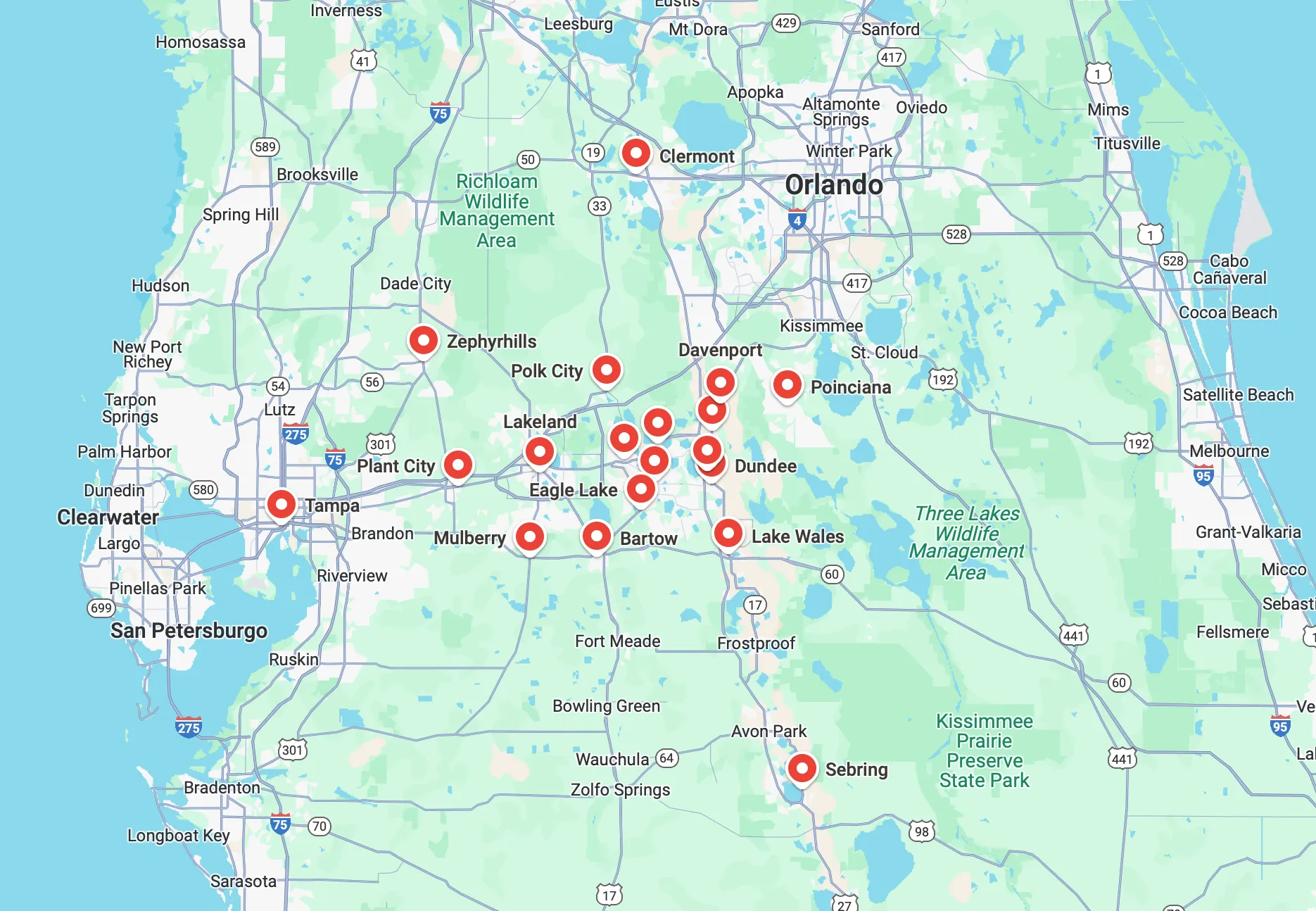
Service Areas