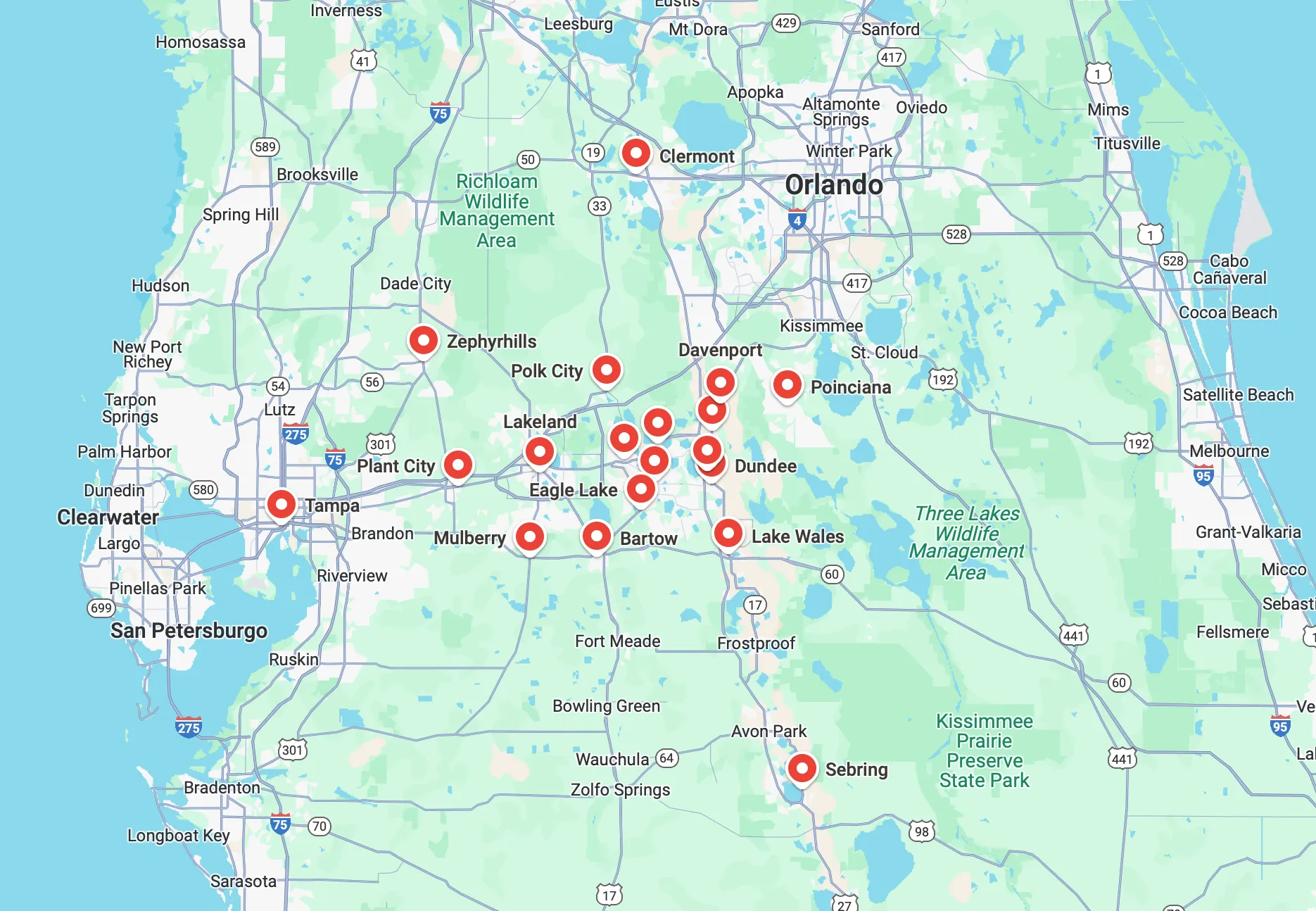
Mini Split Repair in Poinciana, FL
Mini Split Repair in Poinciana, FL
Mini split systems are the preferred cooling and heating choice for many Poinciana, FL homes because they deliver efficient zone comfort without ductwork. When a mini split stops cooling, makes noise, or cycles erratically, it affects comfort quickly in Central Florida’s hot, humid climate.
.jpeg)
Common mini split problems in Poinciana, FL
Homes in Poinciana face high cooling demand, frequent humidity, and seasonal storms that contribute to these typical mini split issues:
- Refrigerant leaks - low refrigerant causes weak cooling and frozen evaporator coils; humidity accelerates performance loss.
- Compressor faults - outdoor compressor fails or struggles after heavy use or electrical surges during storms.
- Electrical issues - blown fuses, tripped breakers, failed capacitors, or damaged circuit boards from power fluctuations.
- Sensor failures - indoor thermostat or temperature sensors misread conditions, causing short cycling or incorrect setpoint behavior.
- Airflow and condensate problems - clogged air filters, dirty coils, or blocked condensate drains leading to reduced airflow, water leaks, or mold growth.
- Mechanical wear - fan motors, bearings, or reversing valves that degrade over years of operation.
Diagnostic procedures and troubleshooting
A thorough diagnosis separates simple homeowner fixes from repair needs. Typical diagnostic steps include:
- Visual inspection of indoor and outdoor units for obvious damage, debris, or rodent nests.
- Confirming power and control signals: checking breakers, disconnects, and control wiring for continuity and correct voltage.
- Airflow assessment: verifying filter condition, blower operation, and ductless indoor unit clearance.
- Refrigerant system evaluation: measuring suction and discharge pressures, using electronic leak-detection tools or UV dye to locate leaks.
- Electrical component testing: checking capacitors, contactors, relays, and circuit boards with multimeters.
- Sensor and thermostat checks: validating temperature sensors and remote controllers for correct operation.
- Condensate system inspection: clearing drains, checking float switches, and inspecting drain pans for obstructions or corrosion.
Many issues are discovered within a single service visit, but complex refrigerant leaks or compressor failures may require a follow-up if a replacement part is needed.
Typical repair options and parts replacement
Repairs are chosen based on safety, system age, and long-term value. Common repair solutions include:
- Refrigerant leak repair: locating and repairing the leak (brazing or replacing a damaged line), evacuating and recharging the system, and replacing the receiver/drier or filter-drier when required.
- Compressor replacement or overhaul: replacing a failed compressor or, in some systems, replacing the entire outdoor condensing unit if parts are no longer available.
- Electrical repairs: replacing capacitors, contactors, fuses, breakers, or damaged control boards; tightening terminals and improving surge protection.
- Sensor and control replacements: installing new room sensors, PCBs, or remotes to restore accurate control and cycling.
- Fan motor and reversing valve repair: replacing worn motors or valves to restore airflow and heat pump reversing functions.
- Drain and coil maintenance: clearing condensate lines, replacing clogged drain pans or float switches, and performing coil cleaning to restore efficiency.
- Line set or indoor unit replacement: when corrosion, extensive leaks, or physical damage exists, replacing line sets or indoor heads may be the most reliable solution.
Repairs are selected to balance system longevity, energy efficiency, and safety. In cases where multiple major components are near end of life, replacement of the system may be more cost-effective than piecemeal repairs.
Emergency and same-day service
In Poinciana’s summer heat, loss of a mini split quickly becomes an urgent comfort and health concern. Emergency or same-day service availability is commonly offered to address:
- Complete loss of cooling or heating during heat waves
- Major refrigerant leaks creating visible oil or ice
- Electrical faults causing smoke, burning smells, or repeated tripping
- Severe water leaks from condensate overflow threatening property damage
Technicians prioritize safety first, stabilizing the system to prevent further damage and then recommending the appropriate repair path.
What affects repair cost (pricing guidance)
Instead of fixed prices, repairs are influenced by several predictable factors:
- Type and refrigerant: R410A, R32, or older refrigerants affect parts and recharge needs.
- Access and location: hard-to-reach outdoor units or attic-mounted indoor units increase labor time.
- Parts availability and brand: OEM versus aftermarket parts and whether components are discontinued.
- Extent of the issue: simple component swaps versus major refrigerant recovery and brazing work.
- Permits and code requirements: larger refrigerant repairs may require paperwork or certified technician work.
- Age and condition of the system: older units can have cascading failures that increase repair scope.
Understanding these factors helps set realistic expectations about repair scope and outcomes without relying on price estimates alone.
Warranty and reliability expectations
Warranty coverage can come from the original equipment manufacturer and from the service provider. Typical warranty aspects include:
- Manufacturer warranty: parts (compressor, heat exchanger) often have limited-term coverage that varies by brand and may require registration.
- Service warranty: repairs performed by a licensed technician are often backed by a workmanship warranty for a defined period on parts and labor.
- Extended parts coverage: some replacement components carry their own manufacturer warranties independent of the system warranty.
When evaluating repairs, confirm which warranties apply to both replaced parts and labor, and whether warranty work requires returning the unit to a service center or on-site inspection.
Maintenance and preventing repeat problems
Regular maintenance in Poinciana’s humid environment reduces emergency repairs and extends system life:
- Change or clean filters every 1 to 3 months during heavy use.
- Schedule seasonal coil cleaning and condensate line checks before peak cooling season.
- Inspect electrical connections and tighten terminals annually to prevent storm-related failures.
- Ensure outdoor units are clear of debris, vegetation, and standing water to maintain airflow and prevent corrosion.
Routine care improves energy efficiency, reduces humidity-related problems, and keeps refrigerant pressures within design ranges.
How scheduling and service visits typically work
Service visits generally follow a predictable workflow to ensure transparent repair decisions:
- Initial intake captures unit make, model, symptoms, and availability.
- On-site visit begins with a visual and diagnostic inspection, followed by discussion of findings and repair options.
- If immediate repair is feasible, work is completed and the system is tested for operation and safety.
- For complex repairs requiring parts, technicians secure replacement components and return for completion, documenting work and warranty terms.
This structured approach helps homeowners in Poinciana weigh repair versus replacement options and understand long-term reliability in a climate that demands consistent cooling performance.

Customer Testimonials

Service Areas