Mini Split Repair in Lake Hamilton, FL
Mini Split Repair in Lake Hamilton, FL
When your mini split struggles to cool, hums loudly, or displays error codes, you need reliable, expert mini split repair in Lake Hamilton, FL. With Lake Hamilton homes facing long, hot, humid summers and frequent afternoon storms, mini split systems work hard year round. That constant demand makes timely diagnostics and professional repairs vital to keep indoor comfort and energy costs under control.
.jpeg)
Common mini split issues in Lake Hamilton, FL
Mini splits in this region show recurring problems because of humidity, heavy use, and occasional power disturbances. Common faults include:
- Compressor failures - system will not cool, outdoor unit very hot, high electrical draw, or repeated breaker trips.
- Inverter and control board faults - frequent error codes, erratic fan/compressor speed, inability to maintain set temperature.
- Refrigerant leaks - loss of cooling capacity, ice on the evaporator or low pressure readings.
- Electrical problems - bad capacitors, failed contactors, wiring corrosion, or damaged breakers from storms.
- Drain and condensate issues - blocked condensate drains causing leaks or indoor water problems.
- Fan motor and airflow faults - noisy indoor/outdoor fans, reduced airflow, dirty filters or evaporator coil restrictions.
How we diagnose a mini split
A systematic diagnostic process finds the root cause rather than treating symptoms:
- Visual inspection of indoor and outdoor units for corrosion, wiring damage, and visible leaks.
- Check system error codes and log recent operating behavior.
- Measure voltages, amp draw on compressor and fan motors, and continuity of electrical components.
- Test refrigerant pressures with manifold gauges and locate leaks with electronic detectors or UV dye.
- Inspect airflow, air filters, and condensate drains for blockage.
- Confirm communication between indoor and outdoor controllers and check inverter operation.
Diagnostics typically take 30 minutes to 90 minutes depending on access and system complexity. Proper diagnosis reduces repeat repairs and unexpected costs.
Typical repair procedures and parts used
Repairs focus on restoring safe, efficient operation. Common procedures and components:
- Refrigerant leak repair and recharge - locate and repair leak (brazing or replacing tubing), replace filter-drier, evacuate and recharge to manufacturer specifications. R-410A and R-32 are common refrigerants; handling requires certified technicians.
- Compressor replacement - recover refrigerant, replace compressor and associated components like drier and service valves, vacuum lines, and recharge system.
- Inverter and PCB repairs - replace inverter module or printed circuit boards when electronic failures occur. Reprogram or update firmware as needed.
- Electrical repairs - replace capacitors, contactors, relays, and correct wiring or breaker issues. Add surge protection if storm-related damage is suspected.
- Fan motor replacement - swap indoor or outdoor fan motors, balance fans and bearings.
- Drain cleaning and condensate pump replacement - clear drain lines and replace faulty pumps to stop indoor leaks.
Parts commonly used include compressors, inverter modules, PCBs, capacitors, fan motors, expansion devices, filter-driers, refrigerant, and service valves. All refrigerant work should be performed by technicians with EPA 608 certification.
Estimated repair timelines
Times vary with parts availability and system access. Typical ranges:
- Basic electrical fix or capacitor swap: 1 to 4 hours
- Filter-drier and refrigerant recharge after leak repair: 2 to 8 hours
- Locating and repairing a refrigerant leak: 2 to 8 hours or more if extensive
- Compressor replacement: 4 to 10 hours depending on model and access
- Inverter or PCB replacement: 2 to 6 hours
- Drain or condensate pump repairs: 1 to 4 hours
These timelines assume common residential mini splits and on-hand parts. Severe corrosion, hard-to-reach units, or out-of-stock parts can extend repair time.
Emergency response options
Because heat and humidity in Lake Hamilton quickly affect comfort and health, emergency repair options are important:
- After-hours diagnosis for systems that stop cooling during peak heat
- Temporary isolation of failed components to restore partial operation when possible
- Emergency part sourcing for critical failures such as compressors or inverter boards
- Safety advice for immediate action: isolating power to damaged units to prevent further electrical damage
Emergency response aims to stabilise the system quickly and arrange for full repair as soon as parts and conditions allow.
Technician qualifications and safety
For reliable mini split repair in Lake Hamilton, FL, technicians should have:
- EPA 608 certification for refrigerant handling
- Manufacturer-specific training on inverter-driven and multi-zone mini split systems
- Florida HVAC contractor licensing and proper insurance
- Experience diagnosing electronic control systems and performing brazing and vacuum procedures
- Safety training for electrical and refrigerant handling, including use of personal protective equipment
Qualified technicians follow best practices for leak detection, refrigerant recovery, and proper system charging to protect performance and compliance.
Warranty and guarantee information
Warranties typically include:
- Manufacturer warranty on compressors, inverter modules, and other components which varies by part and manufacturer
- Service or workmanship guarantee provided by technicians for repairs, covering labor and installation quality for a specified period
Always request warranty details before any repair. Keep documentation for parts and service work to maintain manufacturer warranty eligibility and for future claims.
When replacement is recommended
Replacement can be the best long-term option in these situations:
- System age is high and efficiency has dropped substantially, with frequent breakdowns
- Repeated compressor or inverter failures where repairs exceed a sensible proportion of replacement cost
- Major corrosion or mechanical damage that compromises reliability
- System uses phased-out refrigerants with limited availability or high replacement cost
- You want a significant efficiency upgrade, improved humidity control, or a different zoning configuration
Replacement also gives the opportunity to select modern inverter-driven units matched to home cooling load and local climate patterns for better comfort and lower energy use.
Maintenance and local considerations for Lake Hamilton homes
To keep mini splits running well in Lake Hamilton, FL:
- Schedule annual inspections and tune-ups before the hottest months
- Clean or replace indoor filters every 1 to 3 months during heavy use
- Keep outdoor units clear of vegetation and debris; high humidity encourages growth that restricts airflow
- Install surge protection to reduce storm-related electronic damage
- Monitor drain lines for blockages caused by algae growth in humid climates
Regular maintenance extends system life, preserves efficiency, and reduces the odds of summertime breakdowns.

Customer Testimonials

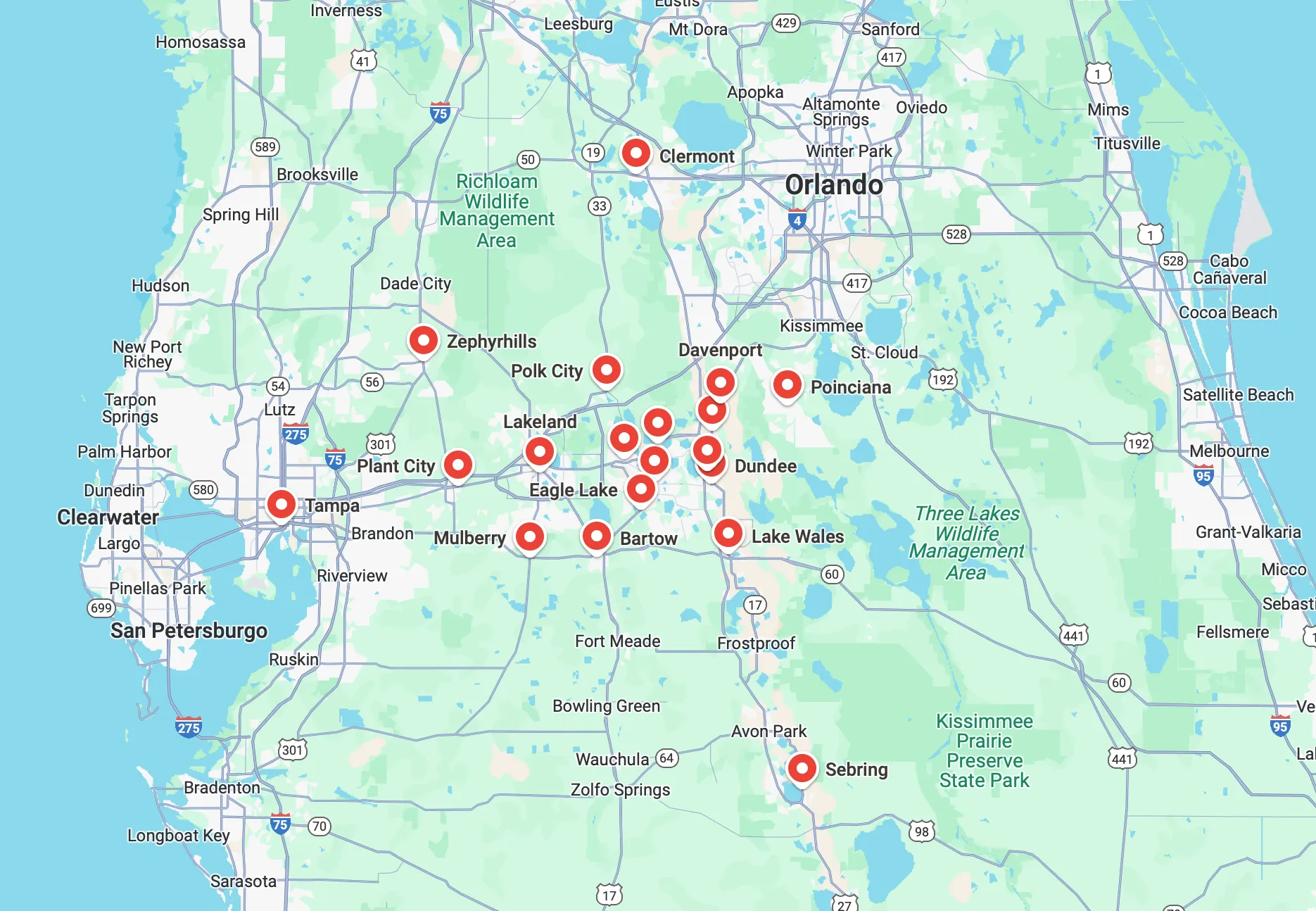
Service Areas