Mini Split Repair in Lake Alfred, FL
Mini Split Repair in Lake Alfred, FL
Keeping a mini split running reliably is essential in Lake Alfred homes where hot, humid summers and frequent thunderstorms put heavy demand on cooling systems. Our Mini Split Repair in Lake Alfred, FL content explains common problems, how technicians diagnose them, typical repair solutions and parts replacement, expected response times and emergency options, pricing transparency, warranty practices, and preventive tips to reduce future breakdowns.
.jpeg)
Why timely mini split repair matters in Lake Alfred, FL
Lake Alfred’s high humidity and long cooling season increase runtime and stress on mini split components. Extended operation can accelerate coil corrosion, clog condensate drains, and mask small refrigerant leaks that grow worse over time. Timely repair restores comfort, improves energy efficiency, prevents secondary damage (like mold from clogged drain pans), and often costs less than waiting until a major component fails.
Common mini split repair issues in Lake Alfred, FL
- Loss of cooling or reduced cooling capacity
- Refrigerant leaks and low refrigerant charge
- Compressor failure or intermittent cycling
- Indoor or outdoor fan motor failures
- Frozen evaporator coil or poor airflow
- Electrical faults: bad capacitors, relays, control boards, or wiring damage from storms
- Water leaks from clogged condensate drains
- Strange noises: grinding, rattling, or loud humming
Diagnostic process: how problems are identified
Technicians follow a standard diagnostic workflow designed for accuracy and transparency:
- Initial visual inspection of indoor and outdoor units for obvious damage, debris, and airflow obstructions.
- Check basic operation: thermostat settings, mode, and measured temperature drop (supply vs return).
- Airflow and filter inspection: verify blower function and filter condition.
- Electrical testing: measure voltage, current draw, capacitor and contactor condition, and inspect control board signals.
- Refrigerant assessment: measure system pressures and superheat/subcooling; if pressures are abnormal, perform leak testing with electronic detectors or UV dye.
- Compressor and motor checks: test starting components and motor windings; listen for abnormal sounds indicating mechanical failure.
- Condensate and drain inspection: clear clogs and verify proper drainage.
- Diagnostic report and itemized estimate: documented findings, repair options, parts recommended, and estimated time to complete.
A typical onsite diagnostic takes 30-60 minutes. Technicians will provide an itemized explanation of findings and a transparent estimate before any work begins.
Typical repair solutions and parts replacement
- Refrigerant leak repair: locate and repair the leak (braze or replace line sections), evacuate and pressure test the system, then recharge with the correct refrigerant while following EPA reclaim/recycle rules.
- Compressor replacement: when the compressor is mechanically or electrically failed; includes system recovery, compressor swap, vacuum, and recharge.
- Fan motor or blower replacement: replace failed outdoor condenser fan motor or indoor blower motor and balance the fan assembly.
- Electrical repairs: replace capacitors, contactors, relays, fuses, or control boards; repair or replace damaged wiring or thermostat controls.
- Expansion devices and valves: replace TXV or metering device when causing poor refrigerant control.
- Coil cleaning and repair: clean dirty coils or, when corroded, replace coil sections.
- Drain and condensate repairs: clear blockages, replace clogged pans or lines, and install overflow safeguards.
All refrigerant handling follows federal and state regulations; technicians should be EPA-certified for refrigerant recovery and handling.
Estimated response times and emergency repair options
- Routine diagnostics: same-day appointments often available within typical business hours; many services aim to diagnose issues within 24 to 48 hours of request.
- Standard repairs: simple repairs (capacitor, filter, drain unclog) can often be completed the same day; more involved repairs (compressor, hard-to-find parts) typically require 1-3 business days depending on parts availability.
- Emergency repair: priority or emergency response options are common during extreme heat or after storm damage. Emergency service aims for same-day or within-hours response when the system failure creates a health or safety risk. Temporary measures such as isolating zones, installing portable cooling, or temporary electrical fixes can be used until full repair is possible.
Response times vary by provider and parts availability; expect honest estimates upfront with clear timelines for ordered parts.
Pricing transparency and estimates
Professional repair services provide:
- A clear, itemized diagnostic fee and what it covers.
- Detailed, written estimates that list parts, labor hours, and any fees (trip, disposal, refrigerant recovery).
- Options for OEM parts vs equivalent aftermarket parts when available, with the benefits and trade-offs explained.
- Authorization requirements before any repair begins and no hidden surcharges after approval.
Comparing itemized estimates helps homeowners understand true costs and choose long-term value rather than short-term fixes.
Warranty information you should expect
- Parts warranty: manufacturers often provide parts warranties on specific components; aftermarket parts may carry separate warranties. The duration varies by part and manufacturer.
- Labor warranty: many reputable technicians provide a labor warranty for repairs (commonly 30-90 days, though lengths differ).
- Warranty clarity: always obtain written details explaining what is covered, exclusions (e.g., pre-existing conditions or improper use), and transferability if you sell the home.
Documented warranties and post-repair inspection policies protect your investment and set clear expectations.
Preventive tips to avoid future breakdowns in Lake Alfred homes
- Schedule annual maintenance before the hot season to check refrigerant levels, clean coils, and verify electrical health.
- Clean or replace air filters monthly during heavy use to maintain airflow and prevent frozen coils.
- Keep outdoor units clear of vegetation, debris, and grass clippings; maintain at least 2 feet clearance for airflow.
- Ensure condensate drains are flowing and install a drain float switch to prevent overflow and water damage.
- Install surge protection or whole-home surge devices to protect control boards from frequent lightning and storm-related power surges in Florida.
- Monitor for subtle signs: reduced cooling, increased noise, cycling more frequently, or higher energy bills — early detection reduces repair cost and downtime.

Customer Testimonials

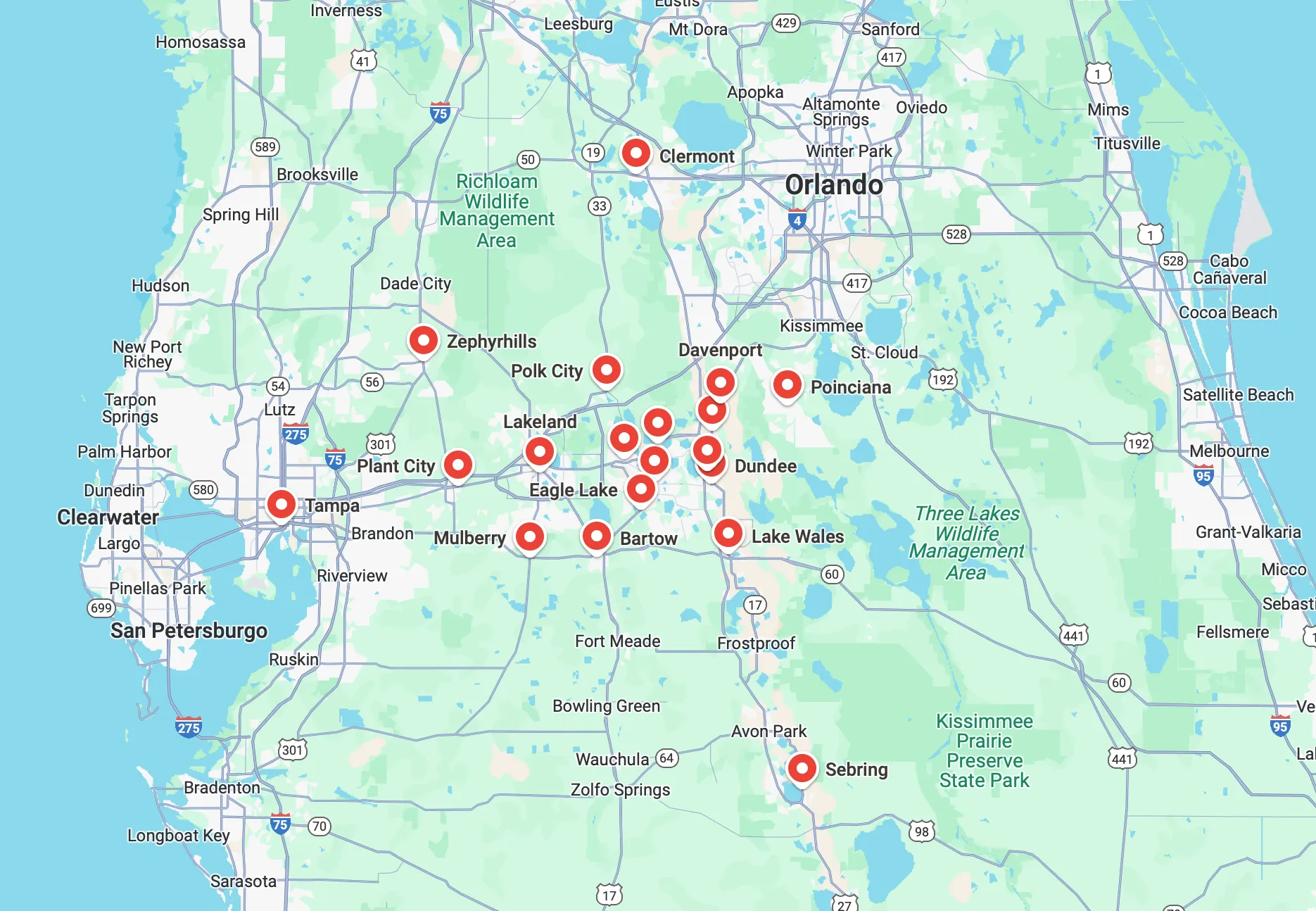
Service Areas