Whole House Dehumidification in Lake Wales, FL
IAQ Whole-House Dehumidification in Lake Wales, FL
High humidity is a year-round reality in Lake Wales, FL. IAQ whole-house dehumidification addresses the root cause of mold, musty odors, sticky indoor air, and accelerated wear on wood and electronics by controlling moisture at the whole-home level.
.jpeg)
Why whole-house dehumidification matters in Lake Wales, FL
Lake Wales experiences warm temperatures and high relative humidity, especially during the wet season and hurricane events. Typical consequences of elevated indoor humidity include:
- Increased mold and mildew growth in attics, crawlspaces, bathrooms, and closets
- Musty smells and worsening allergy or asthma symptoms
- Warping or cupping of hardwood floors and damage to wood furniture
- Condensation on windows, pipes, and exterior walls
- Longer run-times for air conditioners that struggle to remove moisture
A whole-house dehumidification system keeps indoor relative humidity in the recommended range-generally 45% or lower in Florida homes-so you get true comfort without overcooling your living spaces.
Common whole-house dehumidification issues in Lake Wales homes
Homeowners seeking dehumidification often encounter these typical challenges:
- Inadequate capacity for the home size or local climate, leaving rooms still humid
- Poor integration with the HVAC leading to overcooling or short cycling
- Improper placement causing uneven humidity control or condensation spots
- Clogged drain lines or improper condensate routing producing leaks
- Incorrect setpoints that are too low (causing dry air) or too high (allowing mold growth)
Understanding these issues helps homeowners choose the right system and avoid common pitfalls.
Types of whole-house dehumidification systems
Choosing the right type depends on house size, duct layout, and humidity load. Common options include:
- Ducted, bypass whole-house dehumidifiers: Install inside the air handler or return plenum and use existing ductwork to treat the entire home. Ideal for many single-family homes.
- Integrated dehumidification with the air handler: Uses the HVAC system components for coordinated moisture removal while maintaining temperature control.
- Standalone whole-house units: Larger units mounted in mechanical rooms that connect to ductwork; useful when replacing an older air handler is not planned.
- Desiccant dehumidifiers: Best for special applications or very low-temperature environments; rarely necessary for Lake Wales climate.
Capacity is expressed in pints per day (or liters). For Lake Wales, typical homes often require higher-capacity units than inland or northern homes because of year-round humidity. A professional load assessment ensures the unit size matches the actual moisture load.
How whole-house dehumidifiers integrate with HVAC
Proper integration is critical for efficient, comfortable performance. Key integration points:
- Shared ductwork: Ducted units work with the existing return or supply plenum to distribute dehumidified air evenly.
- Air handler compatibility: Some systems mount directly to or inside the air handler to use blower fans for whole-house circulation.
- Controls integration: Humidistats, dedicated controllers, or smart thermostats synchronize humidity setpoints with HVAC operation, preventing excessive cooling while removing moisture.
- Drainage and electrical: Condensate drain lines are routed to suitable drains or condensate pumps. Dedicated electrical circuits may be required depending on unit size.
Integrated systems reduce AC runtime needed for moisture removal, improving comfort while preventing overcooling and maintaining energy efficiency when properly configured.
Typical installation process
Installation is a structured process that minimizes disruption and ensures system performance:
- Site assessment: Technicians evaluate the home layout, existing HVAC, moisture sources, and electrical and drainage options.
- Sizing and selection: A whole-home moisture load calculation determines the appropriate capacity and type of unit.
- Preparation: Necessary duct modifications, electrical wiring, and drain routing are planned and confirmed.
- Mounting and connections: The unit is installed in the mechanical closet, attic, or crawlspace. Duct, electrical, and condensate connections are secured.
- Integration and commissioning: Controls are set, humidistat calibration is verified, and the system is balanced with the HVAC to ensure even distribution.
- Final walkthrough: The homeowner is shown how to read and adjust humidity settings, and expected performance is explained.
Most installations are completed within a day or two depending on home complexity and any duct modifications needed.
Maintenance schedule and tasks
Routine maintenance keeps performance high and extends equipment life. Recommended schedule:
- Monthly
- Check and clean or replace the unit’s air filter if applicable.
- Inspect drain lines and condensate traps for clogs or standing water.
- Quarterly
- Inspect the humidistat or control to confirm accurate readings.
- Check for unusual noises, vibration, or leaks.
- Annually
- Full system inspection: coils, fans, electrical connections, and refrigerant charge where applicable.
- Clean coils and verify airflow and drainage.
- Verify integration with HVAC and recalibrate controls if needed.
Prompt attention to blocked drains, refrigerant leaks, or electrical faults prevents water damage and reduced dehumidification capacity.
Diagnosing performance problems
If humidity remains high or the system is noisy or leaking, a professional diagnostic will typically examine:
- Unit capacity versus actual measured indoor humidity levels
- Airflow through return and supply ducts
- Condensate drainage integrity and pump operation
- Humidistat calibration and control wiring
- Refrigerant pressures and compressor performance (for refrigerant-based units)
- Unsealed ductwork or hidden moisture sources such as roof leaks or ground moisture
A correct diagnosis leads to targeted repairs or system adjustments rather than unnecessary replacements.
Benefits beyond comfort
Whole-house dehumidification delivers measurable benefits for Lake Wales homeowners:
- Reduces mold and mildew risk, lowering health and remediation costs
- Protects wood floors, cabinetry, and musical instruments from moisture damage
- Eliminates musty odors and improves perceived air freshness
- Helps air conditioners run more efficiently by removing moisture load separately
- Reduces allergy and asthma triggers by limiting mold spores and dust mite proliferation
In humid climates like Lake Wales, these advantages protect your home and can prevent future repair expenses.
Practical tips for Lake Wales homeowners
- Aim for a relative humidity of around 45% to 50% during warm months to balance comfort and mold prevention.
- Address major moisture sources such as poor attic ventilation, gutter failures, or ground grading before sizing a dehumidifier.
- Pair whole-house dehumidification with attic and crawlspace moisture controls for the best results.
- Use a calibrated hygrometer in multiple rooms to validate performance after installation.
Whole-house dehumidification is a long-term investment in IAQ, comfort, and home preservation-especially in Lake Wales where humidity is persistent. Properly sized, professionally integrated, and routinely maintained systems deliver reliable control, protect building materials, and improve living conditions throughout the year.

Customer Testimonials

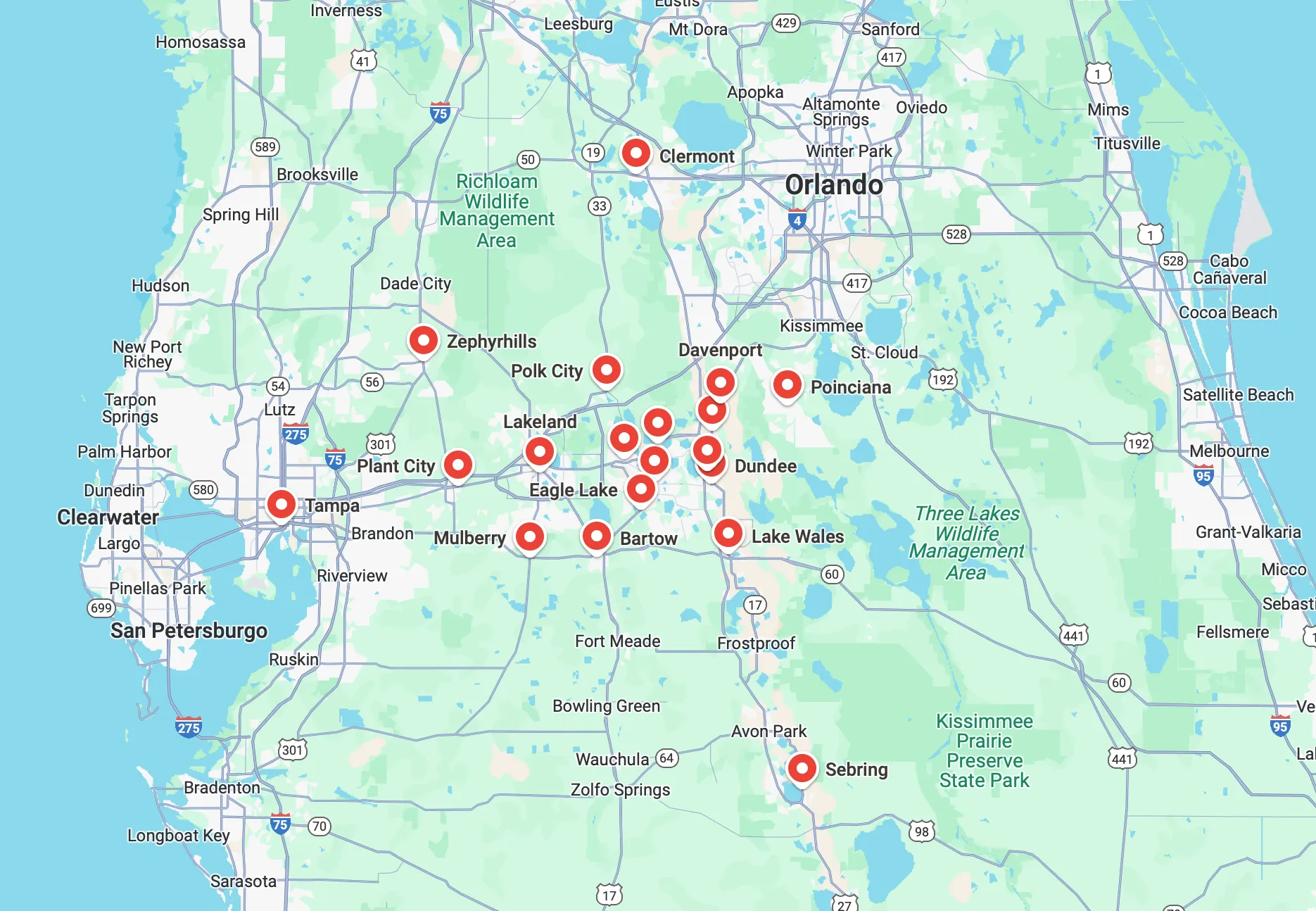
Service Areas