Air Quality Testing in Lake Alfred, FL
IAQ Air Quality Testing in Lake Alfred, FL
Indoor air quality testing in Lake Alfred, FL is essential for protecting health, comfort, and building performance in our hot-humid climate. Homes and businesses here commonly experience elevated humidity, mold growth, seasonal pollen and dust, and VOCs from cleaning products and furnishings. Professional IAQ testing identifies measurable problems, explains likely causes, and gives prioritized, actionable solutions so you can make informed decisions about filtration, ventilation, and source control.
.jpeg)
Why IAQ testing matters for Lake Alfred properties
- Hot, humid summers increase moisture loads that drive mold growth and dust mite populations.
- Older HVAC systems and ductwork can harbor dust, biological growth, and accumulated debris that reduce indoor air quality and system efficiency.
- Occasional construction, pesticide use, and household products contribute volatile organic compounds (VOCs) and odors.
- Seasonal pollen and outdoor particulate matter can infiltrate homes and aggravate allergies and asthma.
IAQ testing pinpoints whether symptoms like musty smells, frequent allergy flares, headaches, or uneven comfort are caused by airborne particles, gases, humidity problems, or ventilation shortfalls.
Common IAQ issues in Lake Alfred, FL
- Elevated relative humidity and surface moisture leading to visible or hidden mold
- High concentrations of particulate matter (PM2.5, PM10) from outdoor dust, roadways, and indoor activities
- VOCs from cleaning agents, paints, new furniture, and stored chemicals
- Poor ventilation reflected by high CO2 levels in occupied spaces
- Dust, pet dander, and biological allergens concentrated in duct systems and fabrics
- HVAC inefficiencies and dirty filters that reduce filtration and increase recirculation of pollutants
Tests performed - what to expect
A comprehensive IAQ assessment combines real-time monitoring with targeted sampling. Typical tests include:
- Particle counts and size distribution (PM2.5 and PM10) using portable particle counters to quantify airborne particulates
- VOC screening and detailed sampling for specific VOCs or formaldehyde using PID meters, sorbent tubes, or canisters
- Relative humidity and temperature mapping across rooms to identify moisture-prone areas
- Mold spore air sampling and surface swabs or tape lifts to distinguish indoor versus outdoor spore profiles
- CO2 monitoring to evaluate ventilation effectiveness and occupant density impacts
- Carbon monoxide testing where combustion appliances are present
- HVAC duct pressure and airflow measurements, filter inspection, and leak checks
- Optional targeted tests: allergen panels, microbial culturing, or radon testing when appropriate
Diagnostic procedures and site data collection
Testing begins with a structured walkthrough to document building layout, occupancy patterns, visible moisture, recent renovations, and appliance locations. Key diagnostic steps:
- Visual inspection and moisture assessment using moisture meters and infrared imaging where indicated.
- Placement of real-time monitors in representative spaces (living areas, bedrooms, attic, mechanical rooms) to capture particle counts, CO2, temperature, and humidity over the monitoring period.
- Collection of air and surface samples following industry sampling protocols to preserve validity for lab analysis.
- HVAC inspection including filter type, filter condition, coil cleanliness, condensate drainage, and duct connections.
- Documentation of occupant activities and recent events that could affect results (new carpeting, painting, deep cleaning, hurricane preparation, or flooding).
Some tests require short-duration sampling (minutes to hours) while others, like VOC canisters or passive badges, may run 24 to 72 hours to capture representative concentrations.
Data analysis and reporting
Reports translate raw measurements into clear findings and recommendations. A typical IAQ report includes:
- Executive summary of primary issues and priority actions
- Measured concentrations with easy-to-read graphs and time-series plots
- Comparison to health-based guidelines (EPA, WHO, and industry standards) and local baseline expectations
- Photographs and annotated floor plans showing sensor locations and problem areas
- Root cause analysis linking measurements to likely sources, building features, or occupant behaviors
- Recommended corrective measures organized by priority, expected impact, and typical effort
Reports are written in plain language so homeowners, building managers, and decision makers can quickly understand risks and remediation options.
Recommended improvements and solutions
Based on test findings, solutions focus on source control, ventilation, and filtration:
- Source control: remove or isolate pollutant sources (old stored chemicals, smoking indoors, water-damaged materials) and use low-VOC products for cleaning and renovations.
- Filtration upgrades: switch to higher-efficiency filters (MERV 13 where compatible) or add HEPA portable air cleaners for targeted rooms.
- Ventilation improvements: increase outdoor air exchange, repair or balance HVAC ventilation, and consider energy recovery ventilators for controlled fresh air without excessive energy penalties.
- Moisture management: repair leaks, improve attic and crawlspace ventilation, install dehumidification systems, and dry or replace water-damaged materials to prevent mold recurrence.
- HVAC maintenance: clean coils and ducts as needed, ensure proper condensate drainage, and establish regular filter replacement schedules.
- Sealing and building envelope repairs: caulk gaps, weather-strip doors and windows, and improve attic insulation where infiltration is a factor.
Each recommendation is prioritized by effectiveness and practicality for Lake Alfred homes, taking local climate into account to ensure solutions control humidity without causing energy or comfort trade-offs.
Typical scheduling process and what to expect
Scheduling an IAQ assessment in Lake Alfred generally follows these steps:
- Define the scope: choose from basic screenings (particle, humidity, VOC quick scans) to full investigations with laboratory analysis and multi-day monitoring.
- Book a convenient inspection window; many tests are performed during regular business hours, while longer-duration samples may require a technician to place and retrieve monitors over multiple days.
- Pre-test guidance is provided so results are representative (for example: avoid deep cleaning, painting, or running fans excessively before testing; close windows and doors during monitoring).
- Onsite visit duration ranges from one to several hours for walkthrough, sensor placement, and HVAC checks. Multi-day sampling will require a return visit to collect equipment.
- Report delivery time depends on test complexity; lab-analyzed samples typically return in several days to two weeks, while on-site instant readings and initial findings are often available immediately.
Benefits of testing and ongoing maintenance
Professional IAQ testing provides documented evidence to support remediation decisions, reduce health risks, improve comfort, and optimize HVAC performance. For Lake Alfred properties, addressing humidity-driven problems quickly prevents mold damage and costly repairs. After corrective actions, follow-up testing verifies improvements and supports ongoing maintenance planning.
Regular simple checks - monthly filter changes, seasonal coil inspections, and humidity monitoring - keep indoor air quality stable in Florida conditions. When problems recur or when planned renovations occur, repeat testing ensures that solutions remain effective over time.
By combining targeted measurements, experienced diagnostics, and locally appropriate solutions, IAQ air quality testing in Lake Alfred, FL gives homeowners and building managers the clarity they need to protect occupants and preserve property value.

Customer Testimonials

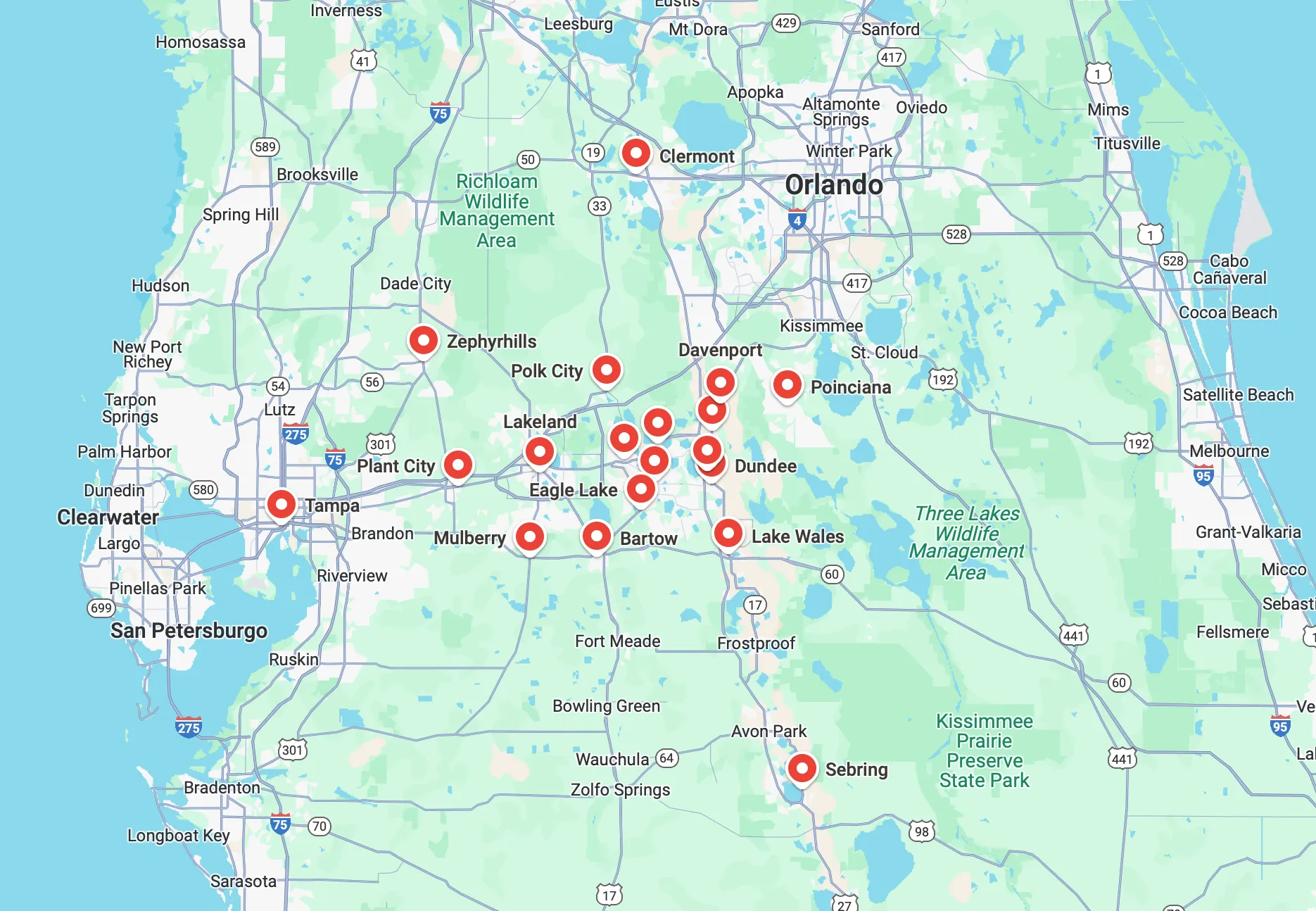
Service Areas