HVAC Repair in Lake Alfred, FL
HVAC Repair in Lake Alfred, FL
Keeping your heating, ventilation, and air conditioning system running well is essential in Lake Alfred, FL, where hot, humid summers and sudden thunderstorms put heavy demand on cooling equipment.
.jpeg)
Why Lake Alfred climate matters for HVAC repair
Lake Alfred’s humid subtropical climate means air conditioning does most of the heavy lifting. High humidity increases runtime, accelerates wear on compressors and coils, and raises the risk of mold growth in ductwork and drain pans. Frequent summer storms and occasional lightning can also cause electrical damage such as blown capacitors or fried control boards. Understanding these local stressors helps explain why common failures appear more often here than in milder climates.
Common HVAC problems in Lake Alfred homes
- No cooling or heating: System runs but does not produce conditioned air. Often caused by refrigerant leaks, failed compressors, or blocked airflow.
- Short cycling: System turns on and off frequently. Common causes include improper thermostat settings, a failing capacitor, or an oversized unit.
- Compressor failure: The compressor is the system’s heart and can fail from age, overheating, or electrical issues.
- Thermostat faults: Incorrect readings, wiring issues, or failed control modules can prevent proper operation.
- Refrigerant leaks: Loss of refrigerant reduces cooling capacity and can damage components if left unaddressed.
- Frozen evaporator coils: Usually a result of restricted airflow (dirty filters, blocked vents) or low refrigerant.
- Drain line clogs and overflow: High humidity and debris lead to clogged condensate drains and potential water damage or microbial growth.
- Electrical failures: Burnt wires, tripped breakers, bad capacitors, and control board problems — often worsened by lightning or power surges.
- Uneven airflow or hot/cold rooms: Duct leaks, improper balancing, or failing blower motors are frequent causes.
Diagnostic procedures: how technicians find the problem
Technicians use a systematic approach to diagnose HVAC issues quickly and accurately:
- Visual inspection: Check outdoor and indoor units for obvious damage, corrosion from humidity, and condition of coils and wiring.
- System controls and thermostat check: Verify thermostat calibration, wiring connections, and control logic.
- Airflow assessment: Measure supply and return airflow, inspect filters, vents, and ductwork for obstructions or leaks.
- Electrical testing: Use multimeters to test capacitors, contactors, breakers, and voltage at the compressor.
- Refrigerant and pressure checks: Attach gauges to check pressures and look for leaks with electronic detectors or dye kits.
- Temperature split and performance metrics: Measure return vs. supply temperature to evaluate cooling effectiveness.
- Moisture and condensate evaluation: Inspect drain lines, condensate pans, and humidity-related issues.
A clear diagnosis typically takes 30–90 minutes for standard issues. More complex problems (intermittent electrical faults or hidden duct leaks) may require extended troubleshooting.
Typical repairs and parts replacement
- Capacitor replacement: Quick field repair for start/run issues; often completed in under an hour.
- Contactor or relay replacement: Common electrical fix; typically done same day.
- Blower motor or fan replacement: May require several hours depending on accessibility.
- Refrigerant leak repair and recharge: Locate leak, perform repair (patch or replace components), and recharge to manufacturer specs. Time varies from a few hours to a day.
- Compressor replacement: Major repair that can take a full day or more; may require system evacuation, refrigerant recovery, and recharging.
- Coil cleaning or replacement: Cleaning is routine and fast; full coil replacement may take a day.
- Thermostat replacement or reprogramming: Often completed within an hour.
- Duct sealing or repairs: Time depends on extent; targeted repairs may be completed in a day, full duct replacement longer.
Repair timeframes: many common repairs are completed same day or within 24 hours. Major component replacements or system retrofits typically require 1–3 days and sometimes additional inspections or permits.
Emergency response and timing expectations
During Florida’s hottest months, HVAC failures are urgent. Emergency repair options typically include priority scheduling and same-day service for dangerous conditions (loss of cooling during heat waves or water leaks causing property damage). For electrical fires or serious water intrusion, immediate attention is critical. Response times vary by availability and local demand; expect triage where medically or property-critical issues receive the fastest response.
Warranty and parts information
- Manufacturer warranties: Major components like compressors often carry manufacturer warranties (commonly 5–10 years on select parts) but vary by brand and model. Always check the original equipment paperwork.
- Parts warranties: Aftermarket parts and OEM parts generally come with their own limited warranty periods (often 1–5 years). Labor warranties for repairs may be offered separately and vary by provider.
- Warranty considerations: Replacement components may affect existing system warranties. Permits, proper installation records, and using approved parts can be important to maintain or validate warranties.
- Documentation: Keep invoices and replacement part numbers for warranty claims and future service tracking.
Tips to avoid future breakdowns in Lake Alfred
- Seasonal maintenance: Schedule spring cooling tune-ups and fall heating checks to catch small issues before they become failures.
- Replace filters regularly: In high-humidity and pollen-heavy seasons, change filters every 1–3 months to maintain airflow and indoor air quality.
- Maintain clear outdoor unit space: Keep debris, plants, and mulch at least 2–3 feet away to prevent restricted airflow and corrosion from moisture.
- Protect electrical components: Use surge protection to reduce the risk from lightning and power spikes common during thunderstorms.
- Monitor drainage: Periodically check condensate drains and pans for blockages to prevent overflow and microbial growth.
- Consider system aging: If your system is over 10–15 years old and experiencing multiple failures, evaluate replacement options; newer systems are more efficient and better suited to Lake Alfred’s climate.

Customer Testimonials

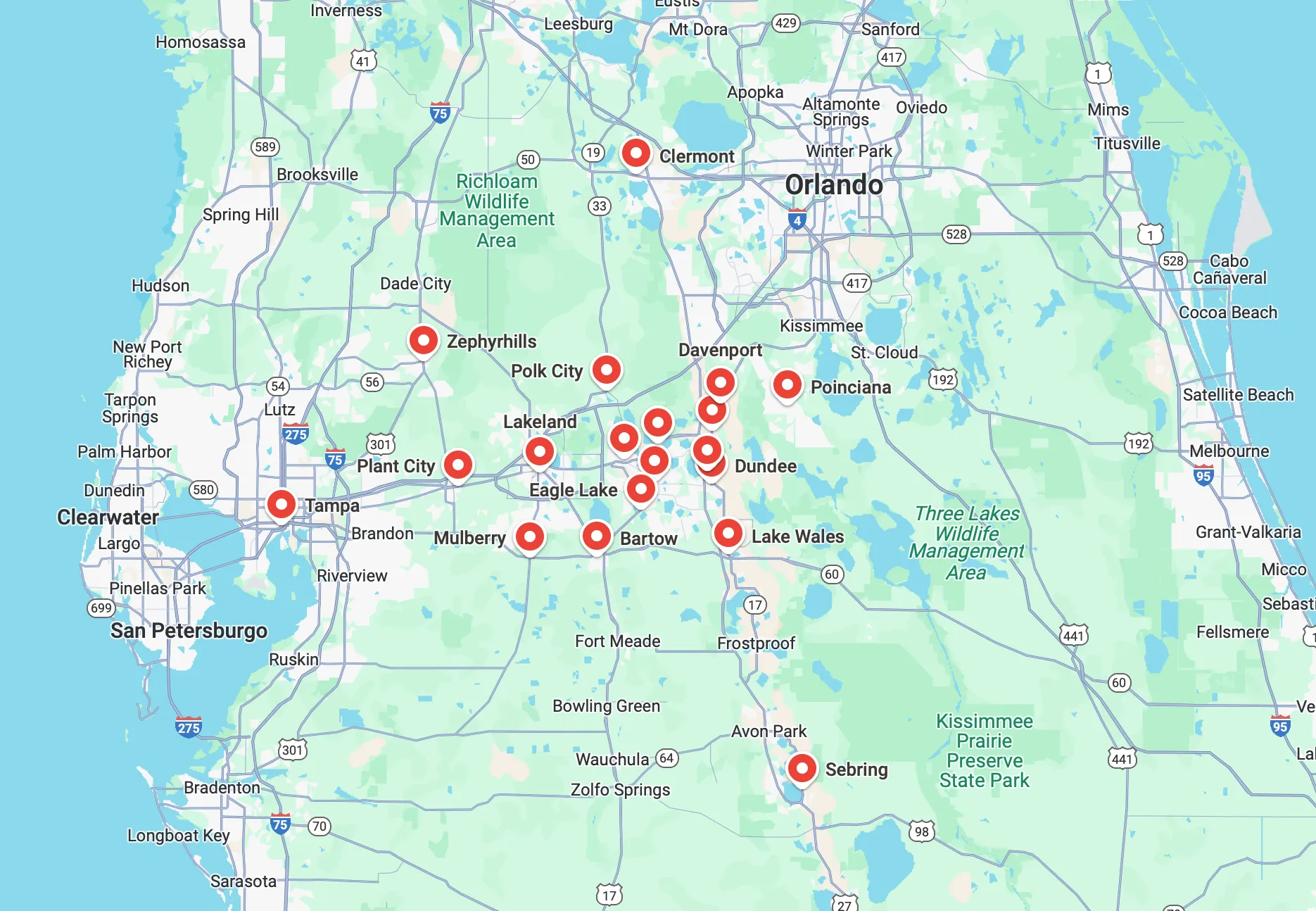
Service Areas