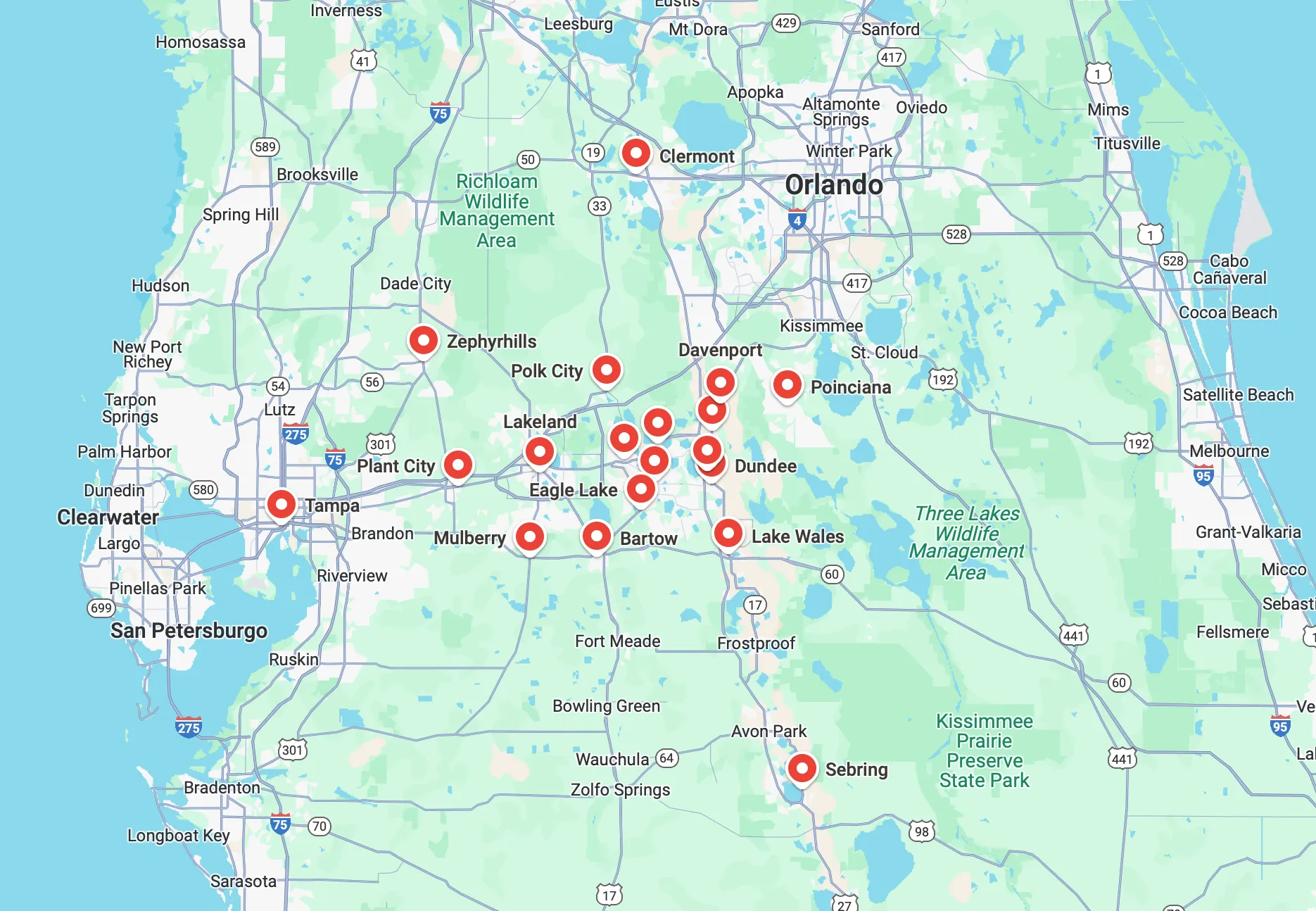
Heat Pump Installation in Lake Alfred, FL
Heat Pump Installation in Lake Alfred, FL
A properly sized, professionally installed heat pump delivers consistent comfort and lower energy bills for Lake Alfred homes, where long, humid summers and mild winters make efficient cooling the priority.
.jpeg)
Why a heat pump is a smart choice for Lake Alfred homes
- Lake Alfred experiences high cooling loads due to hot, humid summers. A modern heat pump efficiently handles cooling and provides adequate heating during mild winters.
- Energy-efficient models with high SEER ratings reduce monthly utility costs and perform better under sustained use.
- Heat pumps that incorporate variable-speed compressors and inverter technology deliver more consistent temperatures and lower humidity, improving indoor comfort in lake-area homes.
Common heat pump installation types and scenarios
- New construction installations where the system is sized to the home from the start.
- Replacement of an existing central AC or older heat pump where refrigerant recovery and safe removal of the old equipment are required.
- Ductless mini-split installations for additions, garages converted to living spaces, or homes without existing ductwork.
- Retrofits where existing ducts are upgraded or modified to optimize airflow and efficiency.
Typical issues homeowners in Lake Alfred see that drive installations
- Inadequate cooling or frequent short cycling caused by undersized equipment or poor airflow.
- High energy bills from older systems with low SEER ratings.
- Uneven temperatures and humidity problems due to improperly sized systems or leaky ducts.
- Systems showing end-of-life signs such as refrigerant leaks, compressor failure, or noisy operation.
On-site assessment and system sizing
A thorough installation begins with a professional site assessment:
- Load calculation using Manual J principles to determine the correct heat pump capacity for your home, factoring in Lake Alfred’s climate, insulation, window orientation, and occupancy.
- Ductwork inspection (Manual D) to evaluate airflow, leakage, and static pressure; recommendations for sealing, insulation, or resizing are documented.
- Electrical panel and service review to confirm available power and whether a dedicated circuit or panel upgrade is necessary.
- Assessment of the outdoor unit location considering shading, clearance, and elevation if the home is in a flood-prone area or near a lake shore.
Guidance on selecting energy-efficient models
- Prioritize units with higher SEER and HSPF ratings for better cooling and heating efficiency over time.
- Consider variable-speed compressors and multi-stage systems for improved humidity control and quieter operation.
- Look for ENERGY STAR qualified equipment and robust manufacturer warranties.
- Match indoor coil and air handler to the outdoor unit for optimized performance; mismatched components reduce efficiency.
Electrical and ductwork considerations
- Many Lake Alfred homes will need:
- Dedicated circuit wiring sized to manufacturer specifications.
- Proper disconnects and surge protection per local code.
- Panel capacity checks; older homes may require service upgrades to handle new equipment.
- Ductwork upgrades can include:
- Sealing and insulating ducts to prevent energy loss.
- Reconfiguring branch ducts or adding return pathways to balance airflow.
- Replacing undersized or damaged duct sections to meet required static pressure.
Permitting and code compliance
- Installations must comply with the Florida Building Code and Polk County permit requirements. Permits typically cover mechanical, electrical, and sometimes structural elements.
- Licensed HVAC contractors will submit permit applications and arrange for inspections. Documentation often includes equipment specifications, load calculations, and refrigerant handling forms.
- Specific site considerations in Lake Alfred may require elevated mounting pads, hurricane straps, or corrosion-resistant components depending on location and exposure.
Removal of existing equipment and refrigerant handling
- Safe removal includes certified refrigerant recovery to EPA standards and responsible disposal of old equipment.
- Old equipment that contained R-22 refrigerant may require special handling and documentation.
- Any necessary repairs to existing linesets or electrical systems are completed before new equipment is installed.
Installation timeline and what to expect
- Typical installations for a standard single-family home require 1 to 3 days:
- Day 1: On-site preparations, removal of old equipment, initial duct or electrical work.
- Day 2: Mounting outdoor unit, installing indoor coil or air handler, connecting refrigerant lines and electrical.
- Day 3: System charge, duct sealing, insulation, and commissioning tests.
- More complex retrofits or ductless multi-zone systems can extend the timeline depending on structural access and permit scheduling.
Post-installation testing and commissioning
A complete commissioning process verifies safe, efficient operation:
- Pressure and leak tests on refrigeration lines and validation of proper refrigerant charge.
- Electrical checks for correct voltage, amperage, and proper breaker sizing.
- Airflow and static pressure testing to confirm duct performance and balanced distribution.
- Thermostat calibration and system controls check to ensure staging and setpoints operate correctly.
- A commissioning report documenting test results, as-installed equipment data, and maintenance recommendations.
Warranty, maintenance, and financing options
- Manufacturer warranties typically cover compressors and major components; labor warranties vary by contractor. Documentation should outline parts, labor, and warranty durations.
- Routine preventive maintenance extends equipment life and preserves efficiency: annual inspections, filter changes, coil cleaning, and refrigerant checks are standard.
- Financing and payment plans are commonly available through third-party lenders or manufacturer programs, with options that match homeowner budgets and project scope.
Benefits summary and long-term considerations
A properly specified and installed heat pump improves comfort, lowers energy costs, and reduces humidity problems in Lake Alfred homes. Prioritizing accurate load calculations, matched components, ductwork integrity, and code-compliant electrical work ensures reliable performance through hot Florida summers and beyond. For homes near lakes or in low-lying areas, addressing elevation, corrosion resistance, and local permit requirements during planning protects both performance and compliance.
Typical homeowner expectations after installation include consistent indoor temperatures, improved humidity control, clear documentation of system settings and warranties, and a maintenance plan to maximize longevity and efficiency.

Customer Testimonials

Service Areas