Understanding Your HVAC System: Key Components & Basic Functionality for Homeowners
-min.webp)
HVAC Emergency? A Technician's Guide to Diagnosing the Problem Fast
When your air conditioner quits on a sweltering Florida afternoon or your heat fails on a rare cold night, your first instinct is stress. You have a critical problem, and you need to understand what’s happening-right now. Most guides offer surface-level advice, but that isn't enough when you're worried about safety, cost, and choosing the right professional.
This is different. We’re pulling back the curtain to give you the technical insights our NATE-certified technicians use to diagnose emergencies. You'll move from uncertainty to understanding, armed with the knowledge to make a confident, informed decision.
Before you touch anything, let's ensure your home is safe.
First Steps: Your 3-Point Safety Checklist
- Check for Odors: If you smell gas (like rotten eggs), leave your home immediately and call your gas utility's emergency line from a safe distance. Do not operate any electrical switches or create sparks.
- Listen Carefully: If you hear loud, metallic grinding or screeching, go to your thermostat and shut the system off completely to prevent catastrophic damage.
- Find Your Breaker: If the system is silent or humming without starting, locate your electrical panel and turn off the breaker labeled "HVAC," "Air Handler," or "Condenser." This prevents further electrical strain.
With the immediate situation secured, let's diagnose the issue.
Quick Diagnosis: What Your AC is Trying to Tell You
Use this guide to identify the likely culprit behind your system's most common distress signals. Find your symptom below to understand the technical issue at play.
- Loud Noises: Is the outdoor unit emitting grinding, screeching, or a loud hum?
- Likely Cause: Critical Compressor Failure. This usually indicates a mechanical breakdown deep inside the sealed system.
- Weak or Warm Air: The system is running, but the air blowing from the vents is barely cool or completely warm.
- Likely Cause: Severe Refrigerant Leak. Low refrigerant levels mean the system cannot absorb and remove heat from your home effectively.
- No Airflow at All: You hear the system click on, but no air comes from the vents.
- Likely Cause: Blower Motor Burnout. The fan responsible for pushing air through your ducts has likely failed.
- System Won't Start: Your thermostat is set and calling for cooling, but the unit doesn't respond.
- Likely Cause: Major Electrical Fault. This could be a failed capacitor, a tripped breaker, or a more serious wiring issue.
- Burning Smells or Alarms: You smell burning dust or plastic, or worse, your carbon monoxide alarm is sounding.
- Likely Cause: Cracked Heat Exchanger (if a heat pump or gas pack). This is a serious safety issue requiring immediate system shutdown.
- Visible Ice: You notice ice or frost building up on the refrigerant lines or the outdoor unit.
- Likely Cause: Frozen Evaporator Coils. This is often caused by severe airflow restriction or low refrigerant, leading to a block of ice forming on the coils.
- Likely Cause: Frozen Evaporator Coils. This is often caused by severe airflow restriction or low refrigerant, leading to a block of ice forming on the coils.
The Most Common HVAC Emergencies: A Technical Breakdown
Competitors often list problems like dirty filters. While important, that's rarely a true emergency. Here, we'll dissect the critical component failures that cause a complete system shutdown.
Critical Compressor Failure
- Your Symptoms: A loud, violent grinding or shaking from the outdoor unit, followed by silence. The system may trip the breaker repeatedly when it tries to start. You may also hear a persistent humming as the motor struggles to engage.
- Technical Teardown: The compressor is the heart of your AC system. It's a high-powered motor that pressurizes refrigerant, allowing it to absorb heat from your home and release it outside. A catastrophic failure usually means an internal mechanical seizure. The pistons may have broken, or the internal bearings have worn out from a loss of lubricating oil, causing metal-on-metal contact. It can also be an electrical failure, where the motor windings short out, preventing it from ever starting again.
- Severity: 5/5 (Critical System Failure)
- DIY or Pro? Professional only. This is one of the most complex and expensive repairs in any HVAC system, requiring specialized tools for refrigerant recovery, vacuuming, and brazing.
- What a Newbern AC Pro Will Do: Our technician will first confirm the diagnosis using a multimeter to test the compressor's windings for shorts and check for grounded connections. We will then connect gauges to measure system pressure, which can indicate a mechanical seizure. If confirmed, the process involves safely recovering all existing refrigerant, cutting out the old compressor, brazing a new one into the copper lines, and replacing the filter drier. Finally, we perform a deep vacuum on the system to remove all air and moisture before recharging it with the exact amount of new refrigerant specified by the manufacturer.
Severe Refrigerant Leak
- Your Symptoms: The system runs continuously, but the air from your vents is cool, not cold. You may notice ice forming on the refrigerant lines outside or on the indoor evaporator coil. Your electricity bill might be unusually high.
- Technical Teardown: Refrigerant (like R-410A) is the lifeblood of your AC. It's a chemical compound that undergoes a phase change from liquid to gas and back to move heat. Your AC is a closed-loop system, meaning refrigerant should never be "used up." If it's low, there's a leak. A severe leak causes a drop in system pressure, preventing the refrigerant from getting cold enough. When the coil temperature drops below freezing, humidity from your indoor air freezes onto it, creating an insulating layer of ice that blocks all airflow and cooling.
- Severity: 4/5 (Leads to System Failure and Compressor Damage)
- DIY or Pro? Professional only. Handling refrigerant requires EPA certification and specialized equipment. Simply "topping off" the system without fixing the leak is illegal, environmentally irresponsible and a waste of money.
- What a Newbern AC Pro Will Do: Finding a leak requires methodical detective work. We use several tools, including electronic leak detectors, ultraviolet dye, and a nitrogen pressure test to isolate the leak's location, which is often a pinhole in a copper coil or a weakened weld. Once found, we repair the leak (usually by brazing). Then, just like with a compressor replacement, we pull a vacuum to purify the system before recharging it to the manufacturer's exact specifications a step that is critical for both efficiency and system longevity.
Blower Motor Burnout
- Your Symptoms: You can hear your outdoor unit running, but you feel no air coming from the vents inside. You might hear a loud humming from the indoor unit (the air handler). In some cases, you might smell an electrical burning odor near the air handler.
- Technical Teardown: The blower motor is a powerful fan located in your indoor air handler. Its sole job is to circulate air over the evaporator coil and push it through your ductwork. These motors can fail in two main ways. First, the bearings can wear out, causing the motor to seize. Second, and more commonly, the run capacitor-a small component that gives the motor a jolt of electricity to start and run efficiently-can fail. When the capacitor dies, the motor struggles to turn, drawing excessive amperage, overheating its copper windings, and eventually burning out.
- Severity: 3/5 (System is inoperable but the fix is isolated)
- DIY or Pro? Professional. While replacing a capacitor is a quick job for a technician, it holds a dangerous electrical charge even when the power is off. A full motor replacement requires disconnecting high-voltage wiring and safely handling a heavy, awkward component within the air handler.
- What a Newbern AC Pro Will Do: Our technician will first test the capacitor. If it's failed, a replacement often solves the problem in minutes. If the motor itself is burnt out, we will shut off all power, safely discharge the old capacitor, disconnect the wiring, and unbolt the motor and fan assembly. We'll install the new motor, ensure the fan blade is correctly positioned for optimal airflow, and wire it correctly before restoring power and testing the system's airflow.
Major Electrical Fault
- Your Symptoms: The thermostat is set to "cool," but absolutely nothing happens. The indoor and outdoor units are completely silent. You've checked the breaker, and it hasn't tripped.
- Technical Teardown: Beyond a simple tripped breaker, several key electrical components can fail and halt your entire system. The most common are the contactor in the outdoor unit (an electrical relay that sends power to the compressor and fan) and the transformer in the indoor unit (which steps down high voltage to the 24 volts needed to power the thermostat and safety controls). When a contactor's points become pitted or welded shut, it can't deliver power. When a transformer burns out, the thermostat has no power, and the system can't receive the signal to turn on.
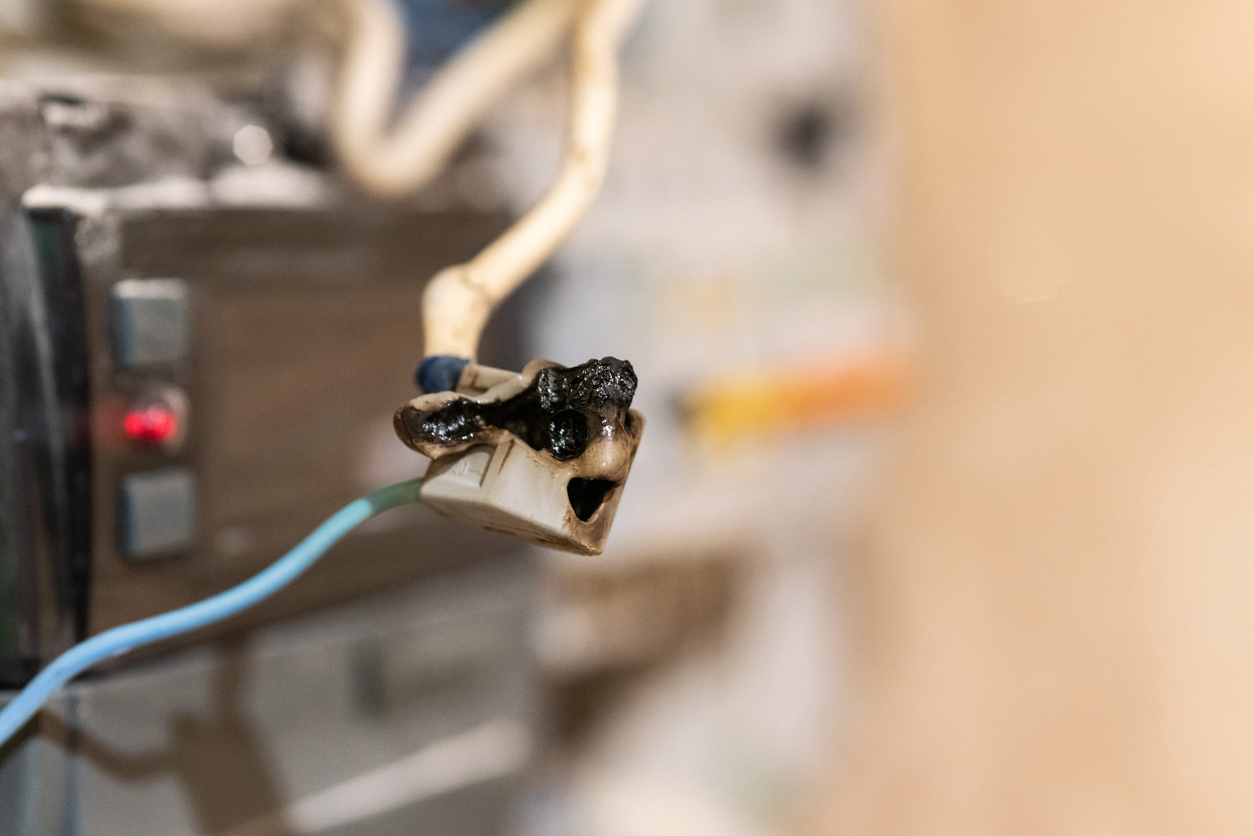
- Severity: 3/5 (Can be a simple or complex fix)
- DIY or Pro? Professional only. Diagnosing electrical failures requires a multimeter and a deep understanding of high- and low-voltage HVAC circuits. Working inside a live panel or unit without proper training is extremely dangerous.
- What a Newbern AC Pro Will Do: Using a multimeter, we'll trace the path of electricity from the breaker to the unit. We check for voltage at the disconnect, then at the contactor and transformer. This methodical process allows us to pinpoint the exact component that has failed. Replacing these parts is typically straightforward for a trained professional and can often get your system running again quickly.
Cracked Heat Exchanger (Furnace Emergency)
- Your Symptoms: This applies to gas furnaces. Your carbon monoxide detector is going off. You or your family members are experiencing unexplained headaches or nausea. You may notice a strong, unpleasant odor when the heat kicks on.
- Technical Teardown: The heat exchanger is a metal chamber where fuel is burned to generate heat. It is designed to keep the toxic combustion byproducts (like carbon monoxide) completely separate from the clean air that circulates into your home. Over time, the repeated expansion and contraction from heating cycles can cause the metal to fatigue and crack. When this happens, deadly carbon monoxide can leak directly into your home's air supply. This is the most dangerous HVAC emergency.
- Severity: 5/5 (Immediate Life-Safety Hazard)
- DIY or Pro? Professional Emergency Service. If you suspect a cracked heat exchanger, turn off your furnace at the breaker, evacuate your home, and call 911 and a qualified HVAC company like ours for an emergency HVAC repair service.
- What a Newbern AC Pro Will Do: Our top priority is safety. We will use a combustion analyzer and a camera to visually inspect the heat exchanger for cracks. If a crack is confirmed, the furnace is immediately shut down and "red-tagged," meaning it is unsafe to operate. The only safe solution is to replace the heat exchanger or, more commonly, the entire furnace, as the labor for a heat exchanger replacement is often nearly the cost of a new unit.
Frozen Evaporator Coils
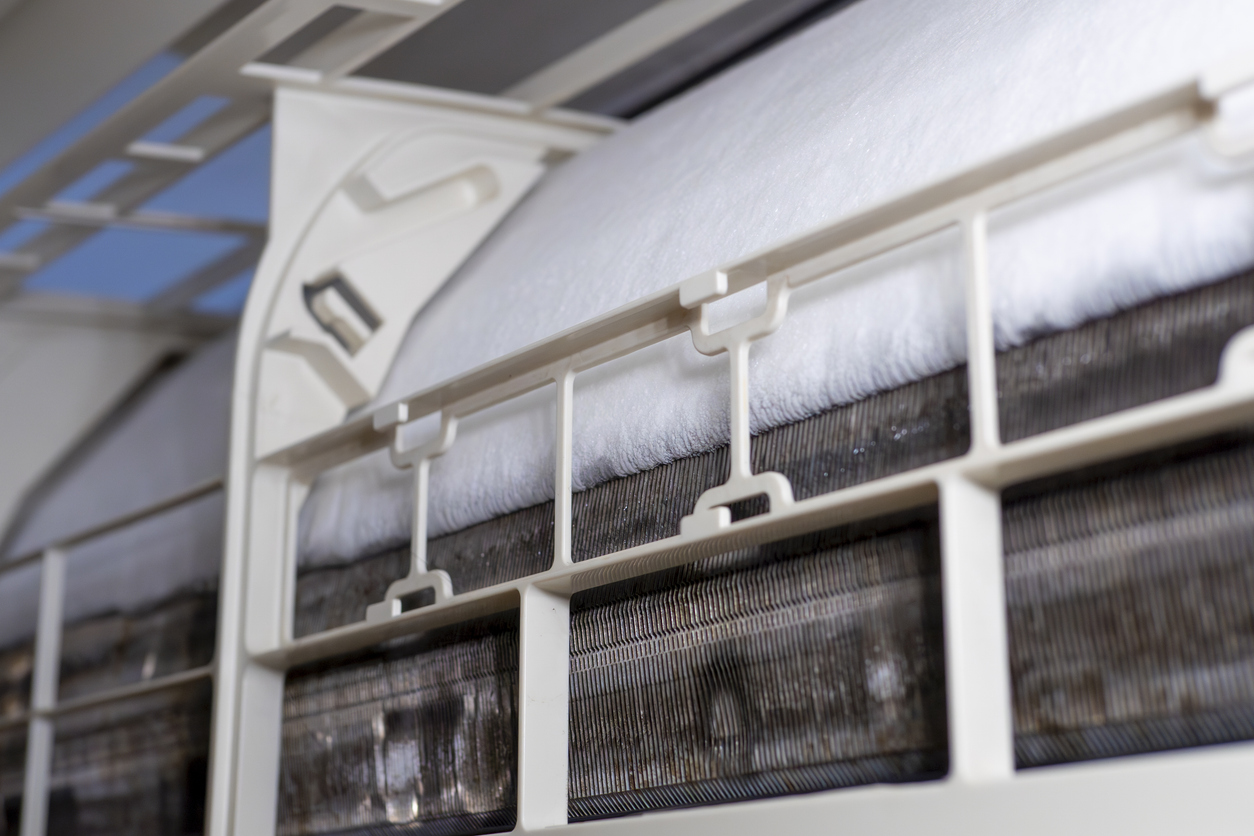
- Your Symptoms: You see a thick layer of ice on the copper lines running to your outdoor unit or inside the air handler. Airflow from your vents is very weak or completely blocked. You might see water pooling around your indoor unit as the ice melts.
- Technical Teardown: It's critical to understand that a frozen coil is a symptom, not the root cause. The ice forms for one of two reasons:
- Restricted Airflow: A severely clogged air filter or a failing blower motor prevents warm air from moving over the coil. Without that heat exchange, the coil's temperature plummets below freezing.
- Low Refrigerant: As explained earlier, a refrigerant leak causes a pressure drop that makes the coil too cold.
Running your AC with a frozen coil can quickly destroy your compressor by forcing it to pump against a block of ice.
- Severity: 4/5 (Indicates a serious underlying problem)
- DIY or Pro? Professional. While you can change the filter, a pro is needed to diagnose whether the root cause is airflow or a refrigerant leak.
- What a Newbern AC Pro Will Do: The first step is to safely thaw the coil. We'll turn the system off and run the fan to circulate air over the ice. Once thawed, we perform a full diagnostic. We inspect the filter, check the blower motor's function, and connect our gauges to read the refrigerant pressures. This tells us the true story and allows us to fix the actual problem, ensuring the ice doesn't just come right back.
Making the Call: Repair vs. Replace
When faced with a major repair like a compressor replacement, the big question is whether to invest in your old system or replace it. A helpful industry guideline is the "$5,000 Rule."
Multiply the age of your unit by the estimated repair cost. If the number is over $5,000, replacement is generally the wiser financial choice.
- Example: A 12-year-old unit with a $350 repair cost (12 * 350 = $4,200) is likely worth repairing.
- Example: The same 12-year-old unit with a $2,500 compressor replacement (12 * 2,500 = $30,000) is a clear candidate for replacement.
Beyond the math, consider factors like your system's energy efficiency (SEER rating) and the type of refrigerant it uses. Investing heavily in an older, inefficient system is often not a sound long-term decision. Our technicians can provide a clear breakdown of repair costs versus the long-term savings of a new, high-efficiency AC installation.
How to Choose the Right Emergency Technician in Auburndale
In a moment of crisis, it's easy to make a rushed decision. Arm yourself with this checklist to ensure you're hiring a true professional.
- Check for Licensing and Insurance: Ask for their state license number. For Florida, it should be a "CAC" number. This is non-negotiable.
- Look for NATE Certification: NATE-certified technicians have passed rigorous, real-world exams, proving their expertise.
- Read Recent Reviews: Look for reviews that mention professionalism, punctuality, and fair pricing-values we stake our reputation on.
- Demand Upfront Pricing: A trustworthy company will diagnose the problem first and then provide you with a clear, written estimate for the repair before any work begins.
Your Best Defense: Preventing the Next Emergency
The single best way to avoid a sudden breakdown is consistent, professional maintenance. During a tune-up, our technicians can spot failing capacitors, clean vital components, and check refrigerant levels-addressing the very issues that lead to emergencies. Investing in one of our preventative maintenance plans is the most effective way to ensure reliability and peace of mind.
Frequently Asked Questions About HVAC Emergencies
How long does an emergency repair usually take?
For common failures like a capacitor or contactor, a repair can take less than an hour. For major jobs like a compressor or motor replacement, it can take several hours, including the time to source the correct part.
Is it safe to stay in my house during an HVAC emergency?
Unless you smell gas or your carbon monoxide detector is sounding, it is generally safe. The biggest risk is discomfort from the lack of heating or cooling. If you have any safety concerns, it's always best to err on the side of caution.
Why does emergency service cost more than a scheduled appointment?
Emergency service often requires rearranging schedules, dispatching technicians after hours or on weekends, and paying overtime. The premium reflects the immediate, priority response required to get your system back online as quickly as possible.
Don't Face an Emergency Alone.
When your system fails, you need more than just a quick fix-you need a reliable partner. At Michael I. Newbern Air Conditioning, we combine technical expertise with a commitment to honest, transparent service. If you're experiencing an HVAC emergency in the Auburndale area, call us for a fast, professional response you can trust.

Customer Testimonials

Service Areas