Furnace Not Heating: Common Issues & Solutions

Warm Your Auburndale Home Today
A cold furnace is more than an annoyance — it’s stressful and can threaten your comfort and safety. If you live in Auburndale, FL, knowing the most common reasons a furnace blows cold air and the right next steps can save time and protect your family. Below we walk through likely causes, safe homeowner checks you can try, when to call a pro, and simple maintenance tips to keep your system dependable. Read on and you’ll be ready to spot obvious problems, take safe first steps, and describe the issue clearly to a technician.
This guide assumes a typical residential forced‑air furnace found in Central Florida homes. It’s not a substitute for your owner’s manual or a professional diagnosis, but it provides a practical checklist to identify common problems and communicate effectively with an HVAC technician. We focus on lower‑risk checks most homeowners can handle and clearer symptom descriptions to help prioritize service calls.
Why Is My Furnace Blowing Cold Air? Causes and Troubleshooting Steps
Cold air from your vents usually points to a handful of common causes. The top culprits are clogged filters, blocked vents or ducts, thermostat issues, ignition failures, and restricted airflow. Less often, electrical faults, control board errors, or safety switches can allow the blower to run while the burner won’t heat. Knowing these possibilities helps you narrow the cause and decide whether a quick fix or a service call is next.
When troubleshooting, start with simple, low‑risk checks (filters, thermostat, vents, breakers) and only move to more technical items (ignition, control board, blower motor) if you’re comfortable. Note when the symptom happens — for example, only at certain times, after recent service, or on the first heat call after a long idle — and keep a short log of what you tried and any error codes to share with your technician.
As you observe the system, pay attention to cycle timing and temperature change. For example, if the blower runs immediately but the burner never lights, that points toward ignition or fuel issues. If the burner lights but the house stays cold, distribution or airflow is more likely the problem. Small details like unusual startup delays, repeated lockouts, or patterns tied to weather can significantly narrow diagnostic possibilities.
- Airflow problems — dirty filters, closed vents, or blocked return grilles reduce the warm air reaching your rooms.
- Ignition and fuel delivery — a faulty pilot, flame sensor, or gas valve can stop the burner from lighting or staying lit.
- Controls and sensors — thermostat faults, limit switches, or control boards that misread conditions or lock out the system will stop heating cycles.
- Mechanical failures — a worn blower motor, broken belt, or seized bearings may stop air movement even if the burner fires.
- Safety and structural issues — cracks in the heat exchanger or venting problems can force the system to shut down for safety reasons.
Begin with the simplest, safest checks and only tackle technical items if you feel confident. If you smell gas, suspect carbon monoxide, or see signs of serious damage, leave the house and call emergency services and a licensed technician right away.
How Do Dirty Air Filters Affect Furnace Heating?
Clogged filters restrict airflow and make the furnace work harder. When airflow drops, the system can overheat and hit a safety cutoff, or warm air may never reach living spaces. Replace or clean filters every 1–3 months to keep healthy airflow and steady heat. Regular filter care also extends equipment life.
Filter choice matters: washable filters, standard pleated filters, and higher‑efficiency media filters each balance filtration and airflow differently. If you switch to a denser filter, watch for reduced airflow or more frequent cycling — check with your technician to choose a filter that protects indoor air without starving the furnace.
When selecting filters, confirm the size and the manufacturer's recommendations for your furnace model. If you are unsure, photograph the existing filter and the data plate on the furnace; that helps a technician recommend the right replacement. Remember that filters installed backward or loosely seated allow air to bypass the media and reduce effectiveness.
Practical tips for selecting and maintaining filters:
- Confirm the correct filter size stamped on the frame and fit it snugly so air can’t bypass the media.
- Keep a small stock of replacement filters so swaps are quick when needed.
- Homes with pets or allergy sufferers will clog filters faster — check and replace more often.
- If you reuse washable filters, rinse and let them fully dry before reinstalling to avoid mold or damage.
Can Blocked Vents and Ductwork Cause Cold Air?
Yes. Furniture blocking floor or wall registers, closed dampers, or debris and animal nests in ducts can stop warm air from circulating. Make sure vents are open and unobstructed, and remove visible debris. If rooms remain cold, schedule a professional duct inspection and cleaning to restore airflow.
Signs of duct problems include uneven room temperatures, whistling at registers, and dusty air from vents. Leaky ducts — common in attics and crawlspaces — send conditioned air into unheated spaces and reduce efficiency. A technician can seal leaks with approved materials and may recommend insulating ducts that run through hot or humid areas to prevent energy loss and condensation.
For a simple home check, hold a light tissue or a thin strip of paper in front of each register while the furnace is running; strong movement indicates good airflow. If many registers show weak flow, the issue is likely upstream at the blower or in the duct distribution rather than a single blocked vent.
Simple checks homeowners can perform safely:
- With the furnace running, feel airflow from each register. Weak airflow in many rooms often points to a distribution or blower issue rather than one bad vent.
- Look into accessible return grilles for large debris or signs of animal activity; don’t crawl into the ducts yourself.
- Note unusual noises when dampers are adjusted — rattles or whines can signal loose dampers or uneven pressure.
What To Do When Your Furnace Is Not Igniting? Troubleshooting Ignition Failures
If your furnace won’t ignite, the issue may be the pilot, flame sensor, ignition module, or gas supply. These parts are essential to light the burner, and checking them often reveals the root cause. Systems with electronic hot surface igniters behave differently from older units with a standing pilot — follow steps appropriate to your model.
Before any ignition checks, turn off power to the furnace and read the owner’s manual for safety instructions. If you’re not comfortable working around gas appliances, call a licensed technician instead.
When you observe ignition failures, note whether the system attempts to light and then locks out, or whether there is no attempt at all. Modern furnaces often blink a diagnostic code on a small LED; record the blink pattern or photograph it. That small bit of information frequently reduces diagnostic time and parts-on-truck visits.
How Does a Faulty Pilot Light or Flame Sensor Impact Furnace Operation?
A failed pilot or a dirty flame sensor will prevent the burner from staying lit, so the furnace won’t produce heat. You can check whether a pilot is lit and gently clean an exposed flame sensor if you’re confident doing so. The flame sensor confirms a steady flame; if it’s coated with carbon or corrosion, it may not register flame and will shut the gas valve as a safety measure.
High‑level cleaning steps for a flame sensor: turn power and gas off, access the sensor, remove and lightly clean it with a nonabrasive cloth or fine emery pad, reinstall, and test. If the sensor is damaged or cleaning doesn’t help, replacement is usually straightforward but should be done by someone comfortable with gas and electrical work.
Differences between ignition systems to note:
- Standing pilot systems keep a small flame lit continuously; a pilot outage in these systems is obvious and often related to the thermocouple or gas supply.
- Electronic ignition systems (hot surface igniters or spark igniters) attempt to light only when there’s a call for heat; these rely on timed sequences and sensors and may show error codes if a step fails.
When Should You Reset or Replace Furnace Ignition Components?
Only attempt a reset if the manufacturer’s manual recommends it and you feel safe doing so. A reset can clear certain electronic faults or cycle safety locks, but it may be temporary. Replace ignition parts when failures repeat — for example, frequent pilot outages, persistent ignition failures, or a unit that won’t stay lit after several resets. Because these components involve gas and electricity, prioritize safety and consult a professional when unsure.
When you call a technician for ignition issues, note any error codes on the control board, how long the problem has been happening, and any recent service history. That information helps the technician diagnose faster and bring the right parts.
How Can Thermostat Issues Prevent Your Furnace From Heating?
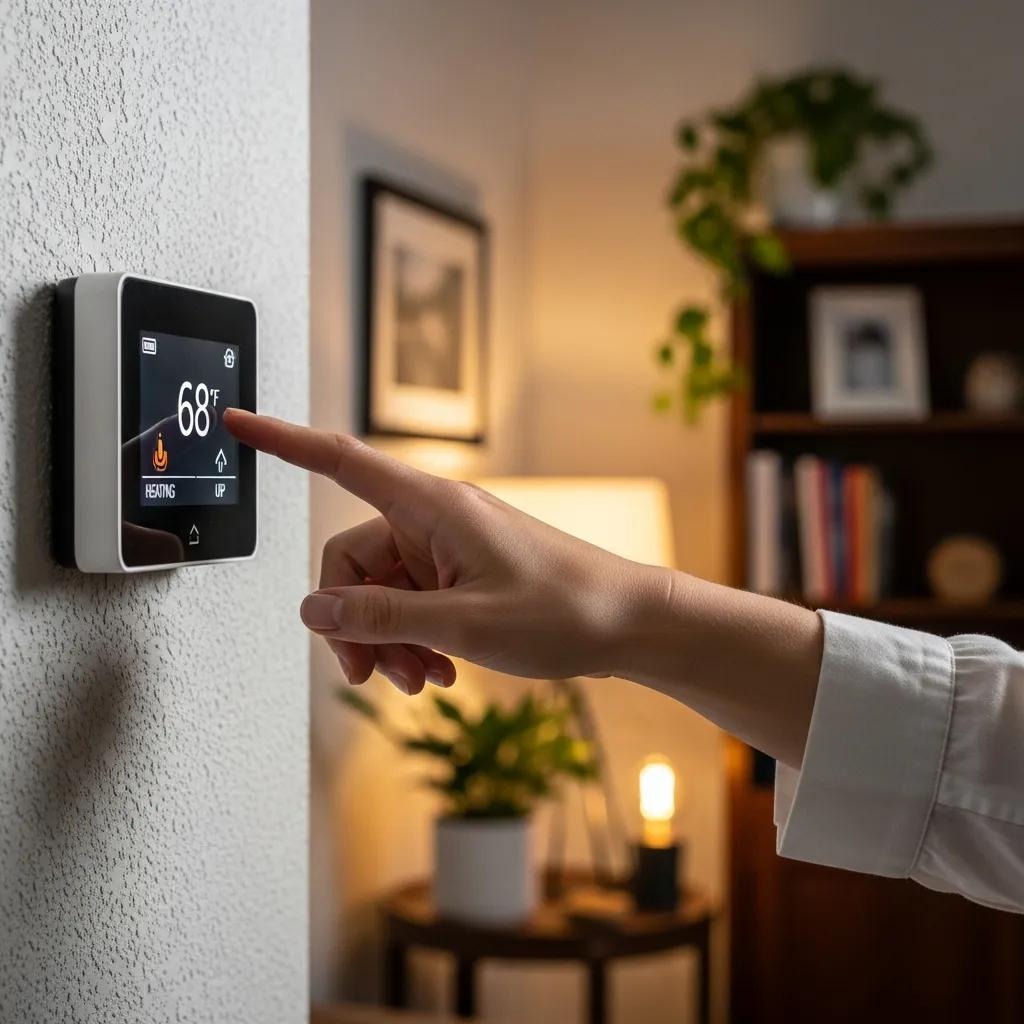
A thermostat that misreads temperature or is set incorrectly will prevent your furnace from running as expected. Many thermostat problems are simple to fix and will get your heating back on quickly. Common causes include dead batteries, software glitches in smart units, or wiring faults after home projects or rodent activity.
Smart thermostats may also be affected by Wi‑Fi or cloud service interruptions; when that happens, the device might not send a call for heat even though the display appears normal. If you suspect a software issue, try a soft reboot following the manufacturer’s instructions and test by manually increasing the setpoint to trigger a heat call.
What Are Common Thermostat Malfunctions Affecting Furnace Performance?
Typical thermostat problems include dead batteries, incorrect mode settings, or loose wiring. Start by replacing batteries and confirming the thermostat is set to “heat” with a setpoint higher than the room temperature. If the furnace still won’t respond, check wiring only if you’re comfortable doing so — otherwise call an HVAC pro.
Other thermostat issues to consider:
- Placement problems — thermostats in direct sunlight, near vents, or above appliances can misread room temperature.
- Software or schedule conflicts — programmable and smart thermostats may use schedules, holds, or energy‑saving modes that override normal heating.
- Compatibility — many modern thermostats need a common (C) wire for steady power; without one they can behave unpredictably.
How To Check and Adjust Thermostat Settings for Proper Heating?
Verify the thermostat is set to “heat” and the setpoint is above current room temperature. Follow the manufacturer’s steps to recalibrate if needed. Upgrading to a programmable or smart thermostat can improve comfort and save energy over time.
If you replace a thermostat, label each wire before disconnecting and follow the wiring diagram carefully. If the furnace still doesn’t respond after correct wiring, the issue may be at the control board or in the low‑voltage wiring — a task for a qualified technician if you’re not experienced with electrical troubleshooting.
Simple thermostat checks you can perform safely:
- Install fresh batteries and reboot the unit if it allows a soft restart.
- Temporarily raise the setpoint and listen for the furnace to start; if the blower runs but no heat follows, the problem is likely ignition or burner related.
- Write down any error messages or unusual display behavior to share with your service technician.
What Are the Signs of Blower Motor Problems Causing No Heat?
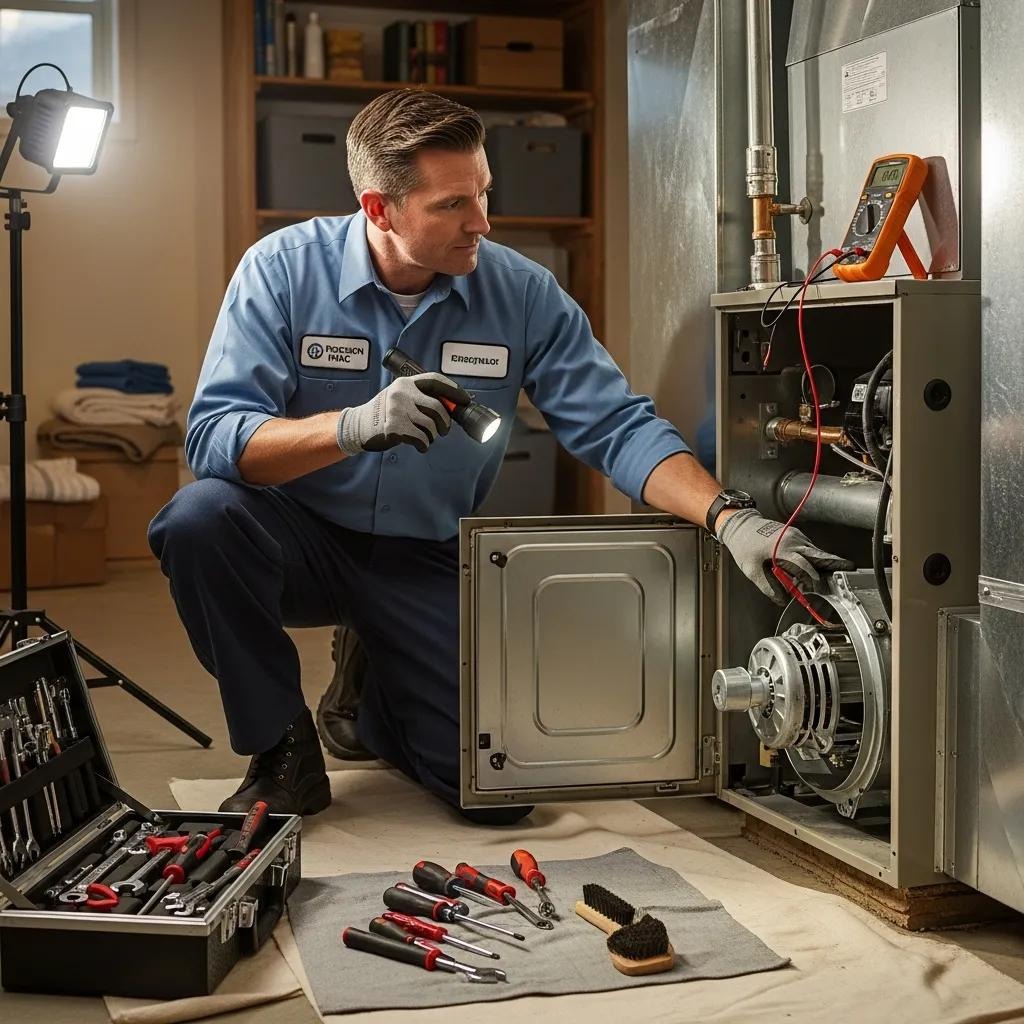
A failing blower motor can leave your home without warm air even while the furnace appears to be running. Spotting early symptoms lets you fix the issue before it becomes a larger repair. The blower moves warm air from the heat exchanger into your ductwork — if it stops, the burner may still fire but heat won’t be distributed.
If the blower motor is weak or dead, airflow falls and warm air won’t reach rooms evenly, creating cold spots and higher energy bills as the system strains. Regular inspections help catch motor wear early and keep airflow consistent.
Common blower issues include worn bearings, a failing start capacitor, broken belts on older belt‑drive units, clogged blower wheels, or loose electrical connections. A technician will test the motor and capacitor, clean the wheel, and replace worn parts as needed.
When inspecting for blower problems, always turn off power at the service switch and the breaker before removing access panels. Visual signs like dust accumulation on the wheel, oil leaks, or visible belt damage are clues to the root cause. If you hear grinding or squealing, stop using the furnace and call a technician — continued operation can cause more extensive motor damage.
Homeowner observations that point to blower problems:
- Blower runs but airflow is weak at all registers, suggesting an issue with the motor, capacitor, or a major filter obstruction.
- Loud humming or clicking at startup, often indicating a failing capacitor or starter device.
- Intermittent operation where the blower starts and stops for no clear reason, which may indicate thermal protection tripping or electrical faults.
When Is Professional Repair Needed for Blower Motor Failures?
Persistent grinding, squealing, or a blower that won’t run means it’s time to call a professional. Motor repairs involve electrical work and precise replacement — contact a qualified HVAC technician to diagnose and fix blower failures safely. Running the furnace without proper airflow can damage the heat exchanger and other components.
If your system uses belts, a quick visual check can spot a cracked or loose belt, but replacement and alignment are best handled by a technician to ensure correct tension and longevity. Technicians can also measure motor current and static pressure to see whether undersized ducts or resistance are stressing the motor.
Why Is a Cracked Heat Exchanger a Serious Furnace Safety Concern?
A cracked heat exchanger can allow carbon monoxide into your home. Carbon monoxide is odorless and dangerous, so treat any suspected crack as an emergency. Heat exchanger damage may not be obvious without a detailed inspection and can develop from corrosion, thermal stress, or poor combustion.
What Are the Symptoms of a Cracked Heat Exchanger?
Watch for a yellow or flickering pilot light, soot around the furnace, unusual metallic or burning smells, or unexplained symptoms such as headaches when the furnace runs. If you notice any of these signs, get a professional inspection right away. Frequent burner cycling or visible corrosion when the cabinet is opened are also warning signs.
Working carbon monoxide detectors on every level of your home are essential. If a detector alarms when the furnace runs, turn off the system, ventilate the house if safe, and call for emergency help and HVAC service immediately. Detectors are a critical layer of protection but don’t replace routine furnace inspections aimed at preventing heat exchanger failure.
What Immediate Actions Should You Take If You Suspect a Heat Exchanger Crack?
If you suspect a cracked heat exchanger, turn the furnace off, leave the house, and call an HVAC professional right away. For safety, do not use the furnace until an expert confirms the system is safe. Contact a professional HVAC technician for prompt assistance.
When you call, describe the symptoms and when they began. That helps the technician prioritize the call and bring the right tools for a diagnostic inspection and any necessary containment or temporary measures. Have the furnace make and model and recent maintenance history ready if available.
When Should You Call a Professional for Furnace Repair in Auburndale, FL?
Some furnace fixes are simple, but many require a trained technician. Knowing when to call keeps you safe and prevents small issues from becoming costly repairs. Call a licensed HVAC technician immediately if the problem involves gas, exposed wiring, suspected carbon monoxide, or a damaged heat exchanger.
What Are the Benefits of Professional Furnace Diagnostics and Maintenance?
Professional diagnostics uncover hidden problems, and routine maintenance keeps parts running efficiently. Technicians have the tools and experience to improve safety, efficiency, and system lifespan. Schedule annual inspections to keep your heating systems ready when you need them.
A typical inspection includes combustion safety checks, a heat‑exchanger examination, testing electrical connections, lubricating moving parts where applicable, checking the thermostat, and verifying airflow. Service visits often include replacing worn parts before they fail and providing a written assessment with repair estimates.
How Does Michael I Newbern Air Conditioning Contractor Inc. Provide Expert Furnace Service?
Michael I Newbern Air Conditioning Contractor Inc. is a family‑owned HVAC and electrical company in Auburndale, FL, serving Central Florida for more than 30 years. Our technicians combine local know‑how with hands‑on experience to deliver dependable, safe home‑comfort services. We offer full furnace service, repairs, and preventive maintenance to keep your system running when you need it most.
When you schedule service, expect a trained technician to arrive with diagnostic tools, common replacement parts, and safety equipment to test combustion and carbon monoxide if needed. A good technician will explain findings in plain language, outline repair options, and recommend maintenance steps to reduce repeat problems. Ask the technician to show you the issue and explain whether repair or replacement is recommended and why.
Before the appointment, have basic information ready: photos of the furnace data plate, notes on any recent repairs, and the behavior timeline you recorded. Clear, concise details help technicians prioritize work and often reduce time on site and cost for homeowners.
How To Fix Furnace Not Heating: DIY Tips and When to Seek Expert Help
Before calling for service, try a few safe checks that often resolve common issues. These steps help you decide whether the problem is simple or needs professional attention. Keep a basic checklist near the furnace so you can work methodically and avoid missing obvious items.
What Simple Troubleshooting Steps Can Homeowners Perform Safely?
- Check the Thermostat: Make sure it’s set to “heat” and the set temperature is above room temperature. Incorrect settings are a common, easy fix. Replace batteries in basic thermostats and review schedule settings on programmable units.
- Inspect Air Filters: Replace or clean dirty filters to restore airflow. Clean filters reduce strain on the furnace and help it heat efficiently. Install the filter with the arrow pointing the correct way for airflow.
- Examine Vents: Confirm vents are open and uncovered so warm air can circulate. Blocked vents reduce comfort and increase system load. Also check return grilles to ensure they aren’t blocked by furniture or rugs.
- Check Power and Breakers: Ensure the furnace switch is on and the circuit breaker hasn’t tripped. Some systems have a service switch near the unit and a breaker in the panel — check both.
- Inspect the Furnace Area: Remove clutter and stored items around the furnace to allow proper airflow and safe service access. Clear dust and debris, but don’t block intake or exhaust openings.
- Look for Error Codes: Modern furnaces often flash codes on a control board. Note the pattern and share it with your technician — it speeds diagnosis.
- Check the Condensate Drain (if applicable): High‑efficiency furnaces with condensing components can stop if the condensate drain clogs. Inspect visible drain lines for blockages.
When performing these simple checks, always follow safety guidance: turn off power where recommended, avoid touching gas connections, and don’t attempt to access internal components unless you have the correct knowledge and tools. Small preventive actions can prevent emergency calls and extend equipment life.
How Does Central Florida’s Climate Affect Furnace Performance and Maintenance?
Central Florida’s climate changes how often you use and maintain heating equipment. Humidity and seasonal swings influence condensation, corrosion, and overall system health. Winters here are milder than in northern areas, so furnaces run less — but periodic checks are still important to ensure reliable operation when needed.
Why Does High Humidity Impact Furnace Operation in Auburndale?
High humidity can cause condensation inside HVAC equipment, leading to rust or moisture‑related problems. Using a dehumidifier during humid months helps protect your furnace and preserve efficiency. Condensation can also foul sensors and electrical connections if left unchecked, so keeping the equipment area dry is an important preventive step.
Humidity control also reduces the risk of mold in ductwork and on filters. Where condensation is likely — basements, crawlspaces, or near outdoor intakes — consider periodic inspections or protective measures such as insulating nearby ductwork and ensuring proper drainage away from outdoor components.
Seasonal timing matters: plan a pre‑season check before the first extended cool spell and a quick post‑season inspection if the system saw heavy use or if you detected moisture-related issues. Regular attention aligned with local seasonal patterns reduces surprise failures and maintains system reliability.
What Maintenance Practices Are Essential for Central Florida Homes?
- Regular Filter Changes: Replace filters every 1–3 months to keep airflow steady and prevent undue strain.
- Annual Inspections: Have a pro inspect your system yearly to catch small problems before they grow. A pre‑season check ahead of cooler months helps ensure heating readiness.
- Humidity Control: Use dehumidifiers as needed to limit moisture‑related wear and keep systems running smoothly.
- Keep the Area Clear: Maintain clearance around the furnace and outdoor units so airflow and service access remain unobstructed.
- Check Venting: Ensure exhaust and intake vents are free of nests, debris, and vegetation. Proper combustion airflow protects efficiency and safety.
- Carbon Monoxide Safety: Test CO detectors regularly and replace batteries annually. Detectors are an essential complement to routine furnace maintenance.
Small, regular actions reduce the chance of sudden failures and often prevent more expensive repairs caused by neglected systems. Keeping a short service log — filter change dates, brief notes from annual visits, and any repairs — helps technicians spot recurring issues and plan longer‑term fixes like component upgrades or duct sealing.
Take Action to Keep Your Auburndale Home Warm and Safe
Knowing the common reasons a furnace blows cold air helps you act quickly and keep your home comfortable. Simple fixes — changing filters, checking vents, and confirming thermostat settings — solve many problems. For issues involving ignition parts, the blower motor, or suspected heat exchanger damage, call a qualified technician for a safe, lasting repair. Keep a maintenance schedule, test carbon monoxide detectors, and reach out to Michael I Newbern Air Conditioning Contractor Inc., a trusted local HVAC company, when problems go beyond basic checks. Explore our full furnace services to keep your heating system reliable all season.

Customer Testimonials

Service Areas